Wrong Turn, Right Destiny: Five Athletes Who Accidentally Conquered Sports They Never Meant to Play

There's a version of sports history that gets told in neat, straight lines. Kid picks up a ball. Kid practices obsessively. Kid wins. The end.
But that version leaves out a whole category of champion — the ones who backed into greatness sideways, who found their sport the way you find a twenty-dollar bill in an old coat pocket. Surprised. A little confused. And ultimately, very glad it happened.
Here are five of the most improbable athletic redirects in American history.
1. The Football Lineman Who Became a Figure Skating Pioneer
Dick Button didn't grow up dreaming about ice. He grew up in New Jersey dreaming about football, the way most American boys in the 1940s did. Broad-shouldered and competitive, Button was built for contact sports. But at thirteen, his parents dragged him to a skating rink, mostly to keep him occupied during a long winter.
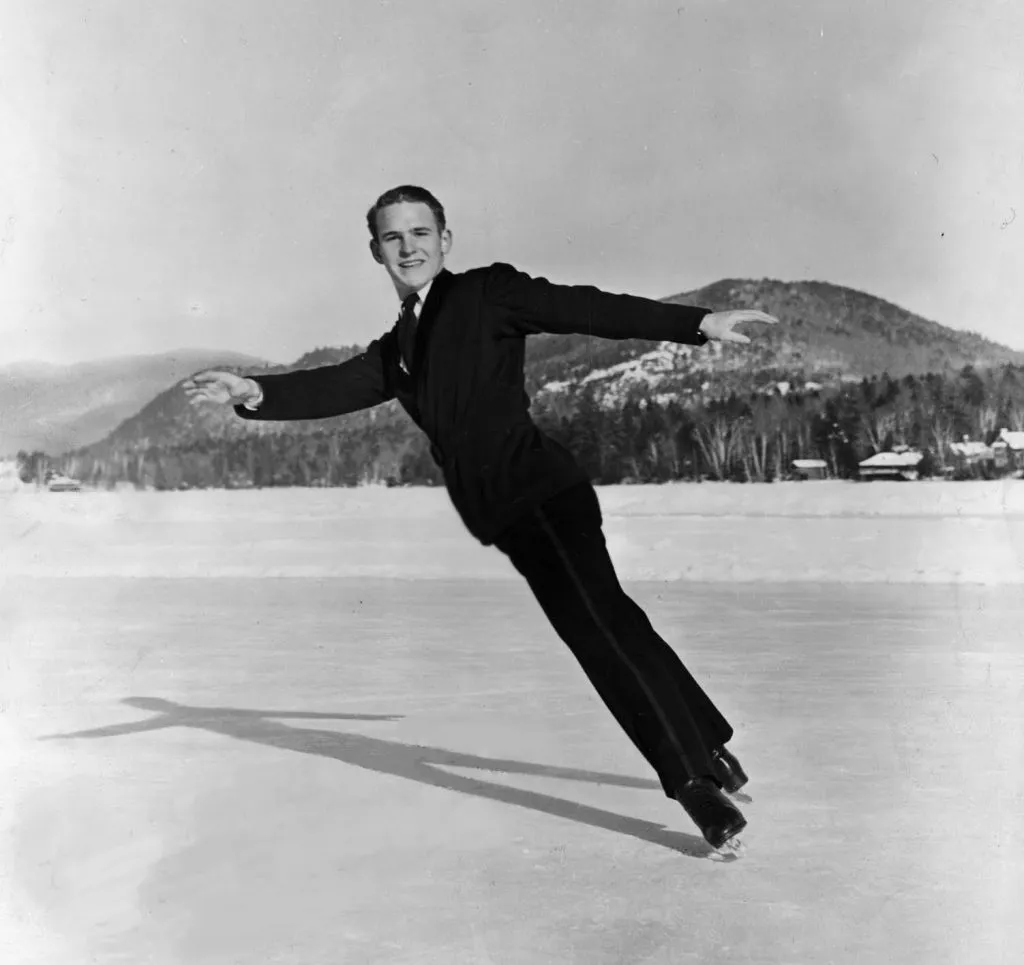 Photo: Dick Button, via japan-forward.com
He hated it immediately. He fell constantly. His ankles gave out. He went home furious.
He also went back the next week.
Within three years, Button had transformed his athletic aggression into something no one had ever seen on ice. He became the first skater to land a double Axel in competition. Then he invented the flying camel spin. Then he won back-to-back Olympic gold medals in 1948 and 1952, becoming the most dominant figure skater of his generation. The sport he'd stumbled into reluctantly gave him a legacy that football never could have.
Button would later say that his lack of formal skating identity was actually his advantage. He came to the ice without anyone telling him what was impossible.
2. The Sprinter Who Couldn't Run — So She Threw Things Instead
Wilma Rudolph is rightly remembered as one of the fastest women in American history. But the story most people don't know is what happened before the sprinting.
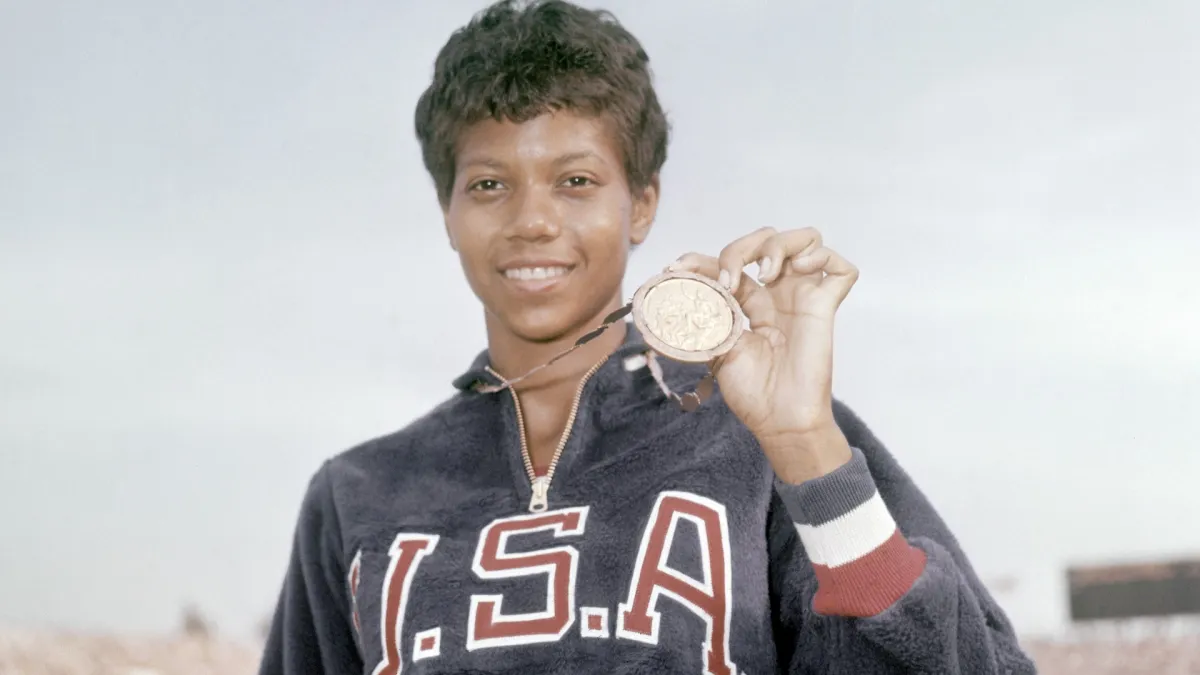 Photo: Wilma Rudolph, via media.11alive.com
Rudolph, the twentieth of twenty-two children born in rural Tennessee, survived polio, scarlet fever, and a double pneumonia that left her unable to walk without a brace until age twelve. When she finally shed the brace, her original plan was simple: she wanted to play basketball, like her older siblings.
But her high school coach saw something different when she ran the length of the court during tryouts. He pulled her aside and pointed her toward the track.
She resisted. Basketball was the plan. Running wasn't a sport, it was just getting somewhere faster.
Her coach won the argument. By 1960, Rudolph had won three gold medals at the Rome Olympics, becoming the first American woman to accomplish that feat at a single Games. The girl who wanted to dribble a basketball ended up rewriting what American women could do on a track.
3. The Baseball Pitcher Who Fell Into the Pool
Before Mark Spitz won seven gold medals at the 1972 Munich Olympics, he was a kid in Sacramento who played Little League with genuine conviction. Baseball was his thing. He was decent, he loved it, and he had absolutely no intention of spending his adolescence staring at a black line on the bottom of a pool.
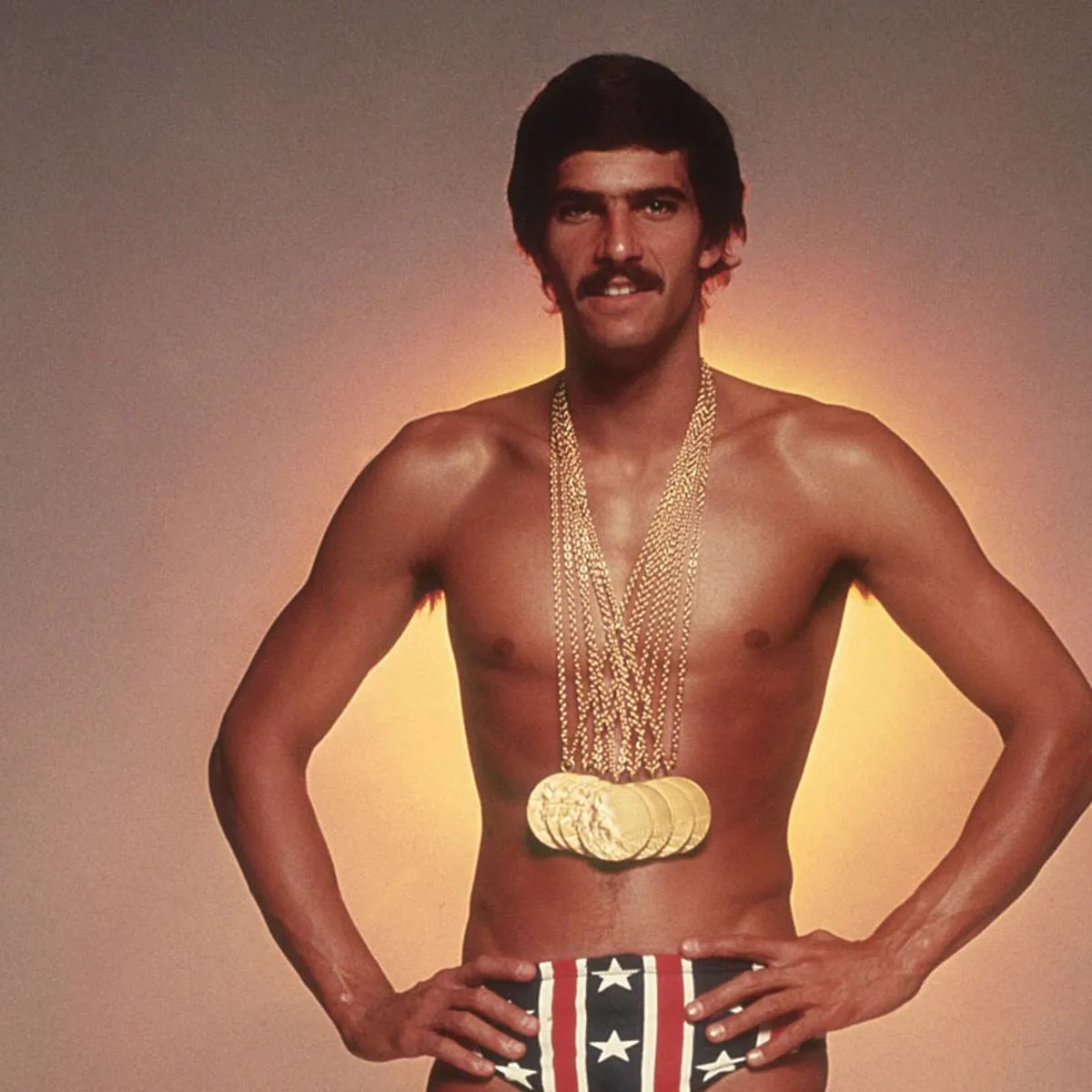 Photo: Mark Spitz, via vault.si.com
Then his father, an avid swimmer himself, signed young Mark up for lessons at a local club — mostly for safety reasons, the way parents do. Spitz took to the water with an ease that startled everyone, including himself. His coaches started rearranging practice schedules around him. His Little League teammates stopped seeing him at games.
Spitz didn't fully abandon baseball until it became obvious, by around age ten, that the water was where physics had decided to be kind to him. His shoulder rotation, his lung capacity, his instinctive feel for pace — all of it translated to swimming in a way that felt almost unfair to the other kids in the pool.
He went on to set thirty-three world records and become the most decorated Olympian of his era. The baseball diamond never knew what it lost.
4. The Basketball Reject Who Discovered the Luge
Ruben Gonzalez grew up in Argentina before moving to the United States with one clear athletic ambition: he wanted to play professional basketball. He was not especially tall. He was not especially fast. He was, by his own cheerful admission, not especially good at basketball.
After getting cut from enough teams to fill a small gymnasium, Gonzalez made a decision that defies rational explanation. He read a magazine article about the luge — the high-speed, head-first ice sledding event that makes most sensible people feel nauseated just watching it — and decided that was what his life had been missing.
He was twenty-one. He had never seen snow in person.
Four years later, Gonzalez competed in the 1988 Calgary Winter Olympics, becoming one of very few people to reach the Games in a sport he had taken up as an adult with zero prior experience. He would go on to compete in four separate Winter Olympics across two decades, a feat almost unheard of in a sport that chews through athletes with brutal efficiency.
The basketball courts of Buenos Aires never knew they were doing him a favor.
5. The Wrestler Who Accidentally Became America's Best Bobsledder
Howie Liddell spent his early twenties wrestling at a regional level — good enough to be competitive, not quite good enough to make it his life. When a knee injury ended his mat career at twenty-four, he found himself at a crossroads that felt less like an opportunity and more like a dead end.
A friend who worked with the US bobsled program mentioned, mostly in passing, that they were looking for athletes with explosive lower-body power and the ability to accelerate quickly over a short distance. Liddell showed up to a tryout half-expecting to embarrass himself.
Instead, his wrestling-built legs and his instinct for generating force through his hips made him a natural push athlete. He made the national team within eighteen months. The injury that ended one career had quietly opened the door to another — and to a sport where his specific, hard-won physical gifts were exactly what was needed.
What the Detour Actually Teaches You
Look at these five stories side by side and something becomes clear. None of them found their sport through a master plan. They found it through injury, parental interference, a magazine left on a coffee table, a coach with a hunch, and a rainy afternoon at a rink.
The common thread isn't talent, exactly. It's a willingness — sometimes reluctant, sometimes bewildered — to follow an unexpected door when it opens. The athletes who became legends in sports they never intended to play all shared one quality: they didn't let the surprise of the detour stop them from taking it seriously once they were on it.
Sometimes the wrong turn is the whole point.