The Boy Nobody Watched: How Bill Russell Made Invisibility the Most Powerful Force in Basketball
The Kid Nobody Picked
In the flatlands of West Oakland in the late 1940s, basketball was a game for scorers. You wanted the ball in your hands, the crowd on its feet, the newspaper photographer leaning in. Points were the currency of reputation, and reputation was everything on those cracked outdoor courts.
Bill Russell didn't score much.
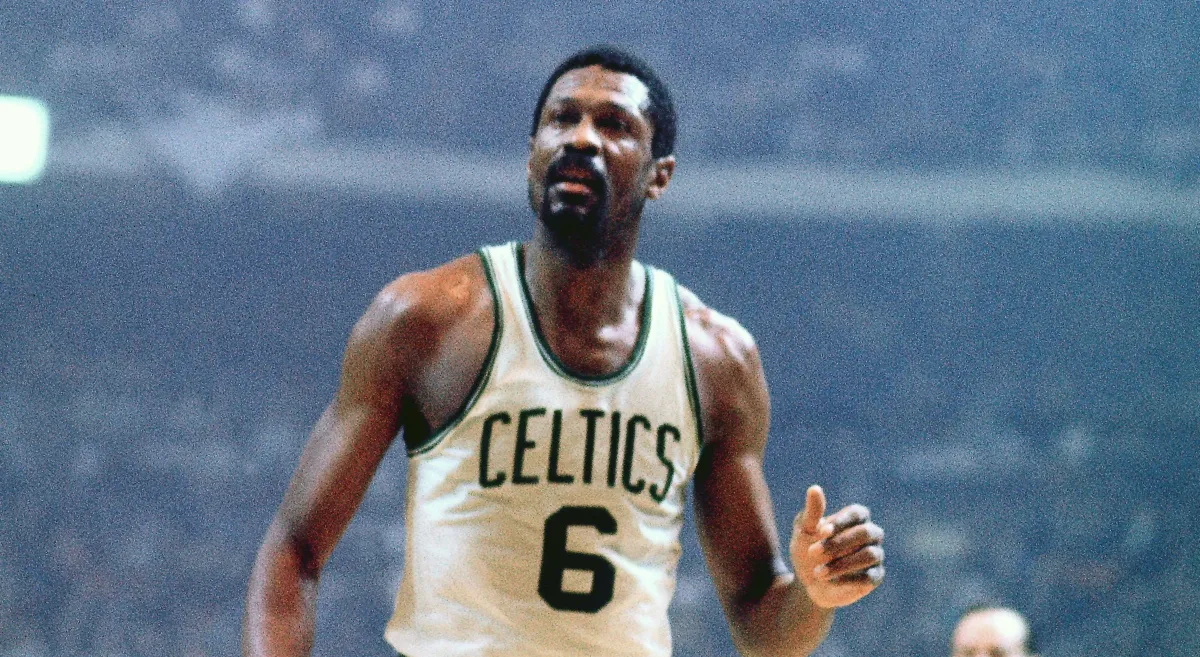 Photo: Bill Russell, via cdn.nba.com
He was tall and rail-thin, frequently sick as a child, and so unimpressive as a young player that his junior high school coach essentially ignored him. He didn't make the varsity squad at McClymonds High School on his first try. When he finally did earn a spot, he was handed a uniform that had belonged to someone else — a hand-me-down jersey for a hand-me-down prospect. His father, Charles Russell, worked a series of grinding, physical jobs to keep the family afloat after the family relocated from Louisiana. Stability was hard-won. Comfort was a luxury. And for young Bill, greatness was something other people's children were allowed to dream about.
What Russell had, though — what nobody could take from him and nobody thought to look for — was a mind that watched the game differently.
Seeing What Everyone Else Ignored
While his teammates and rivals practiced pull-up jumpers and post moves, Russell became obsessed with something the sport barely had language for: preventing the other team from scoring. Not just blocking shots in the obvious, physical sense, but controlling space, reading trajectories, and manipulating where opponents wanted to go before they knew they wanted to go there.
He later described lying awake replaying moves in his head, visualizing not just what players did but what they were about to do — a kind of anticipatory geometry that let him position his body in spaces that made the entire offense feel crowded and uncomfortable.
Coaches didn't know what to make of it. Scouts who came through Northern California in those years were looking for scorers and rebounders. Defense was something you told players to play harder, not something you studied or systematized. The idea that a kid who averaged modest offensive numbers could be a transformative player was, frankly, a hard sell.
University of San Francisco took a chance on him anyway, largely because his raw athleticism was undeniable even if his game looked strange. What happened there began to hint at what was coming.
The Architecture of a New Game
At USF, Russell started building something. Playing alongside Hal Perry and K.C. Jones, he anchored a defense that felt genuinely different from anything opponents had prepared for. Teams would run their standard sets and find, inexplicably, that nothing opened up. The angles were wrong. The gaps they expected weren't there. Russell wasn't just blocking shots — he was relocating them, timing his challenges so that even when he didn't make contact, the shooter adjusted, rushed, second-guessed.
USF won the NCAA championship in 1955 and 1956. Russell was the engine, and slowly, people started paying attention to the engine.
When Red Auerbach of the Boston Celtics traded two players and a future draft pick to acquire Russell in 1956, plenty of observers thought he was overpaying for a defensive specialist. Offense wins games, the thinking went. Always had.
Auerbach understood something the consensus missed: in a sport where every possession matters, eliminating easy baskets is worth as much as creating them. Possibly more.
Eleven Rings and a Revolution
What followed is the kind of record that sounds made up when you say it out loud. Eleven NBA championships in thirteen seasons. Five MVP awards. An Olympic gold medal. A player-coach role that produced two more titles. By any statistical measure of team success, Russell remains the most decorated player in the history of professional basketball in America — and he achieved it almost entirely on the strength of something the sport had barely acknowledged as a skill when he arrived.
The Celtics of the Russell era weren't a collection of offensive superstars. They were a machine built around his defensive intelligence. Teammates understood that Russell's presence in the paint changed the entire geometry of what opposing offenses could attempt. It freed guards to gamble for steals. It let forwards play more aggressively on the perimeter. The whole system breathed differently because of what one man was doing near the basket.
Wilt Chamberlain, the most physically dominant offensive force of the era, famously struggled against Russell's Celtics in ways that baffled people who watched Chamberlain dismantle everyone else. Russell didn't stop Chamberlain by being stronger or taller. He stopped him — or at least complicated him — by being smarter, by making the court feel smaller than it was.
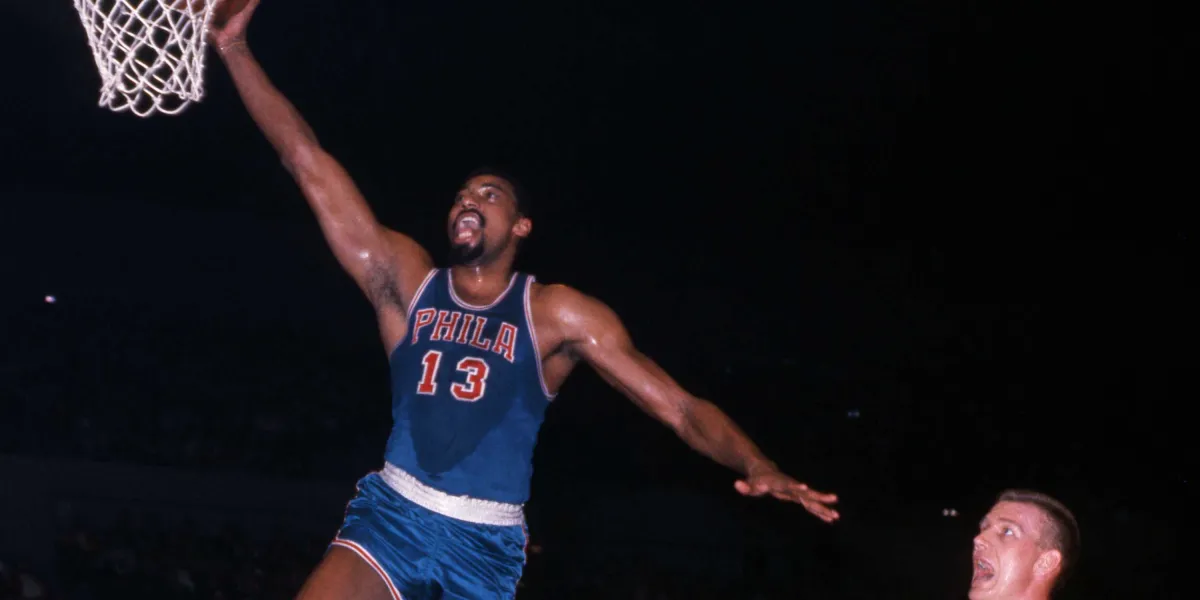 Photo: Wilt Chamberlain, via static0.givemesportimages.com
What the Scoreboard Didn't Show
Here's the thing about Russell's legacy that makes it genuinely improbable: for most of his career, the statistics that would have captured his impact simply didn't exist. Official blocked shots weren't tracked in the NBA until after he retired. The defensive metrics we take for granted today — defensive rating, defensive win shares, opponent field goal percentage — were decades away from being calculated.
Russell dominated a category the sport wasn't even measuring.
In some ways, that invisibility was the whole story. He'd spent his childhood being overlooked, his adolescence being underestimated, his early career being told that what he did best wasn't what the game rewarded. And then he went out and won more championships than anyone in the history of the sport by doing exactly that thing — the thing nobody thought to count.
Modern NBA coaching has absorbed Russell's lessons so completely that they're now foundational. Defensive schemes, rim protection, the concept of a defensive anchor who organizes the entire half-court system — all of it flows, at least in part, from what a skinny kid from West Oakland figured out by watching the game differently than everyone around him.
The Gravedigger's Son
Charles Russell dug ditches and worked foundries and did whatever the economy of mid-century California offered a Black man from Louisiana trying to give his family something better. His son grew up watching that kind of labor — hard, unglamorous, essential, and almost entirely invisible to the people who benefited from it.
Maybe that's where the lesson came from. Maybe Bill Russell understood, earlier than most, that the most important work is often the work nobody sees.
Eleven championships later, the sport finally caught up to what he'd always known.