The Magnificent Seven of Midlife: Athletes Who Rewrote the Rules of Aging
When Biology Meets Willpower
In sports, forty is supposed to be ancient. By conventional wisdom, reflexes slow, muscles weaken, and younger competitors inevitably take over. But a remarkable group of American athletes has spent the last few decades rewriting that narrative, proving that peak performance can arrive when most careers are supposedly over.
These aren't feel-good comeback stories or nostalgic victory laps. These are athletes who reached the absolute pinnacle of their sports — Olympic medals, world championships, professional titles — well into their forties and beyond. Their success challenges everything we thought we knew about aging, competition, and the limits of human performance.
1. Meb Keflezighi: The Marathon Man at 39
When Meb Keflezighi won the Boston Marathon in 2014, he wasn't just crossing a finish line — he was obliterating assumptions about distance running. At 39, an age when most marathoners are hanging up their racing flats, Keflezighi ran the race of his life on American soil's most prestigious course.
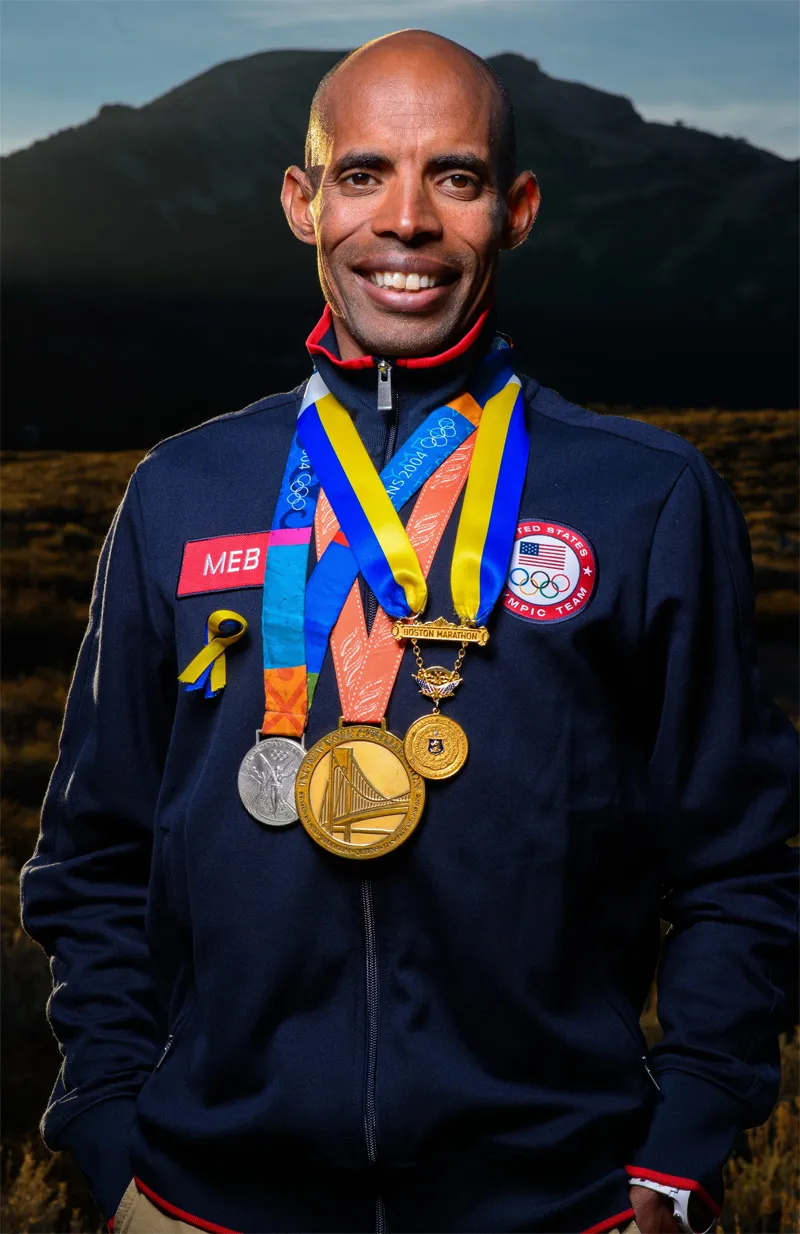 Photo: Meb Keflezighi, via cloudfront.bernews.com
What made his victory even more improbable was the competition. The Boston field included runners a decade younger, athletes in their supposed prime. Yet Keflezighi's experience-honed race strategy and unmatched mental toughness carried him to victory in 2:08:37.
"Young runners have speed," Keflezighi explains. "But older runners have wisdom. We know how to suffer efficiently."
Sports scientists now understand what Keflezighi intuitively grasped: endurance sports favor athletes who can manage pain and pace themselves strategically — skills that improve with age and experience.
2. Bernard Hopkins: The Executioner's Late-Career Masterpiece
Bernard Hopkins was 46 when he became the oldest boxer in history to win a major world title, defeating Jean Pascal for the WBC Light Heavyweight Championship. In a sport where reflexes mean everything and father time is undefeated, Hopkins seemed to have discovered the fountain of youth in Philadelphia's toughest gyms.
His secret wasn't mystical — it was methodical. Hopkins revolutionized training for older athletes, focusing on flexibility, nutrition, and recovery with scientific precision. While younger fighters relied on natural athleticism, Hopkins built a machine of efficiency.
"These young boys don't know how to train their minds," Hopkins said after his historic victory. "They train their bodies, but the mind is what wins fights."
Neurological studies support Hopkins' philosophy. Older athletes often compensate for decreased physical capacity through superior decision-making and strategic thinking — exactly what Hopkins demonstrated in the ring.
3. Dara Torres: Swimming Against Time at 41
When Dara Torres qualified for the 2008 Olympics at age 41, she shattered more than records — she challenged the fundamental assumptions of competitive swimming. In a sport dominated by teenagers, Torres proved that technique and experience could compete with youthful power.
Torres' approach was revolutionary. She trained smarter, not harder, incorporating cutting-edge recovery methods and biomechanical analysis. Her stroke efficiency improved with age, demonstrating that technical mastery could offset declining raw speed.
At the Beijing Olympics, Torres won three silver medals, missing gold by fractions of seconds. Her performances sparked a wave of research into master's athletics and late-career competition.
4. Tom Brady: The Quarterback Who Aged Backwards
Tom Brady's seventh Super Bowl victory at age 43 represents perhaps the most dominant late-career performance in professional sports history. In the NFL, where the average career lasts just over three years, Brady played at an elite level for more than two decades.
Brady's longevity stemmed from obsessive attention to detail: specialized diets, innovative training methods, and sleep optimization that bordered on scientific research. He transformed himself into a laboratory for athletic aging.
"I've learned more about my body in my forties than I did in my twenties," Brady reflected. "Experience teaches you what works and what doesn't."
His success inspired a generation of older athletes to reconsider retirement timelines and invest in longevity-focused training.
5. Diana Nyad: Conquering Cuba to Florida at 64
Diana Nyad's successful swim from Cuba to Florida at age 64 redefined what's possible in endurance sports. After four failed attempts and a thirty-year hiatus from marathon swimming, Nyad proved that determination could overcome both age and seemingly impossible odds.
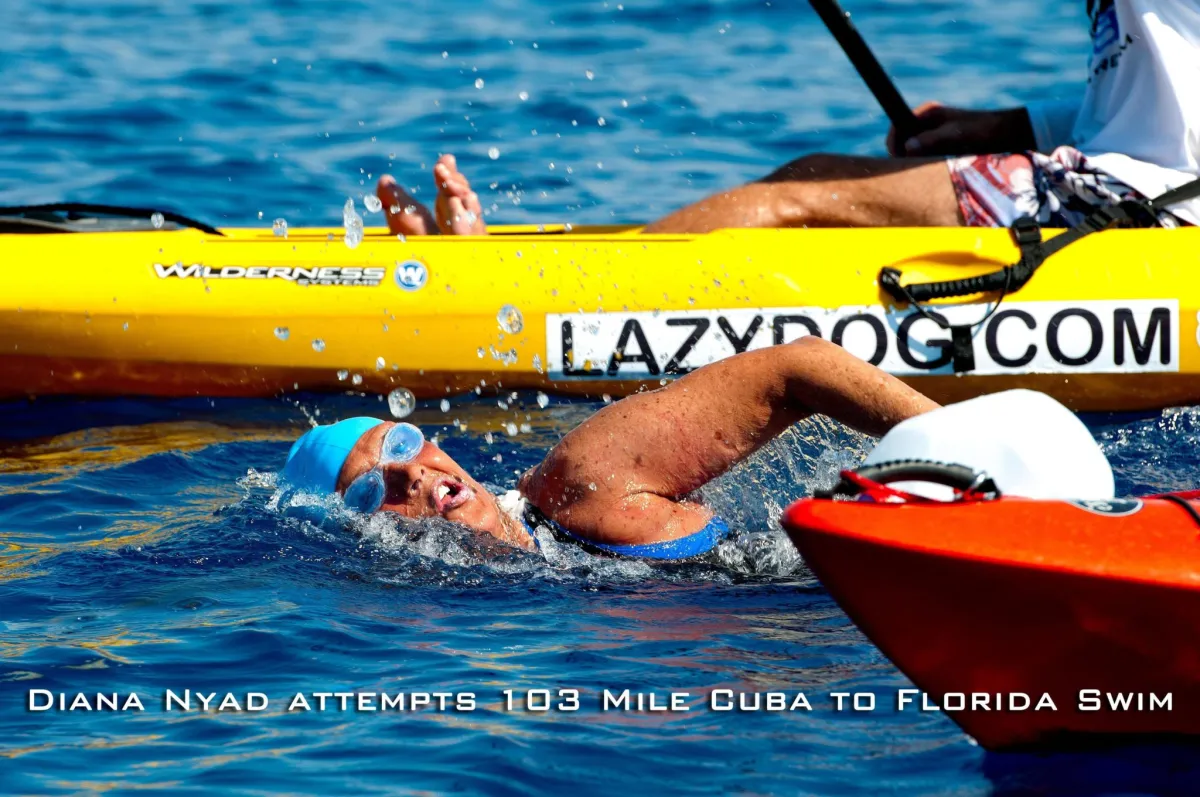 Photo: Diana Nyad, via swimswam.com
Her 53-hour journey through shark and jellyfish-infested waters demonstrated that mental toughness — developed over decades of life experience — could be more valuable than youthful physical advantages.
"You're never too old to chase your dreams," Nyad famously declared upon reaching Key West. Her achievement sparked research into ultra-endurance performance among older athletes.
6. George Foreman: The Heavyweight Champion at 45
George Foreman's knockout victory over Michael Moorer in 1994 made him the oldest heavyweight champion in boxing history at age 45. Twenty years after his first title reign, Foreman proved that power could be preserved and even enhanced through experience.
Foreman's second career was built on patience and precision rather than the aggressive style of his youth. He learned to conserve energy, pick his spots, and deliver devastating punches with maximum efficiency.
His victory inspired countless older athletes to consider comebacks and challenged ageist assumptions across professional sports.
7. Martina Navratilova: Tennis Excellence at 49
Martina Navratilova's mixed doubles victory at the 2006 U.S. Open, at age 49, capped one of the most remarkable careers in tennis history. Her longevity stemmed from constant evolution, adapting her game as her physical abilities changed.
Navratilova pioneered fitness training in tennis, understanding that superior conditioning could extend careers. Her late-career success proved that tactical intelligence and court awareness could compensate for decreased speed and power.
The Science Behind Late Bloomers
Recent research in sports science validates what these athletes discovered through experience. Studies show that while raw physical capacity peaks in the twenties, other crucial performance factors — decision-making, pain tolerance, strategic thinking, and emotional regulation — continue improving well into middle age.
Dr. Bradley Young, a researcher at the University of Ottawa, explains: "Older athletes develop what we call 'crystallized intelligence' — accumulated knowledge and skills that can offset declining physical capacity. They know their bodies better, make smarter decisions, and waste less energy."
Additionally, advances in training methods, nutrition, and recovery techniques have extended athletic primes. Modern athletes have access to tools and knowledge that allow them to maintain peak performance far longer than previous generations.
Redefining Athletic Prime Time
These seven athletes didn't just achieve late-career success — they redefined what athletic prime time looks like. Their achievements challenge ageist assumptions in sports and inspire older athletes to pursue ambitious goals.
More importantly, their stories demonstrate that peak performance isn't just about physical gifts. Intelligence, experience, and determination can be just as valuable as speed and strength. In a culture obsessed with youth, these athletes proved that sometimes, the best really is yet to come.