From Library Cards to Match Points: The Quiet Kid Who Terrorized Tennis

The Sound of Silence on Court Seven
The first thing you noticed about Marcus Chen wasn't his backhand — though it would eventually be compared to a whip crack by Sports Illustrated. It wasn't his serve, despite clocking 135 mph by age seventeen. It was how quiet he was between points, standing perfectly still while his opponents paced, argued with line judges, or smashed rackets in frustration.
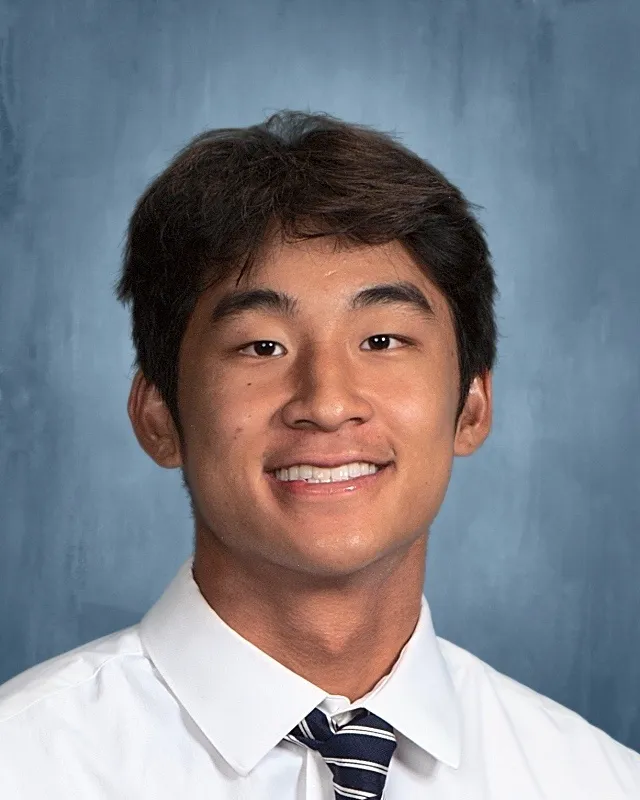 Photo: Marcus Chen, via theloyalist.org
That silence came from somewhere specific: thousands of hours spent in the Lincoln Public Library, where his mother worked the evening shift and where Marcus discovered that tennis, unlike most sports, could be understood as much through books as through practice.
 Photo: Lincoln Public Library, via images.squarespace-cdn.com
The Wrong Side of the Net
In 1987, American tennis looked like a country club catalog. The junior circuit ran through private academies in Florida and California, where parents paid $50,000 a year for their kids to hit with former pros on perfect courts. Marcus Chen's tennis education cost exactly $47.50 — the price of a used racket from a garage sale and a library card that was already free.
His mother, Linda, had emigrated from Taiwan with a nursing degree that American hospitals wouldn't recognize. The library job paid $8.50 an hour and came with one unexpected perk: after closing time, Marcus could spread tennis books across the reading tables and study the game like it was calculus.
"Other kids had coaches," Marcus remembers. "I had Vic Braden's Tennis for the Future and a VHS copy of the 1984 French Open that someone donated. I watched McEnroe's serve frame by frame until I could see things the announcers missed."
The local parks department had built one public tennis court behind the community center in 1973. By the time Marcus found it in 1989, the net sagged like a hammock and the baseline paint had faded to suggestions. But it was free, and it was his.
The Science of Winning
While his future competitors were learning proper form at summer camps, Marcus was teaching himself the mental game through sports psychology texts. He discovered that tennis anxiety spiked between points, so he developed rituals to stay calm. He learned that most junior players couldn't handle pace changes, so he practiced hitting soft shots that died just over the net.
Most importantly, he figured out something that would define his entire career: tennis wasn't about hitting perfect shots. It was about hitting shots that made your opponent hit imperfect ones.
"The books taught me that tennis is chess with a yellow ball," he says. "Every shot is setting up the shot after that. Most players think three shots ahead. I was thinking seven."
By age fifteen, Marcus was practicing six hours a day — two hours on court, four hours studying video and strategy. He'd convinced the local high school to let him use their courts after practice, and he'd found hitting partners through a bulletin board posting: "Free tennis lessons in exchange for practice time."
Breaking Through the Gates
Marcus's first real tournament was the Nebraska State Junior Championships. He rode a Greyhound bus four hours to Omaha, carrying his one racket and a grocery bag lunch. The other kids arrived in SUVs with bags full of equipment and parents who looked like they'd stepped off a yacht.
"I remember walking onto that court and feeling like I was trespassing," Marcus recalls. "Everyone was staring at my shoes — they were basketball shoes because I couldn't afford tennis shoes. My opponent asked if I was sure I was in the right place."
Marcus won that match 6-1, 6-0. Then he won his next match. And the next. By the semifinals, word had spread about the quiet kid from Lincoln who hit shots that seemed to defy physics.
The final was against Tommy Richfield, whose family had spent more on tennis lessons that year than Marcus's mother made at the library. The local newspaper called it "David versus Goliath with rackets."
Marcus won 6-4, 6-2, and the tennis establishment took notice for all the wrong reasons.
The Outsider's Edge
Coaches from elite academies offered Marcus scholarships, but they came with conditions: he'd have to unlearn everything he'd taught himself and start over with "proper" technique. Marcus turned them all down.
"They wanted to fix me," he explains. "But I wasn't broken. I was different, and different was working."
Instead, Marcus accepted a partial scholarship to a small college in Kansas that promised to let him keep his unorthodox style. Over four years, he lost exactly seven matches — all to players who would go on to win professional tournaments.
By his senior year, Marcus was ranked third in college tennis despite never having taken a formal lesson. Tennis Magazine called him "the most dangerous player nobody's heard of."
The Professional Breakthrough
Marcus turned professional in 1996, when American tennis was dominated by players with household names and million-dollar endorsement deals. He had neither, but he had something else: a game that no one knew how to prepare for.
His serve looked wrong but was unreturnable. His forehand violated every coaching manual but won points. Most unsettling of all, he never seemed rattled, never showed emotion, never gave opponents any psychological opening to exploit.
"Playing Marcus was like playing a computer," said former world No. 12 Brad Gilbert. "He'd find your weakness in the first set and then exploit it for three hours without mercy. It was surgical."
Marcus reached his first Grand Slam semifinal at the 1998 US Open, where he lost to Pete Sampras in straight sets. But the loss felt like a victory — he'd proved that a library card and a public court could take you as far as any academy.
 Photo: US Open, via media.bleacherreport.com
The Quiet Revolution
Marcus Chen never won a Grand Slam, but he did something more important: he proved that tennis excellence could come from anywhere. His success inspired a generation of players from non-traditional backgrounds to pick up rackets and dream big.
Today, Marcus runs a tennis program in inner-city Detroit, teaching kids on courts that look a lot like the one where he learned to play. The program is free, and the only requirement is curiosity.
"Tennis tried to keep me out because I didn't fit their idea of what a champion looks like," Marcus says. "Now I make sure no kid gets that message. Champions don't come from country clubs. They come from anywhere someone's willing to work."
The quiet kid from the library proved that the most dangerous opponent is often the one nobody expects — and sometimes the best revenge is simply refusing to be what others think you should be.