The Gymnast Who Heard Nothing and Changed Everything: When Silence Became Strength
The Gym Where Sound Didn't Matter
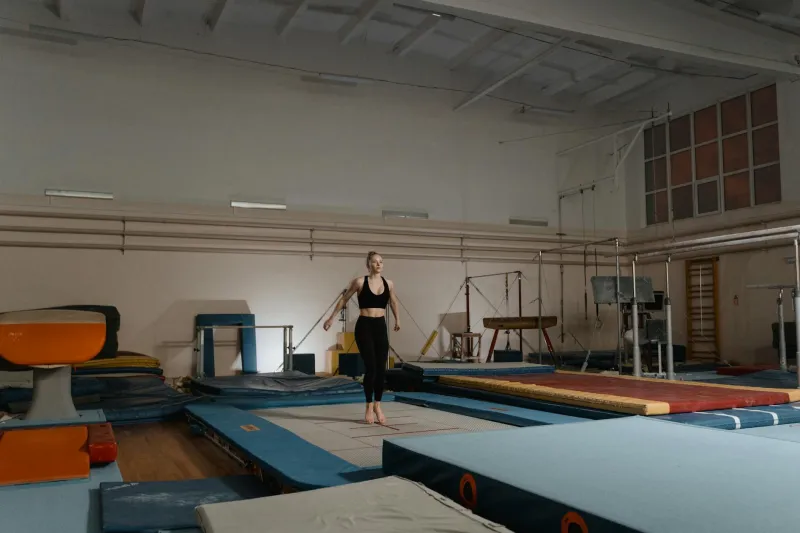
The first thing Shannon Martinez's coach learned was to stop yelling. In the cramped gymnasium of Riverside Community Center in Bakersfield, California, where the equipment was secondhand and the floor mats were held together with duct tape, Shannon couldn't hear instructions shouted from across the room. She couldn't hear the music that other gymnasts used to time their floor routines. She couldn't hear the crowd's gasps when she stuck a perfect landing.
 Photo: Riverside Community Center, via ir.4sqi.net
What Shannon could do was feel every vibration through the floor, sense every shift in air pressure, and develop an internal metronome so precise that it would eventually make her the most consistent gymnast in American junior competition.
Born profoundly deaf, Shannon had been using hearing aids since age three, but they only provided muffled approximations of sound. In the gymnasium, with its echoing acoustics and constant background noise, even those approximations disappeared. Shannon's world of gymnastics was completely silent.
"At first, I thought it was a huge disadvantage," Shannon recalls through an interpreter. "Everyone else could hear the music, hear their coaches, hear when they were supposed to start their routines. I had to figure out a different way to do everything."
That different way would revolutionize how she approached the sport.
Learning to Move in Silence
Shannon started gymnastics at age six, drawn to the sport by the pure physicality of movement. Her mother, Carmen, had enrolled her hoping that gymnastics might help Shannon develop better balance and coordination. Neither of them expected Shannon to fall in love with flying through the air.
Her first coach, Maria Santos, had never worked with a deaf athlete before. Traditional coaching methods — shouting corrections during routines, calling out timing cues, providing immediate verbal feedback — were useless with Shannon.
"We had to completely reimagine how to teach gymnastics," Maria remembers. "With Shannon, everything had to be visual and physical. I couldn't tell her what to do; I had to show her, and then help her feel it in her body."
This hands-on approach had an unexpected benefit. While other young gymnasts relied on external cues and constant coaching feedback, Shannon developed an extraordinary internal awareness of her body position, timing, and movement quality. She learned to sense when a skill was right not by hearing confirmation, but by feeling it in her muscles and joints.
The Metronome in Her Mind
The biggest challenge came with floor exercise, where gymnasts traditionally choreograph their tumbling passes and dance elements to music. Shannon couldn't hear the beats that guided other gymnasts' timing, but she discovered something better: she could create her own perfect internal rhythm.
Working with Maria, Shannon developed a system of counting that was based on breath and heartbeat rather than musical beats. She would feel the vibrations of the music through the floor, but more importantly, she learned to generate consistent timing from within her own body.
"Shannon's internal clock was incredible," says former teammate Jessica Wong. "The rest of us would speed up when we got nervous, or slow down when we got tired. Shannon's timing never changed. It was like she had a metronome built into her nervous system."
This consistency became Shannon's signature. While other gymnasts' routines varied slightly from performance to performance, Shannon's were identical down to the millisecond. Judges began to notice that they could set their watches by her routines.
Breaking Through the Noise
By age twelve, Shannon was dominating regional competitions, but the gymnastics establishment wasn't sure what to make of her. Some coaches questioned whether a deaf gymnast could compete safely at higher levels, where split-second timing and precise coordination with coaches were supposedly essential.
Those doubts disappeared at the 2018 Junior Olympic National Championships in Salt Lake City. Shannon, now fourteen, was competing against the best young gymnasts in the country, many of whom trained at elite academies with world-class facilities.
 Photo: Salt Lake City, via image.shutterstock.com
In the preliminaries, Shannon posted the highest floor exercise score of the day. Her routine — performed to music she couldn't hear, in front of a crowd whose cheers she couldn't hear — was technically flawless and artistically stunning. More importantly, it was exactly the same routine she'd performed hundreds of times in her small-town gym.
"Watching Shannon compete was mesmerizing," says former Olympic champion Shannon Miller, who was commentating the event. "While other girls were clearly affected by the pressure and the noise, Shannon was in her own world. She had this incredible focus that you rarely see in gymnasts of any age."
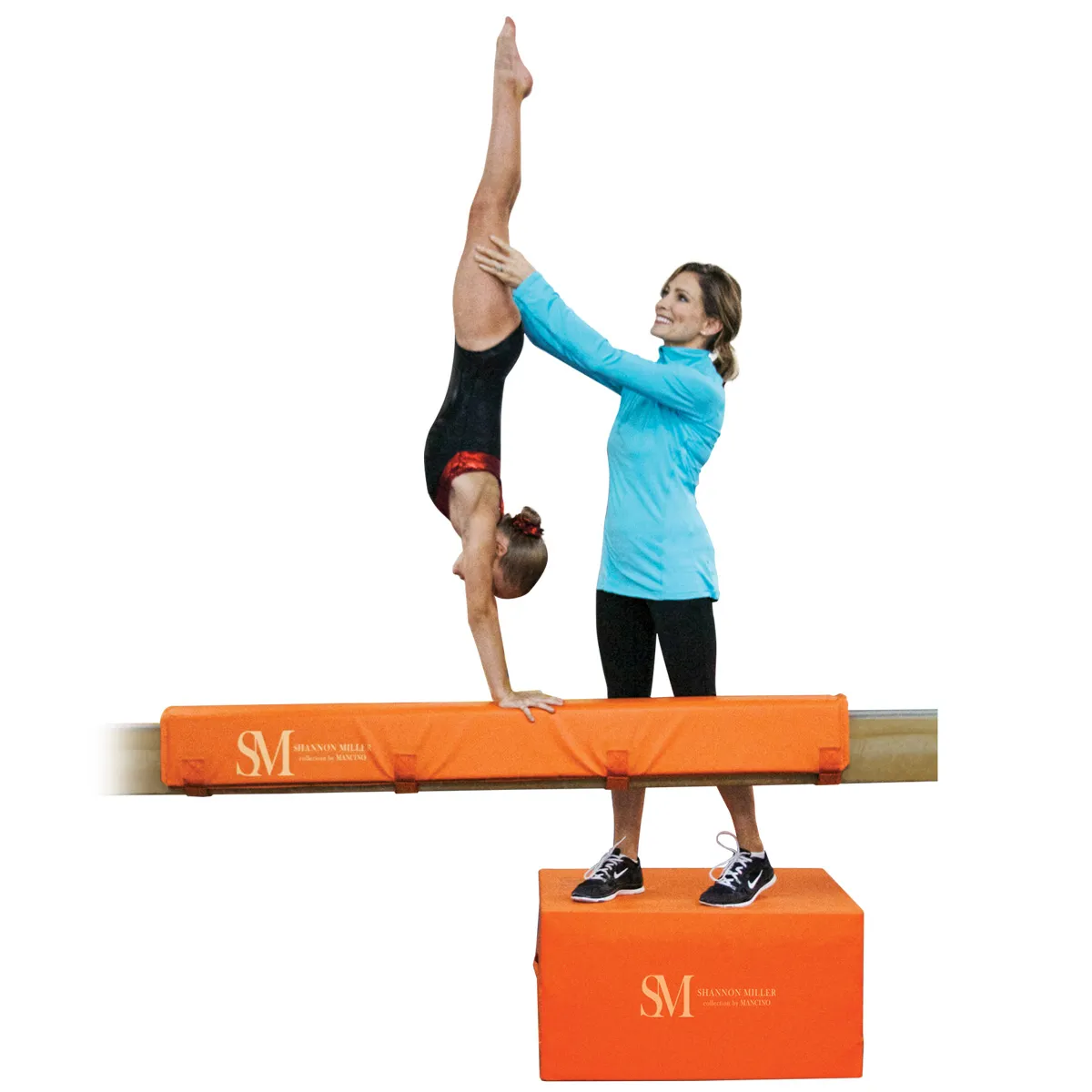 Photo: Shannon Miller, via www.mancinomats.com
Shannon won the junior all-around title, becoming the first deaf gymnast to claim a national championship in any category.
The Silence Advantage
What initially seemed like Shannon's greatest obstacle had become her secret weapon. In a sport where mental pressure often determines the difference between success and failure, Shannon's inability to hear crowd noise, competitor chatter, or coaching anxiety gave her an enormous advantage.
"Other gymnasts would get psyched out by the atmosphere at big competitions," explains sports psychologist Dr. Rebecca Chen. "Shannon was immune to all of that external noise. She competed in the same mental space whether she was in her home gym or at nationals."
Shannon's success also forced the gymnastics community to reconsider their assumptions about communication and coaching. Her coach Maria developed visual coaching techniques that proved so effective that hearing gymnasts began requesting similar training approaches.
"Shannon taught us that constant verbal feedback might actually be counterproductive," Maria explains. "Some of our best gymnasts improved dramatically when we reduced the talking and focused on helping them develop better internal awareness."
Changing the Conversation
Shannon's breakthrough year came in 2019, when she was selected for the U.S. junior national team. The selection sparked controversy — some argued that communication barriers would make her a liability in team competitions.
Shannon's response was to post the most consistent scores of any team member throughout the entire season. At the Junior Pan American Championships in Brazil, she anchored the team's floor exercise lineup, delivering a clutch performance that secured the gold medal.
"Having Shannon on the team actually made us all better," says teammate Morgan Davis. "She showed us what real focus looked like. While we were getting distracted by everything around us, Shannon was just doing her job, perfectly, every single time."
The international gymnastics community took notice. Shannon's success inspired programs for deaf athletes in several countries and led to new research on the role of internal timing in elite athletic performance.
The Sound of Success
Today, Shannon trains at a elite facility in Colorado, working toward a spot on the senior national team. She's developed her own coaching certification program, teaching other coaches how to work with deaf athletes and how to help all gymnasts develop better internal awareness.
Her impact extends beyond gymnastics. Shannon has become a powerful advocate for deaf athletes in all sports, arguing that accessibility isn't about accommodation — it's about recognizing that different approaches can lead to superior performance.
"People always ask me if I wish I could hear," Shannon says. "But I think I might actually have an advantage. I learned to trust my body completely, to develop perfect timing from within, to focus without distraction. Those aren't disabilities — those are superpowers."
Redefining What's Possible
Shannon Martinez's story challenges fundamental assumptions about athletic performance and communication. In a sport that traditionally relied heavily on verbal instruction and musical timing, she proved that silence could be a source of strength rather than limitation.
Her success has opened doors for other deaf athletes and forced coaches to develop more effective training methods. But perhaps most importantly, Shannon has shown that the qualities that make someone different — the very characteristics that others might see as disadvantages — can become the foundation for extraordinary achievement.
In the end, Shannon Martinez didn't overcome her deafness to become a champion gymnast. She became a champion gymnast because of it, proving that sometimes the most powerful sound in sports is the sound of silence.