The Man Who Cleaned the Lab and Cracked the Case: A Janitor's Accidental Medical Discovery
The first thing you need to understand about Emanuel Vega is that he was very good at his job. Not in the way that gets written up in performance reviews or celebrated at company all-hands meetings. Good in the quiet, invisible way that keeps institutions functioning without anyone ever thinking too hard about why.
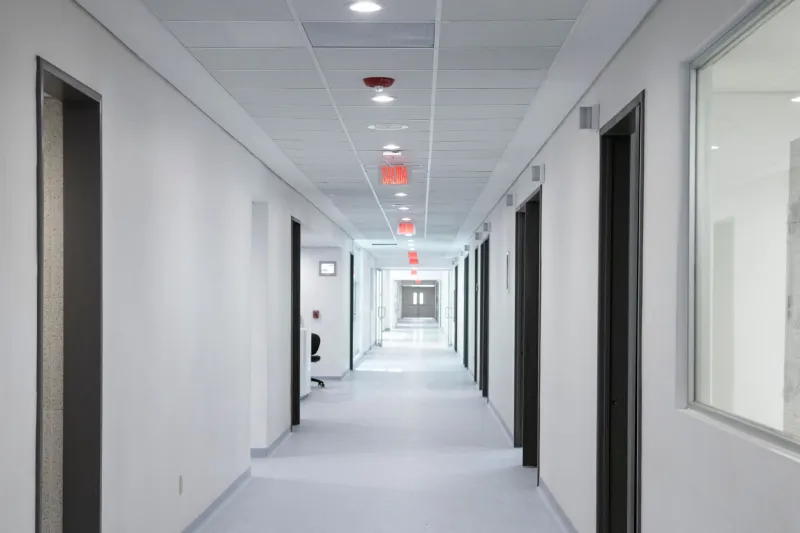
For eleven years, Vega worked the overnight shift at a mid-sized regional hospital in the American Southwest, cleaning the research wing and the adjacent clinical labs. He emptied the biohazard bins. He mopped the hallways. He restocked the supply closets. He did all of this between the hours of ten at night and six in the morning, in a building that was mostly empty, watched mostly by no one.
And then, in the winter of 2009, he noticed something that would take a hospital infection control team eighteen months to fully understand — and that would eventually change the facility's protocols in ways that are still in use today.
The Education That Happens After Hours
Vega had emigrated from Oaxaca, Mexico, in the early 1990s and spent his first years in the United States doing the work that was available: construction, kitchen labor, landscaping. He landed the hospital job in 1998 through a staffing agency and stayed because the hours suited him — he could be home before his kids left for school — and because the work, strange as it sounds, interested him.
He was not a scientist. He had completed secondary school in Mexico and had no formal education beyond that. But he was, by every account of the people who eventually came to know him, a person of considerable intellectual curiosity. He read constantly during his breaks — library books, mostly, whatever was available in Spanish and later, as his English improved, in English too. He had a habit of asking questions that people around him found slightly surprising coming from the guy with the mop.
He also paid attention. Relentlessly, systematically, in the way that people who work alone in quiet buildings sometimes do.
What Everyone Else Walked Past
The problem Vega stumbled onto was a contamination issue — specifically, a recurring pattern of bacterial infections in post-surgical patients that the hospital's infection control team had been investigating, with limited success, for the better part of two years.
The team had looked at surgical instruments. They had reviewed sterilization protocols. They had audited hand-washing compliance, examined air filtration systems, and interviewed dozens of clinical staff. They had found nothing definitive.
Vega, cleaning the same corridors night after night, had noticed something different. He had observed that a specific cart — used to transport sterile supplies from the central processing area to the surgical suites — was being parked, routinely and without apparent thought, in a particular alcove near a ventilation return. The cart's contents were covered, but the covering was loose. The ventilation return, Vega had noticed, was the one unit in the wing that he was instructed to clean less frequently because it required a specialist to access safely.
He didn't know the microbiology. He couldn't have told you the name of the pathogen or the mechanism of transmission. But he knew, from eleven years of moving through that building in the dark, that the cart was always there, the vent was always dirty, and the infections had started around the time a facilities renovation had rerouted the ventilation flow through that section of the corridor.
He mentioned it to his supervisor. His supervisor passed it along, somewhat skeptically, to the facilities manager. The facilities manager brought it to the infection control team, who had it checked mostly to close the loop.
The cultures came back positive.
The Part Where the Institution Has to Decide What to Do
This is where Vega's story gets interesting in a different way — not as a discovery narrative, but as an institutional one.
The hospital faced a quiet dilemma. The finding was significant. The contamination source, once identified, was addressed quickly: the cart was relocated, the ventilation unit was cleaned and placed on a regular maintenance schedule, and the infection cluster resolved within weeks. The clinical outcome was unambiguous.
But how do you credit a janitor in a formal infection control report? How do you acknowledge, in the language of institutional medicine, that an overnight cleaner with no scientific credentials had seen what two years of credentialed investigation had missed?
The hospital's initial inclination, by several accounts, was to document the discovery in procedural terms that didn't highlight how it had been made. The infection control team had, after all, conducted the definitive testing. The science was theirs. The observation had just been a tip.
It was the infection control team's lead physician — a woman named Dr. Patricia Howell, who had the institutional standing to push back — who insisted that the report accurately reflect Vega's role. She argued, in a staff meeting that apparently got heated, that failing to credit him wasn't just unfair. It was a missed opportunity to learn something important about how hospitals should be using the knowledge of the people who know their physical spaces best.
Vega was eventually formally recognized by the hospital's administration. He received a commendation, a modest financial award, and — perhaps more meaningfully — an invitation to participate in a newly formed facilities safety committee, where his observations about the physical environment of the hospital became a regular part of the infection control conversation.
What Invisible People See
Dr. Howell went on to write a paper, published in a hospital administration journal, about what she called "environmental knowledge gaps" — the systematic blind spots that emerge when the people who know a physical space most intimately are structurally excluded from the conversations happening inside it.
The argument she made was simple and, in retrospect, obvious: hospitals are complex physical environments that change constantly, and the people who move through every corner of those environments every single day, often when no one else is watching, accumulate observational knowledge that has genuine clinical value. Ignoring that knowledge isn't just wasteful. It's a patient safety issue.
The paper didn't make Vega famous. It didn't launch a national movement. But it circulated in infection control circles and contributed, in a modest way, to a growing conversation about how healthcare institutions involve environmental services staff in safety protocols.
Vega himself retired from the hospital in 2019, after twenty-one years. At his retirement party — the story goes — someone asked him what he thought the secret to his discovery had been.
He reportedly shrugged and said he just cleaned the same places every night and noticed when something didn't look right.
Which is, when you think about it, exactly what good science is supposed to do.