Saddlebags Full of Stories: The Woman Who Brought Books to the Hollows Nobody Else Would Enter
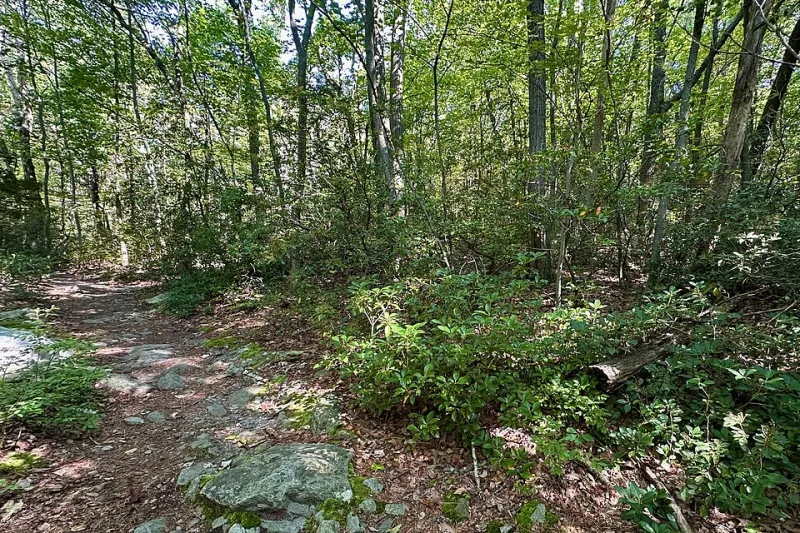
Photo: Zeete, CC BY-SA 4.0, via Wikimedia Commons
The roads didn't go there. That was the point. The whole reason eastern Kentucky's mountain communities had been left out of just about every New Deal program, every rural electrification effort, every public health initiative — was that the roads didn't go there, and building them wasn't worth the cost. The creeks flooded in spring. The ridge trails turned to mud in November. The communities tucked into those hollows were, from the perspective of official America, inconveniently located and therefore conveniently ignored.
Eula Grace Combs did not own a car. She owned a mule named Patience, which turned out to be an appropriate name for the animal and an accurate description of the woman who rode her.
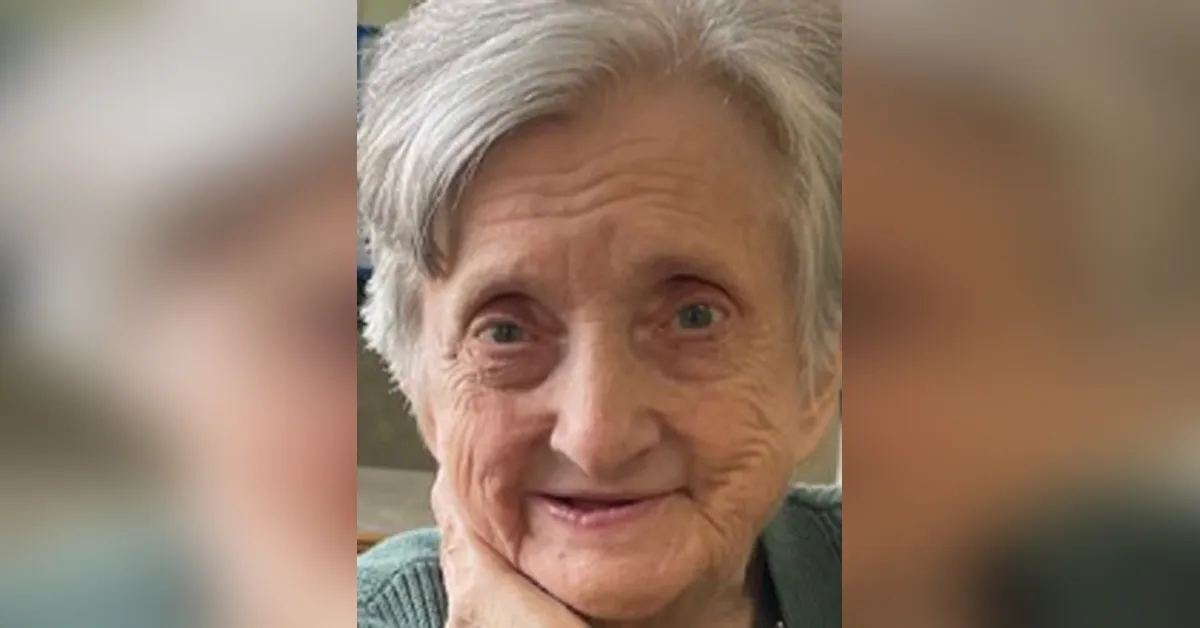 Photo: Eula Grace Combs, via d1q40j6jx1d8h6.cloudfront.net
The Program That Rode In
The Pack Horse Library Project was a creation of the Works Progress Administration, launched in Kentucky in 1935 as part of Roosevelt's effort to put unemployed workers — mostly women, in this case — to work doing something useful. The idea was straightforward: take books and magazines to rural communities that had no access to public libraries. The execution was anything but. The terrain of eastern Kentucky's Appalachian counties was some of the most rugged in the continental United States, and the only reliable way to cover it was on horseback or muleback, one hollow at a time.
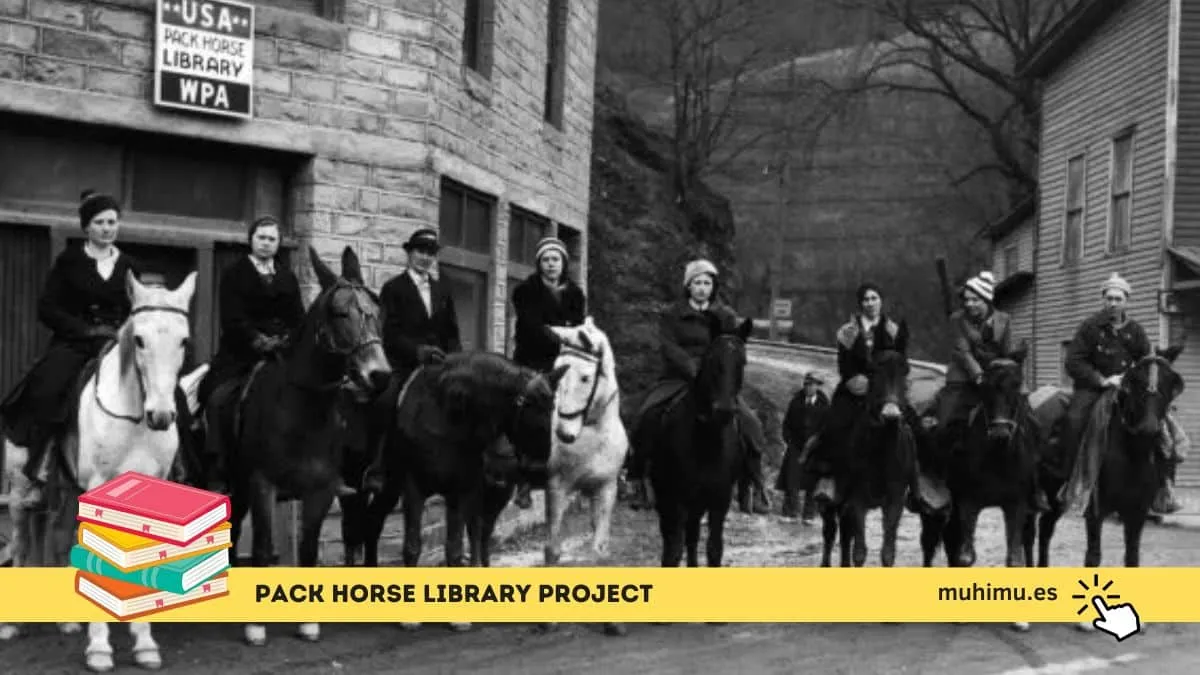 Photo: Pack Horse Library Project, via muhimu.es
Eula Grace Combs took the job because she needed the income — the program paid a small weekly stipend — and because, by her own later account, she couldn't stand the thought of children going without books. She had grown up in Letcher County with a fierce, almost physical relationship with reading. Books had been scarce in her own childhood, passed around and worn to fragments before anyone thought of replacing them. The idea that there were families up in the hollows who had never owned a single volume of anything struck her as a wrong she had the capacity to help right.
She was assigned a route that covered roughly five hundred square miles of Knott and Letcher counties. She rode it, twice a week, for nearly a decade.
What She Carried
The saddlebags held whatever she could gather. The Pack Horse Library Project operated largely on donations — old magazines, outdated almanacs, discarded schoolbooks, church hymnals, adventure novels with broken spines. Combs supplemented the official collection by soliciting donations from churches, schools, and neighbors, and by writing letters to publishing houses and civic organizations in Lexington and Louisville asking for anything they could spare.
She developed a precise knowledge of her patrons' tastes and needs. The Cornett family up Defeated Creek wanted farming guides and anything with photographs. Old man Sexton at the top of Carr Fork couldn't read himself but liked to have someone leave picture magazines so his grandchildren would have something to look at. The schoolteacher at the one-room school near Isom had been asking for months for a proper grammar textbook, and Combs eventually tracked one down through a contact at a Hazard church.
She kept mental notes on all of it. There was no catalog system, no circulation database, no formal record of who had what. There was Eula Grace Combs and what she remembered, which turned out to be considerable.
"She knew every family on that route," recalled one of her former patrons, interviewed decades later by a regional oral history project. "She knew what you'd finished and what you hadn't. She'd take back a book and hand you the next one before you even asked. It was like having a librarian who lived inside your head."
The Weight of the Work
Nobody romanticized the job while it was happening. The trails were dangerous in ways that compounded seasonally — ice in winter, floods in spring, the constant possibility of a horse losing footing on a switchback above a creek that didn't care about your cargo. Combs was thrown twice in her first year. She broke a wrist on one occasion and rode the rest of her route anyway, the books wrapped in oilcloth to keep them dry in the rain.
The pay was minimal. The recognition was nonexistent. The WPA's Pack Horse Library Project was one of those New Deal programs that did genuine good in obscure places and received almost no national press coverage because the people it served didn't have political constituencies anyone in Washington was paying attention to.
Combs didn't appear to mind the obscurity. She was not, by the accounts of people who knew her, someone who required an audience. She was someone who required a purpose, and she had found one that fit the shape of her particular stubbornness.
What Those Books Did
The harder question — the one that historians and educators have returned to repeatedly in the decades since the Pack Horse Library Project ended in 1943 — is what, exactly, those books accomplished. Did a tattered copy of Robinson Crusoe delivered by mule to a hollow in Knott County actually change anything?
The evidence suggests it did. Researchers who conducted oral history interviews with former patrons in the 1980s and 1990s documented a striking pattern: an unusual number of people who grew up in communities served by Pack Horse librarians described books as the catalyst for ambitions they otherwise wouldn't have had. Teachers who became the first in their families to attend college. A doctor who said the medical encyclopedia the librarian left at his family's cabin was the first time he understood that the human body could be known, studied, mapped. A woman who became a journalist in Cincinnati who traced her career to a donated copy of a newspaper that a librarian had tucked into the saddlebag as an afterthought.
None of these outcomes were planned. No one designed the Pack Horse Library Project to produce doctors or journalists or college graduates. It was designed to put unemployed women to work and give isolated communities access to print materials. The transformation that followed was an accident of literacy — what happens when you give curious people something to be curious about.
The Library That Never Had Walls
The Pack Horse Library Project ended when federal funding shifted toward World War II priorities. Eula Grace Combs returned to private life in Letcher County, eventually working as a seamstress and later as a school aide. She gave few interviews and left no memoir. The mule named Patience was sold.
What remained was harder to measure and more durable than any building. In the communities she served, reading had become a habit where it hadn't been one before. Parents who had received books from her saddlebags made sure their children had books too. The chain of literacy she helped establish in those hollows didn't stop when the program did.
Eula Grace Combs carried a library on her back through some of the most unforgiving terrain in America because she believed that people in difficult places deserved access to the same ideas as everyone else. She wasn't building a legacy. She was doing a job that needed doing, in a place no one else wanted to go, on an animal patient enough to take her there.
The hollows remembered her long after official America forgot the program existed. That's usually how it works with the people who show up when everyone else has already decided the road isn't worth building.