The Man the System Threw Away — Who Taught America How to Run

Photo: Prokudin-Gorskii-51.jpg: Sergei Mikhailovich Prokudin-Gorskii, digital rendering for the Library of Congress by Walter Frankhauser / WalterStudio derivative work: Serouj (talk), Public domain, via Wikimedia Commons
A Boy the System Kept
The records from the reform schools of the early twentieth century are sparse, bureaucratic, and largely indifferent to the children they document. Names, dates, infractions. The occasional note about work assignment or behavioral improvement. What they almost never capture is what a child was thinking.
In those thin files, you wouldn't find much to suggest that a particular young man cycling through the juvenile detention facilities of the industrial Midwest would one day reshape how American athletes trained for the longest, most punishing races in the sport. The system that held him saw a problem to be managed, not a mind to be developed.
It was wrong about that. Catastrophically, fortunately wrong.
What Running Looked Like Before He Arrived
To understand what made figures like Clarence DeMar and the coaches who shaped early American marathon culture so remarkable, you have to understand what long-distance training looked like at the turn of the twentieth century.
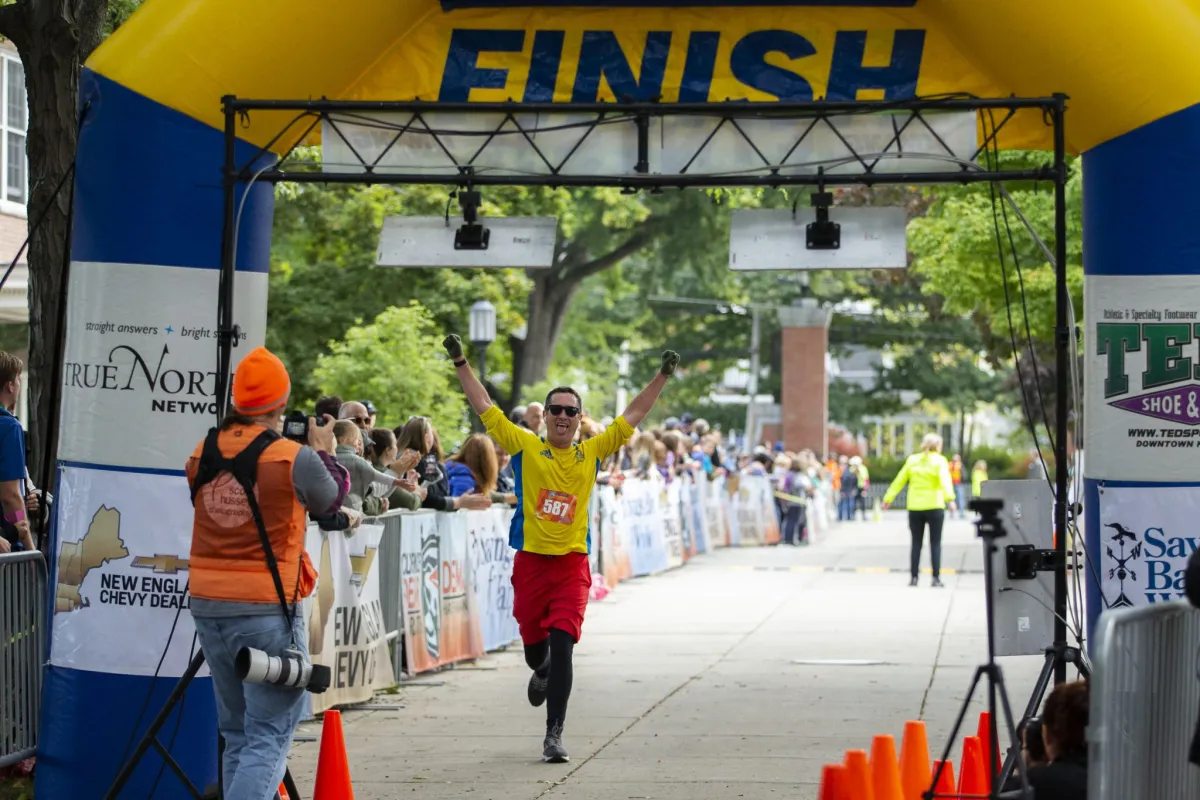 Photo: Clarence DeMar, via kscequinox.com
It looked, mostly, like guesswork dressed up in authority.
The dominant theory of athletic training in the late 1800s and early 1900s held that the human body had a fixed reservoir of vital energy — a tank, essentially — and that depleting it through excessive training would leave an athlete weakened and broken. Rest was considered as important as work, sometimes more so. Long training runs were viewed with suspicion. The idea that you could systematically build aerobic capacity through progressive overload — the foundational principle of modern endurance coaching — was not just unproven; it was actively contradicted by the most respected voices in sports medicine.
Coaches who came up through formal athletic programs absorbed these ideas as gospel. The institutions that trained them passed the assumptions down intact.
An outsider, working from observation rather than doctrine, might see things differently.
The Education You Don't Get in School
The young men who passed through reform schools and labor camps in industrial America between 1900 and 1920 received a particular kind of education. Not academic — the facilities were rarely interested in that — but physical and observational. You learned to read people quickly. You learned which rules bent and which didn't. You learned, above all, how bodies worked under sustained stress, because sustained stress was the primary condition of your existence.
For a young man drawn to running — and the open road offered something that institutional walls couldn't, a sensation of movement and autonomy that was genuinely intoxicating after years of confinement — this background produced a distinctive way of watching athletic performance.
He wasn't measuring against textbook ideals. He was measuring against what he'd seen with his own eyes: what happened to bodies that worked hard every day, that pushed through fatigue rather than stopping at its first appearance, that adapted over weeks and months to demands that would have been impossible at the start.
This was empirical coaching before anyone called it that.
Reading the Body Like a Map
The training methods that emerged from this observational tradition shared several features that set them apart from the consensus of the era.
First, volume. Where orthodox coaching limited long training runs out of fear of depleting the athlete's vital reserves, the outsider approach pushed mileage higher — not recklessly, but progressively, adding distance in small increments and watching how the body responded over weeks rather than days.
Second, specificity. Coaches trained in formal athletic programs often applied the same general conditioning principles to all their athletes regardless of event. The outsider approach recognized that the marathon demanded something categorically different from shorter races — not just more endurance, but a different relationship between effort and pace, a trained ability to sustain uncomfortable output for durations that shorter-distance training never approached.
Third, and perhaps most importantly, the outsider coaches trusted what they saw over what they'd been told. When an athlete's body responded well to a training load that the textbooks said was excessive, the outsider coach increased the load. When rest produced visible deterioration in performance, the outsider coach reduced it. The athlete's actual response was the data, not the theory.
This sounds obvious now. In 1910, it was radical.
The Marathons That Proved the Point
The Boston Marathon, which began in 1897, became a kind of proving ground for American long-distance coaching philosophy. In its early decades, the race was dominated by runners from working-class and immigrant backgrounds — men who had often trained themselves or worked with coaches outside the formal athletic establishment.
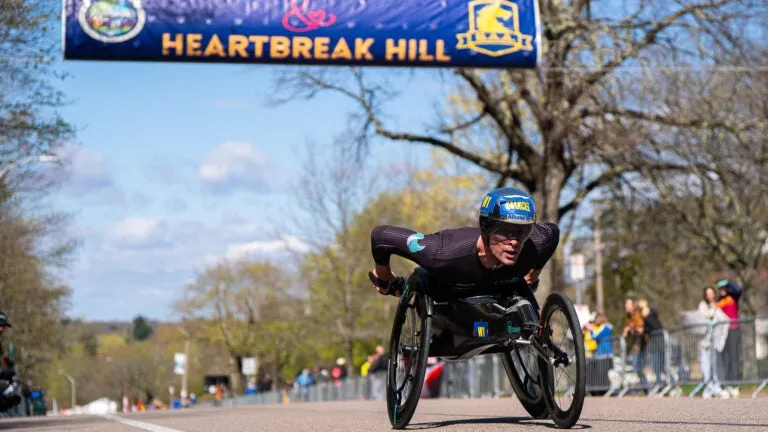 Photo: Boston Marathon, via bdc2020.o0bc.com
Clarence DeMar, who won Boston seven times between 1911 and 1930, trained with a volume and intensity that horrified the medical establishment. A doctor famously told him his heart was too damaged for competitive running and that continuing to race would kill him. DeMar ran for another two decades. His autopsy, conducted in 1958, revealed a cardiovascular system that was, if anything, exceptionally well-developed — the arteries notably larger and more elastic than average.
The doctors had been measuring against a theory. DeMar had been measuring against his body.
The coaching lineages that produced American marathon success in the mid-twentieth century drew heavily on this tradition — the accumulated, passed-down wisdom of men who had learned to coach by watching rather than by studying, whose outsider status had freed them from the assumptions that constrained their credentialed counterparts.
What Institutions Couldn't Teach
There is something almost poetically appropriate about the fact that the reform schools and labor camps that failed these young men so completely ended up, indirectly, contributing to their most important work.
The institutions that held them were built on a theory of human potential that was, in its own way, as limited as the sporting medicine of the era. Both assumed a fixed capacity. Both were wrong.
A boy thrown into the juvenile detention system of 1905 was not, in the eyes of that system, a future architect of athletic excellence. He was a problem. A managed liability. Someone to be processed and released and, with luck, forgotten.
The irony is that the very conditions of that processing — the physical hardship, the enforced observation, the complete absence of received wisdom about how things were supposed to work — produced exactly the kind of mind that could see past the received wisdom in sport.
The Invisible Curriculum
America has a long tradition of credentialing expertise and then being surprised when the uncredentialed do it better. We build institutions to transmit knowledge and then discover, repeatedly, that the people outside those institutions are sometimes the only ones free enough to generate new knowledge.
The reform school graduate who watched bodies under stress and drew his own conclusions wasn't working against the system. He simply wasn't working within it — and that turned out to be the only position from which the truth was visible.
Long-distance running is a sport built on discomfort, on the willingness to stay in difficult conditions longer than feels reasonable. It makes a certain sense that the people who understood it best were the ones who had been living that way since before they ever laced up a pair of shoes.
They didn't need a theory of endurance. They already knew what it felt like.