Overnight Success, Sixty Years in the Making: Five Americans Who Bloomed When No One Was Watching
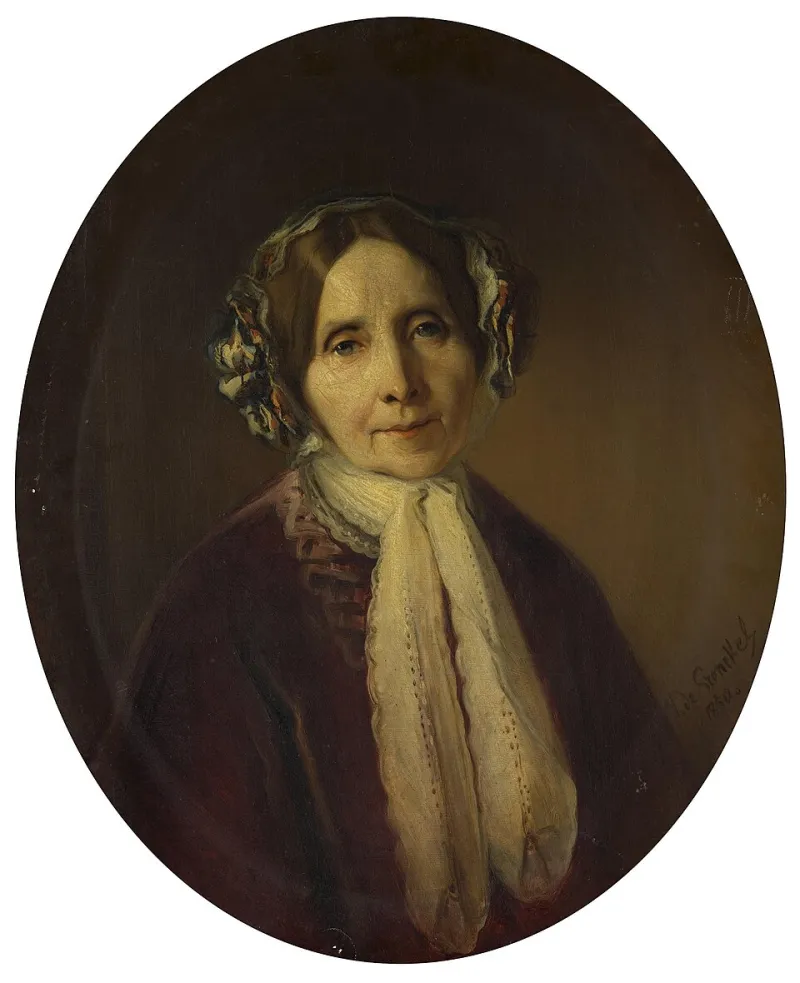
Photo: Vital Jean De Gronckel, Public domain, via Wikimedia Commons
American culture has a soft spot for the young and the early. We put prodigies on magazine covers, we mint thirty-under-thirty lists, and we treat sixty as the checkout line. History, though, keeps filing objections. Some of the most beloved figures in American life spent decades being told they were finished — and then got started.
The Farm Wife Who Out-Painted the Moderns
Anna Mary Robertson Moses ran farms, raised five children, and made butter the neighbors swore by. Art entered her life as needlework — until arthritis turned embroidery into torture in her seventies. So she swapped the needle for a brush and painted what she knew: barn raisings, sugaring-off days, snow settling on the fields. A collector spotted her canvases in a drugstore window in Hoosick Falls, New York, when she was seventy-eight. By eighty she had a solo show. By ninety-three she was on the cover of Time. Before she died at 101, “Grandma Moses” had produced more than a thousand works and become one of the most famous painters in America — while critics were still arguing about where to file her.
The Colonel Who Outran the Interstate
Harland Sanders had held more jobs than most people have opinions — farmhand, streetcar conductor, ferry operator, tire salesman — before landing on fried chicken at a service station in Corbin, Kentucky. For two decades the Sanders Court & Café hummed along. Then the new interstate bypassed his town, and at sixty-five he watched the business he'd built get auctioned off for a fraction of its worth. His response was to get in the car. Living on savings and a modest monthly check, he drove from restaurant to restaurant pitching his pressure-cooker chicken recipe, sleeping in the back seat, hearing no more times than the legend can count. The yeses added up: when he sold the company at seventy-three, hundreds of franchises were wearing his face — a face the world only got to know after most people retire.
The Prairie Was Just Research
Laura Ingalls Wilder spent her childhood being carried through the wilderness in a covered wagon, and her adulthood losing nearly everything — crops to drought and grasshoppers, a son in infancy, a house to fire, a farm to debt. She rebuilt, raised a daughter, and wrote a newspaper column about farm life through her forties and fifties. At sixty-five she published “Little House in the Big Woods.” The books made her famous, but here's the part that matters: she hadn't started late. She'd been gathering the material her whole life. The breakthrough wasn't a new career — it was the harvest of an old one. She died at ninety, three days after her birthday, with readers still asking for more.
The Milkshake Man Whose Empire Came in His Sixties
Ray Kroc sold paper cups for seventeen years, then milkshake machines for another long stretch, crisscrossing the country with a sample case and a bad back. At fifty-two he wandered onto a San Bernardino lot where two brothers ran a burger stand, and he saw the future. What people forget is the timeline: the buyout of the McDonald brothers happened when Kroc was sixty-one, the company's stock offering at sixty-three. The empire that bears his fingerprints was largely built in his sixties, one franchise at a time, by a man who had spent a lifetime being underestimated by everyone but himself.
The Teacher Who Wrote His Masterpiece After the Bell
Frank McCourt spent roughly thirty years teaching high school English in New York City, grading essays in the margins of other people's dreams. He had scribbled for years without breaking through. Then, at sixty-six, he published “Angela's Ashes” — the story of his Brooklyn birth and Limerick boyhood, of hunger and rain and a mother's stubborn love. The book sold by the millions and took the Pulitzer the following year, when McCourt was sixty-seven. Three decades of classrooms turned out to be the apprenticeship. The retirement was the launch.
No Expiration Date on the Dream
Line them up and a pattern appears. Not one of these five was discovered young. Each spent decades collecting skills, scars, and strange jobs that looked like dead ends from the inside and turned out to be ingredients. Retirement age, after all, is a payroll convention, not a prophecy. The next American classic — painting, franchise, novel, or otherwise — is probably being drafted right now by someone the culture has already stopped watching. Which is, historically, exactly when the improbable greats tend to show up.