Never Played, Always Won: The Outsiders Who Mastered the Games They Never Learned

The Paradox of Expertise
In American sports, we worship the player-turned-coach narrative. The former All-Star who translates championship experience into tactical genius. The retired veteran whose credibility comes from battle scars and highlight reels. It's such a compelling story that we rarely question whether it's actually true.
But scattered throughout sports history are coaches who never earned that credibility the traditional way—who never starred, never started, sometimes never even played at a competitive level. Yet they built dynasties, revolutionized strategies, and earned the respect of athletes who could have crushed them in any head-to-head competition.
These are their stories.
1. Bill Bowerman - Track and Field
Never Ran Competitively, Coached 31 Olympians
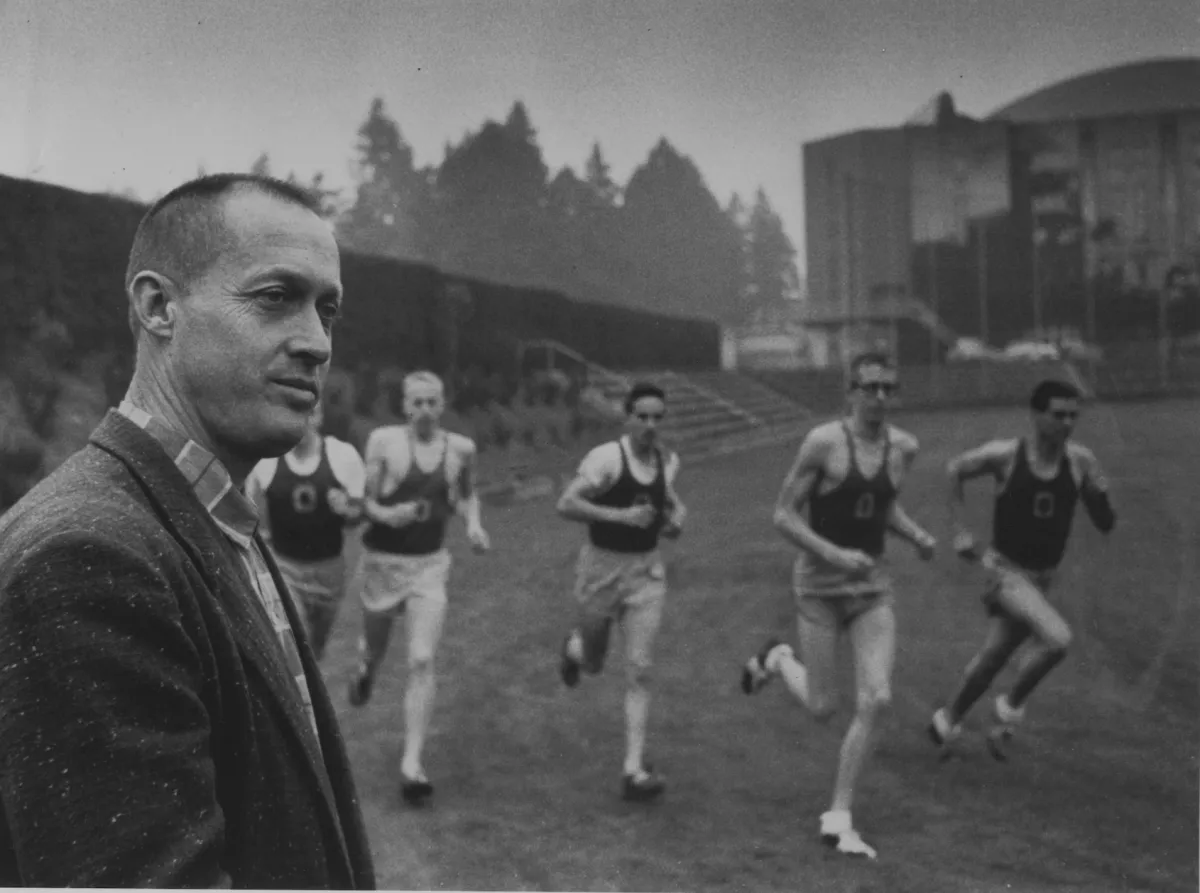 Photo: Bill Bowerman, via static.foxnews.com
Bill Bowerman's athletic career peaked in high school football, where he was adequate at best. He never ran track competitively, never competed in college athletics, and had no formal training in exercise physiology when he became the University of Oregon's track coach in 1949.
 Photo: University of Oregon, via i.forbesimg.com
What Bowerman possessed instead was an engineer's mind and an obsessive curiosity about human performance. While other coaches relied on traditional training methods passed down through generations of former athletes, Bowerman treated every workout like a scientific experiment.
He studied Finnish training techniques, corresponded with coaches from around the world, and constantly questioned why things were done certain ways. His athletes became willing test subjects in his pursuit of marginal gains—lighter shoes, better nutrition, more efficient running forms.
The results spoke louder than any playing resume ever could. In 24 years at Oregon, Bowerman's teams won four NCAA championships and produced 31 Olympic athletes, including Steve Prefontaine. More importantly, his innovations in training methodology and equipment design (he co-founded Nike) transformed how the entire sport approached athletic development.
Bowerman succeeded because his outsider perspective allowed him to see possibilities that traditional coaches, limited by their own playing experiences, might never have considered.
2. Joe Gibbs - Football
Never Played Beyond High School, Won Three Super Bowls
Joe Gibbs's football career ended at San Diego State, where he was a decent but unremarkable player. No professional opportunities, no all-conference honors, no legendary college moments that would later inspire locker room speeches.
Instead, Gibbs became obsessed with the intellectual side of football. He studied offensive systems with the intensity of a doctoral student, breaking down film until he understood not just what teams were doing, but why certain strategies succeeded or failed in specific situations.
When he became the Washington Redskins' head coach in 1981, Gibbs faced immediate skepticism. How could someone who had never experienced the pressure of professional football relate to elite athletes? How could he command respect in a locker room full of players whose athletic achievements dwarfed his own?
Gibbs answered those questions by building the most innovative offense in the NFL. His "one-back" formation revolutionized how teams used tight ends and running backs. His no-huddle system became a template that other coaches still study today.
More importantly, Gibbs proved that coaching excellence comes from preparation, strategic thinking, and the ability to communicate complex ideas clearly—not from personal athletic glory. His three Super Bowl victories in four appearances established him as one of the greatest coaches in NFL history, despite never playing a down of professional football.
3. John Wooden - Basketball
Small-Town Player, Legendary Teacher
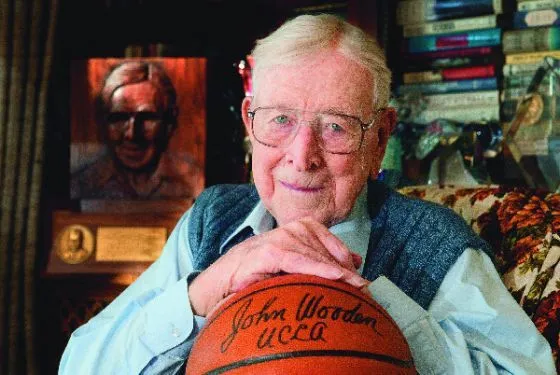 Photo: John Wooden, via i.pinimg.com
John Wooden was actually a decent basketball player at Purdue in the 1930s, but his athletic achievements pale in comparison to what he accomplished as a coach. More importantly, his coaching philosophy was shaped not by his playing experience, but by his background as an English teacher and his deep study of leadership principles.
Wooden approached basketball like a classroom subject, breaking down complex concepts into teachable fundamentals. His famous "Pyramid of Success" had nothing to do with basketball strategy and everything to do with character development and systematic improvement.
At UCLA, Wooden's teams won 10 NCAA championships in 12 years—a feat of sustained excellence that no coach with a traditional playing background has ever matched. His success came from treating basketball as an educational process rather than just athletic competition.
Wooden's greatest insight was that the mental and emotional aspects of competition were more important than physical talent. This understanding came not from his modest playing career, but from his years as an educator watching students overcome limitations through disciplined effort.
4. Casey Stengel - Baseball
Journeyman Player, Strategic Genius
Casey Stengel played 14 years of major league baseball and was thoroughly mediocre. A .284 career batting average, decent but unspectacular defensive skills, and a personality that sometimes annoyed teammates and managers.
But Stengel's playing career taught him something more valuable than star statistics: he learned how to observe, how to understand what made different players successful, and how to recognize patterns that others missed.
As manager of the New York Yankees from 1949 to 1960, Stengel pioneered platooning—using different players in specific situations based on statistical advantages rather than traditional starting lineups. This approach was considered radical at the time, but it maximized the effectiveness of his entire roster.
Stengel's Yankees won 10 American League pennants and seven World Series in 12 seasons. His success came from strategic innovation and player management skills that had nothing to do with his own playing ability and everything to do with his analytical mind.
5. Ara Parseghian - Football
Limited Playing Career, Unlimited Strategic Vision
Ara Parseghian played college football at Miami University in Ohio, but a hip injury limited his effectiveness and ended any professional aspirations. Instead of pursuing a playing career, he dove into coaching with the intensity of someone who had something to prove.
Parseghian became known for his meticulous preparation and innovative defensive schemes. At Notre Dame, he rebuilt a struggling program by emphasizing discipline, strategic complexity, and attention to detail that came from studying the game rather than just playing it.
His teams won two national championships and compiled a .836 winning percentage over 11 seasons at Notre Dame. Parseghian succeeded because his lack of playing credentials forced him to outwork and out-think coaches who relied on their athletic backgrounds.
The Outsider Advantage
What these coaches share isn't a lack of athletic ability—it's freedom from the assumption that playing experience automatically translates into coaching wisdom. Unencumbered by the belief that "this is how we've always done it," they approached their sports with fresh perspectives and analytical minds.
Their success suggests that the best coaches might not be former superstars, but rather individuals who combine deep strategic understanding with the communication skills to help others achieve what they themselves never could. In a culture that often confuses experience with expertise, these outsiders proved that sometimes the best view of the game comes from beyond the playing field.