The Mechanic Who Mapped the Human Heart: How a High School Dropout Revolutionized Cardiac Surgery
The Apprentice Who Wouldn't Stay in His Lane
In 1878, a seventeen-year-old Black teenager walked into a barbershop in Janesville, Wisconsin, carrying nothing but determination and a willingness to work. Daniel Hale Williams had dropped out of high school, bounced between odd jobs, and seemed destined for the kind of invisible life that small-town America carved out for young men of his background. The barbershop owner, Harry Anderson, took him on as an apprentice.
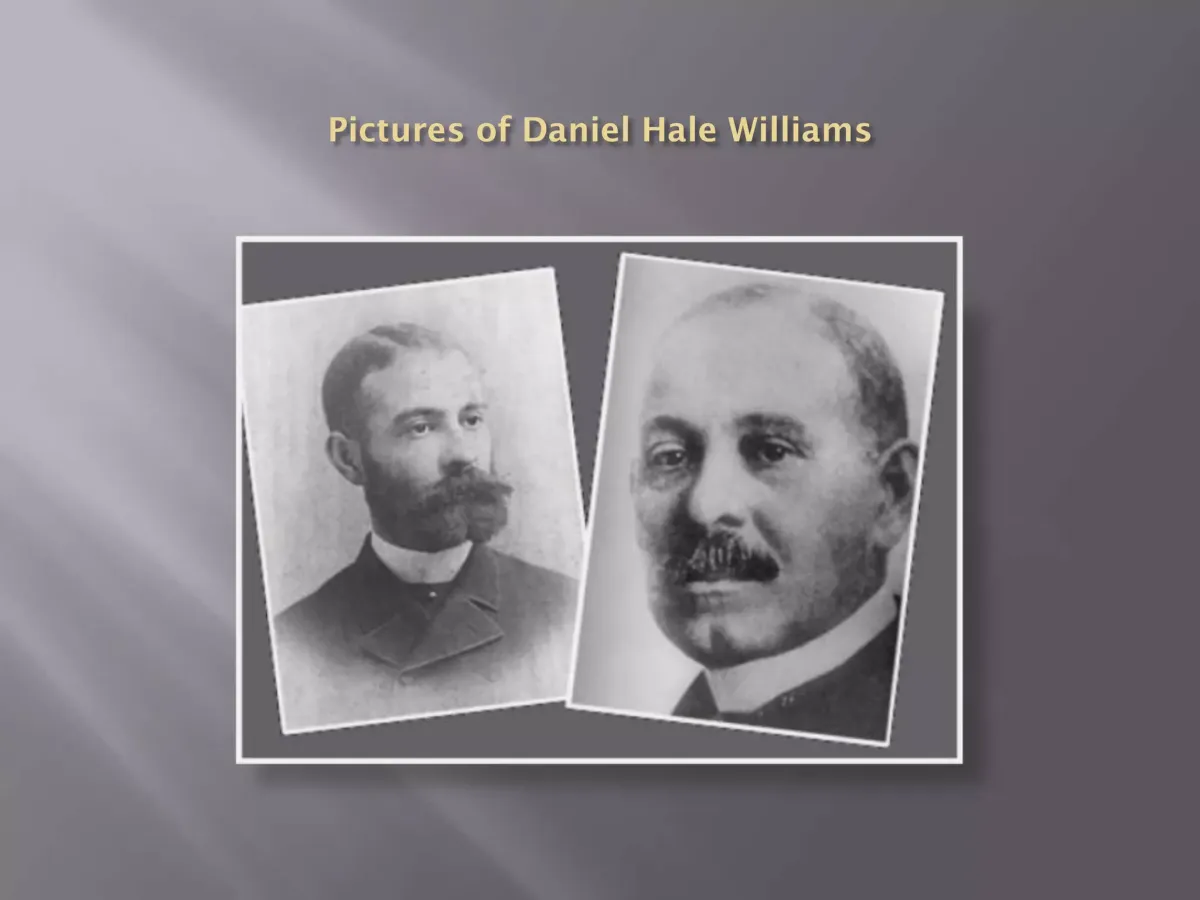 Photo: Daniel Hale Williams, via image.slidesharecdn.com
But Williams had a problem: he couldn't stop asking questions about everything except barbering.
While other apprentices focused on perfecting their razor technique, Williams pestered customers about their ailments, studied anatomy books in his spare time, and spent his evenings reading medical journals by candlelight. Anderson, exasperated by his apprentice's wandering attention, finally made a suggestion that would change American medicine forever: "If you're so interested in fixing people instead of cutting hair, why don't you find a doctor to teach you?"
The Unconventional Medical Education
In 1880, Williams convinced Dr. Henry Palmer, a local physician, to take him on as an apprentice. This wasn't medical school — it was something far more practical and, as it turned out, far more valuable. While his formally educated peers memorized textbooks and attended lectures, Williams spent his days watching Palmer work, learning to read bodies like maps, and developing an intuitive understanding of human anatomy that no classroom could provide.
The apprenticeship system was already becoming obsolete, replaced by formal medical colleges with their standardized curricula and theoretical approaches. But for Williams, being locked out of traditional pathways meant learning medicine the old way: through observation, practice, and an almost mechanical understanding of how things worked.
After three years with Palmer, Williams had absorbed enough medical knowledge to pass the entrance exam at Chicago Medical College (now Northwestern University). He was one of only three Black students in his class, a isolation that would prove to be both a burden and an unexpected advantage.
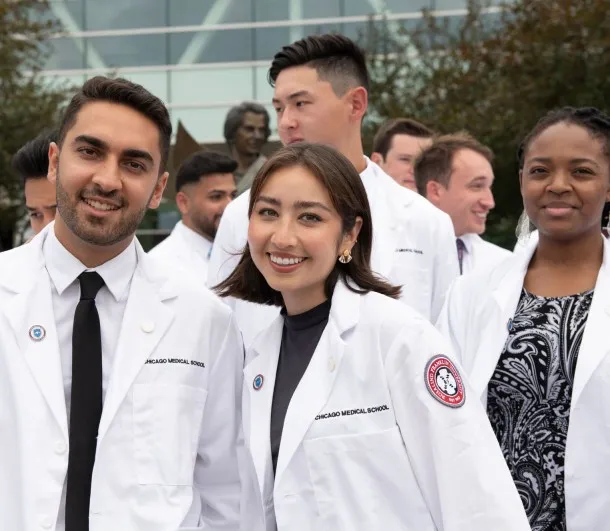 Photo: Chicago Medical College, via rfums-bigtree.s3.amazonaws.com
The Surgery Nobody Thought Possible
By 1893, Dr. Daniel Hale Williams had established himself as a skilled surgeon at Provident Hospital, the first Black-owned hospital in America, which he had founded in Chicago's South Side. But nothing in his unconventional education had prepared him for what walked through his emergency room doors on July 9th of that year.
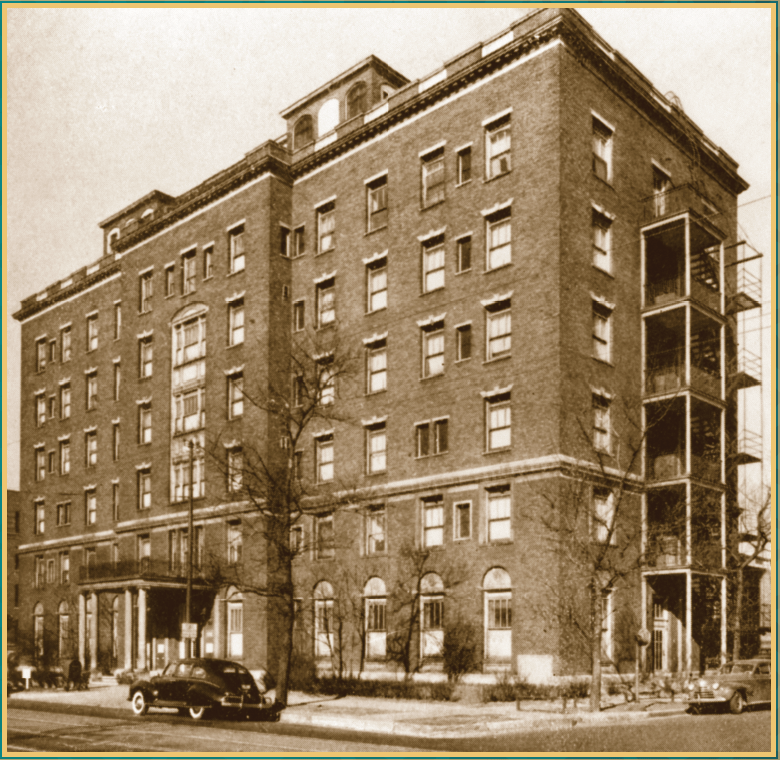 Photo: Provident Hospital, via i0.wp.com
James Cornish, a young Black man, had been stabbed in the chest during a barroom fight. The knife had penetrated deep, and Cornish was dying. In 1893, opening the chest cavity was considered a death sentence. The medical establishment had declared the heart and lungs off-limits to surgical intervention. Patients with chest wounds were given morphine and left to die.
But Williams looked at Cornish's wound with the practical eye of a former mechanic — because that's essentially what his apprenticeship had taught him to be. He saw a machine that was broken and needed fixing.
The Mechanic's Approach to the Human Heart
What happened next was either surgical genius or breathtaking audacity, depending on who you asked. Williams decided to operate.
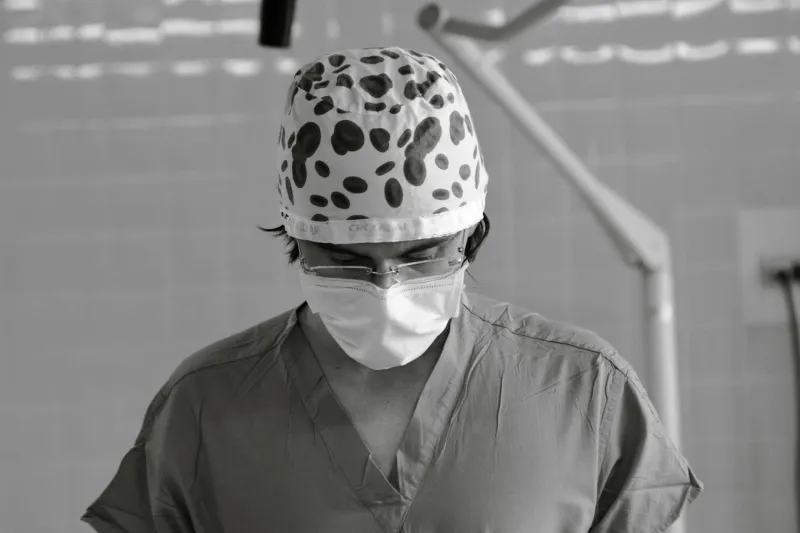
Without X-rays, without proper lighting, without any of the tools that modern cardiac surgery requires, Williams opened Cornish's chest. Using techniques he had improvised from his mechanical understanding of how things fit together, he carefully explored the wound, found that the knife had nicked the pericardium (the sac around the heart), and stitched it back together.
The operation took nearly two hours. Cornish survived.
News of the surgery spread through Chicago's medical community like wildfire. Some doctors called it a miracle. Others called it reckless. But Williams had proven something that the medical establishment wasn't ready to accept: the human heart could be repaired.
The Innovation Born from Exclusion
What made Williams' achievement even more remarkable was that his success came precisely because of his unconventional path, not despite it. His apprenticeship background had taught him to think of the human body as a complex machine rather than a sacred mystery. His exclusion from medical society's inner circles meant he wasn't bound by their limitations.
While formally trained surgeons were taught what was impossible, Williams had learned to ask what was necessary. His mechanical instincts, developed during years of hands-on apprenticeship, allowed him to approach the heart as a problem to be solved rather than a boundary to be respected.
The irony wasn't lost on him. The same racial barriers that had forced him into an apprenticeship instead of medical school had given him exactly the skills he needed to see what others couldn't.
The Legacy of Looking Outside the Lines
James Cornish lived for another twenty years after his surgery, a walking testament to what becomes possible when someone refuses to accept the limits that others take for granted. Williams went on to perform hundreds more operations, train a generation of Black surgeons, and establish surgical techniques that wouldn't be widely accepted until decades later.
But perhaps his greatest contribution wasn't medical — it was philosophical. Williams proved that the most important innovations often come from the people who weren't supposed to be in the room in the first place. His story reminds us that sometimes the best way to revolutionize a field is to approach it from the outside, with fresh eyes and a willingness to ignore what everyone knows is impossible.
In a world that increasingly values formal credentials over practical wisdom, Williams' journey from barbershop apprentice to cardiac surgery pioneer offers a different model for expertise: one built on curiosity, hands-on experience, and the kind of mechanical intuition that sees solutions where others see only problems.