Starting Over at the Starting Line: Five Immigrants Who Rewrote American Athletic History
1. László Szabó: The Hungarian Who Taught America to Swim
When László Szabó stepped off the boat at Ellis Island in 1956, he carried everything he owned in a single canvas bag: two swimsuits, a pair of goggles, and a letter of recommendation written in Hungarian that no one in New York could read. He was eighteen years old, spoke maybe fifty words of English, and had been Hungary's fastest freestyle swimmer before the revolution scattered his family across Europe.
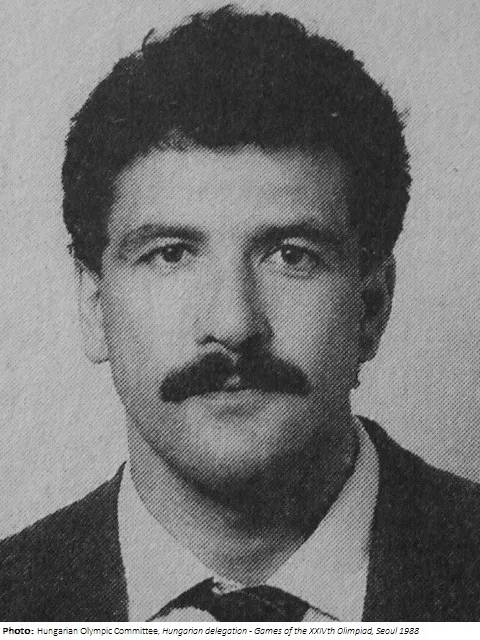 Photo: László Szabó, via d2a3o6pzho379u.cloudfront.net
American swimming in 1956 was a gentlemen's sport—technical, precise, dominated by swimmers from established programs at elite colleges. László's approach looked primitive by comparison. He trained in outdoor pools year-round, even in Hungarian winters. His stroke technique emphasized power over form. American coaches watched him practice and shook their heads.
But László was fast. Impossibly fast.
Within six months, he'd broken three American age-group records. Within two years, he was coaching high school swimmers in Queens, teaching them the brutal training methods he'd learned in Hungary. His athletes started winning state championships using techniques that violated every principle of American swim coaching—longer, stronger strokes that sacrificed elegance for speed.
By 1964, László's training philosophy had spread throughout American competitive swimming. The sport that had once prized technical perfection was now dominated by power swimmers who trained like László's Hungarian athletes. He never made the Olympic team himself—his English remained too limited for the media attention that top swimmers required—but his influence reshaped American swimming from the pool deck up.
2. Kip Keino's American Apprentice: Joseph Kimani and the Iowa Miracle
Joseph Kimani arrived in Cedar Falls, Iowa, in 1974 with a scholarship to Northern Iowa University and absolutely no idea what he was getting into. He'd grown up on a farm outside Eldoret, Kenya, running everywhere because his family couldn't afford a bicycle. His only experience with organized athletics had been winning a regional race that earned him the attention of American scouts looking for distance running talent.
Iowa in 1974 was not a distance running hotbed. The university's track program was mediocre, the winters were brutal, and most of Joseph's teammates had never seen anyone run the way he did—with an effortless stride that made five-minute miles look like jogging.
Joseph's first American race was a disaster. Unfamiliar with tactical racing, he went out too fast, died in the final mile, and finished dead last in a conference meet. Local newspapers wrote him off as another recruiting mistake. But Joseph had grown up running twenty miles to school and twenty miles home. He knew how to adapt.
Working with his coach, Joseph developed a training philosophy that combined Kenyan endurance methods with American racing tactics. He ran 140 miles per week through Iowa winters, often in subzero temperatures that reminded him of high-altitude mornings in Kenya. More importantly, he started teaching his American teammates to think about distance running differently—not as a test of speed, but as a conversation between runner and environment.
By his senior year, Joseph had transformed Northern Iowa into a distance running powerhouse. His teammates, following his training methods, were running times that rivaled athletes from traditional programs. After graduation, Joseph stayed in Iowa as an assistant coach, eventually building one of the most successful distance programs in American collegiate history.
The real revolution came in the 1980s, when Joseph's former athletes became coaches themselves, spreading his hybrid training philosophy throughout the Midwest. Today, Iowa produces distance runners at a rate that defies its small population, a legacy that traces directly to a Kenyan farmhand who had to learn American racing from scratch.
3. The Soviet Gymnast Who Rebuilt American Coaching
Natasha Volkov defected during the 1976 Olympics, slipping away from her team hotel in Montreal and requesting asylum at the American embassy. She was twenty-two, had won bronze in the team competition, and would never compete again. Soviet gymnastics didn't forgive defection.
 Photo: Natasha Volkov, via images-wixmp-ed30a86b8c4ca887773594c2.wixmp.com
American gymnastics in 1976 was decades behind the Soviet system. American gymnasts trained perhaps twenty hours per week; Soviets trained forty. American coaching emphasized encouragement and fun; Soviet coaching emphasized perfection through repetition. When Natasha started coaching at a small gym in Connecticut, she brought methods that American parents found shocking.
Six-hour training sessions. Mandatory ballet classes. Conditioning routines that made grown men cry. Parents complained. Gymnasts quit. But the athletes who stayed began performing skills that American gymnastics had never seen.
Natasha's first elite athlete, a coal miner's daughter from Pennsylvania named Jennifer Walsh, made the national team in 1981 using techniques that Natasha had learned in Soviet training camps. Jennifer's floor routine included tumbling passes that required the kind of power and precision that American gymnastics had considered impossible for female athletes.
Other coaches began studying Natasha's methods. Gymnastics magazines published articles about "Soviet-style training" adapted for American athletes. By 1984, American women's gymnastics had been completely transformed, incorporating elements of Natasha's approach into programs nationwide.
Natasha never received the recognition that American-born coaches enjoyed—her English remained heavily accented, her methods controversial. But her influence runs through every American gymnastics program that emphasizes technical excellence over recreational participation. She took a sport that Americans had treated as an after-school activity and turned it into the systematic pursuit of physical perfection.
4. The Cuban Pitcher Who Changed How America Throws
Rafael Mendoza escaped Cuba on a fishing boat in 1982, landing in Key West with a fastball that American scouts clocked at 98 mph and a slider that moved in ways that violated the laws of physics. He was twenty-four, had been Cuba's top pitcher, and knew exactly three English phrases: "How much?" "Where bathroom?" and "I pitch good."
American baseball in 1982 was still recovering from the cultural shock of Japanese players entering the major leagues. Cuban players were virtually unknown. Rafael's style—aggressive, emotional, with a delivery that looked like controlled violence—made American coaches nervous.
But Rafael could pitch. More importantly, he could teach other pitchers to throw with the kind of explosive power that Cuban baseball had developed in isolation from American influence. His slider grip was completely different from anything American coaches taught. His conditioning program emphasized flexibility over strength. His approach to pitch sequencing followed Cuban theories about disrupting hitter timing.
Rafael spent three years in the minor leagues, not because he lacked talent, but because American baseball didn't know what to do with his unconventional methods. During that time, he quietly worked with other pitchers, sharing techniques that had never been documented in American coaching manuals.
When Rafael finally made the major leagues in 1985, his success opened doors for other Latin American pitchers who brought their own variations on techniques that Rafael had introduced. His influence extends far beyond his own career—modern American pitching development incorporates elements of Cuban training that Rafael smuggled into American baseball along with his 98-mph fastball.
5. The Ethiopian Runner Who Taught America About Altitude
Haile Gebremeskel arrived at the University of New Mexico in 1989 with a scholarship, a single suitcase, and lungs that had been conditioned by a lifetime at 8,000 feet above sea level. He'd grown up in the Ethiopian highlands, where running was transportation and thin air was just life.
American distance running was struggling in 1989. African runners dominated international competition, while American athletes seemed to have plateaued. Coaches knew that altitude training might help, but most American programs treated it as an exotic luxury—a few weeks per year at special camps in Colorado or California.
Haile's approach was different. He'd never trained at sea level, never experienced the luxury of oxygen-rich air. His entire athletic development had occurred in conditions that American runners considered extreme. When he started training with his New Mexico teammates, the difference was immediately obvious.
Haile wasn't just faster—he recovered faster, maintained pace longer, and seemed immune to the fatigue that destroyed other distance runners in the final miles of races. His coach, recognizing something revolutionary, started studying Ethiopian training methods through Haile's explanations and demonstrations.
The program that emerged combined Ethiopian altitude conditioning with American sports science. Haile's teammates began living and training at altitude year-round, not just during special camps. They incorporated Ethiopian running forms—shorter strides, higher cadence, more efficient oxygen utilization—into their technique.
By 1992, the University of New Mexico had become America's top distance running program, producing Olympic qualifiers at a rate that seemed impossible for a single school. Other programs began copying their methods, creating the high-altitude training centers that now dot the American West.
Haile's influence extends beyond his own achievements. He helped establish the scientific foundation for altitude training that American distance running had been missing, turning what had been experimental theory into systematic practice.
The Common Thread
These five athletes shared more than immigrant status—they shared the experience of having to rebuild their athletic identities in a new country while simultaneously teaching American sports new ways to think about performance. Their outsider perspective became their greatest advantage, allowing them to see possibilities that established American programs had missed.
Each brought techniques developed in isolation from American influence, methods that had evolved to solve different problems under different conditions. When these approaches collided with American sports culture, the result was innovation that neither tradition could have achieved alone.
Their stories suggest something profound about the nature of athletic excellence: the best ideas often come from the margins, from athletes and coaches who've had to solve familiar problems in unfamiliar ways. They arrived in America with nothing but talent and perspective—and used both to change American sports forever.