He Learned to Read a Room Before He Ever Read a Balance Sheet

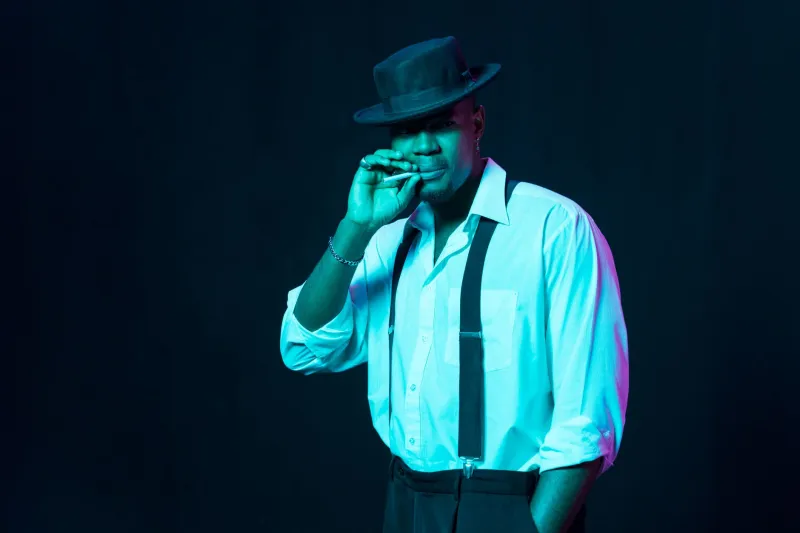
On a Tuesday night in 1987, Marcus Drell was standing outside a club called The Anchor on Detroit's west side, watching a man in a too-nice suit try very hard to look relaxed. The man's shoulders were wrong. His laugh came a half-second too late. His eyes kept drifting toward the back exit.
Drell let him through. Then he told his manager to check the register at the end of the night.
Three hundred dollars were missing by closing time.
Drell would spend another six years working the door at three different clubs across Michigan before anyone on Wall Street had ever heard of him. By the time they did, he had become one of the most sought-after risk analysts in the country — a man who could walk into a trading floor or sit across from a portfolio manager and know, within twenty minutes, whether something was off.
He had no MBA. He had a high school diploma and a nose for liars.
The Education Nobody Offers in Business School
Working the door of a nightclub is, in the most literal sense, a job about risk assessment. Every person who walks up is a variable. Some are obviously fine. Some are obviously not. The interesting ones — the dangerous ones — are the people in between, the ones who've practiced looking harmless.
Drell grew up in Inkster, Michigan, a working-class suburb just west of Detroit, and started bouncing at twenty-two after a brief and unsuccessful attempt at community college. He wasn't a big guy — five-eleven, maybe 190 pounds — but he had what the other bouncers called "the look," meaning he watched people the way most people watch television. Constantly, without blinking, absorbing details he couldn't always name.
"You learn real fast that people lie with their bodies before their mouths even open," Drell said in a 2009 interview with a financial trade publication. "And you learn that systems lie too. A bar that's supposed to hold 200 people but keeps feeling like 300? Something's wrong with the count. Someone's gaming the numbers."
That instinct for systemic inconsistency — the gap between what a number says and what reality feels like — would become his signature.
The Accidental Pivot
In 1993, Drell's cousin got him a job as a security guard at a mid-sized brokerage in Chicago. It was supposed to be temporary. He was supposed to stand near the elevator bank and look authoritative.
Instead, he started asking questions.
Not aggressive questions. Just the kind of quiet, curious ones he'd always asked — why does that trader always make his calls from the stairwell? Why does this account show activity at 3 a.m.? Why does that manager flinch every time someone mentions the Hendricks portfolio?
The compliance officer, a woman named Sheila Okafor, started writing down his observations. Then she started inviting him to meetings. Then, over the course of two years, she helped him get his Series 7 license and pushed him into a junior analyst role that nobody thought he was qualified for.
He was wrong about maybe fifteen percent of his hunches. He was right about the other eighty-five.
"Most analysts are trained to look at data," Okafor told the same publication. "Marcus looked at people. He looked at behavior. And in fraud, behavior is almost always where the story starts."
Reading the Market the Way He Read the Door
By the early 2000s, Drell had built a reputation in compliance and risk management circles that far outpaced his credentials on paper. He was consulting for firms that wouldn't have returned his call a decade earlier. His method was simple but almost impossible to replicate: he combined forensic data analysis — which he'd taught himself, painstakingly, over years — with the kind of behavioral profiling that most financial professionals had never been trained to consider.
He was particularly effective during the post-Enron era, when regulators were scrambling to understand how so many smart, credentialed people had missed so much obvious fraud for so long. Drell's answer was characteristically blunt: they were looking at the wrong things.
"You can manipulate a spreadsheet," he said during a 2004 congressional briefing on financial oversight reform. "You cannot manipulate every person in a room simultaneously. Someone always knows. Someone always acts a little different. You just have to know what different looks like."
What the Credential Doesn't Teach
Drell's story isn't really about nightclubs or Wall Street. It's about the specific kind of intelligence that formal education sometimes actively discourages — the ability to sit with ambiguity, to trust pattern recognition over stated fact, to treat a feeling of wrongness as data worth investigating.
He eventually did earn a graduate certificate in financial analysis from DePaul University, in his late thirties. He's honest about its value: it gave him language for things he already understood, and it opened doors that had been closed to him for reasons that had nothing to do with ability.
But the real curriculum, the one that made him exceptional, was six years of cold nights, bad music, and the slow, patient work of watching human beings try to get away with things.
He retired in 2018 and now consults occasionally and speaks at risk management conferences — usually to rooms full of people with degrees he never earned, telling them to put down their laptops and watch the room.
They always laugh, a little nervously.
He always notices who laughs the latest.