She Just Wanted to Help Her Patients. Millions of Strangers Weren't Supposed to Be Listening.
The Graveyard Shift Nobody Was Watching
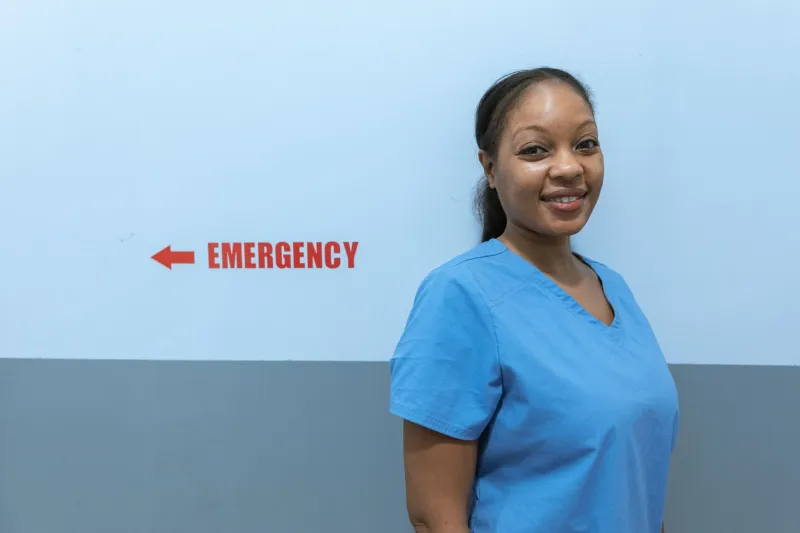
Most nights, the hallways of a small rural hospital in eastern Tennessee go quiet somewhere around 1 a.m. The day staff has gone home. The visitors have cleared out. It's just the hum of monitors, the squeak of sneakers on linoleum, and nurses like Maya Caldwell doing the invisible work that keeps people alive while the rest of the world sleeps.
For years, that was enough. Caldwell clocked in, cared for her patients, clocked out, drove home, slept a few hours, and did it again — all while raising two kids mostly on her own. She wasn't looking for an audience. She was barely keeping her head above water.
Then the pandemic hit, and everything changed.
A Phone, a Parking Lot, and a Hunch
It started small. Caldwell noticed that her patients — and their families — were terrified, and not just of the virus itself. They were terrified of the noise around it. Conflicting headlines. Social media rumors. Relatives forwarding chain messages about miracle cures. People were drowning in information and somehow understanding less than ever.
She started recording short videos on her lunch break, sitting in her car in the hospital parking lot, still in scrubs. No script. No teleprompter. Just a nurse with dark circles under her eyes talking like she was explaining something to a worried family member in a waiting room.
"I'm not going to tell you what to think," she said in one early video that would eventually rack up millions of views. "I'm just going to tell you what I actually see on my floor every night."
That was it. No graphics. No dramatic music. No credentials plastered across the screen. Just honesty, delivered with the particular exhausted calm of someone who has seen too much to bother with performance.
Within three months, she had more followers than her entire hospital system had employees.
The Accidental Credential
Here's the paradox at the heart of Caldwell's rise: the very things that should have disqualified her from being a trusted health communicator were the things that made her one.
She had no media training — so she never learned to hedge everything into meaninglessness. She had no PR team — so she never got smoothed down into corporate-speak. She worked nights in a rural hospital, not at a prestigious research center — so she talked about the patients most health coverage ignores: the uninsured, the elderly, the people who live an hour from the nearest specialist.
Traditional health communication, for all its good intentions, has a tendency to talk at people. It optimizes for accuracy in ways that sacrifice accessibility, or it simplifies so aggressively that it loses trust. Caldwell did neither. She was precise because she had to be — a nurse who gets medication dosages wrong hurts someone — but she translated that precision into language that didn't require a medical degree to follow.
"She sounds like my aunt who happens to know everything," one commenter wrote. That sentence, more than any media profile or credential, captured exactly why it worked.
When It Got Hard
Going viral is easy. Staying credible is brutal.
As her platform grew, so did the pressure. Supplement companies offered sponsorships. Political organizations wanted her to amplify certain messages. Media outlets wanted her to take hotter takes, be more divisive, stoke more engagement. She turned most of it down, which cost her real money at a time when she was still working nights and still raising two kids.
She also faced pushback from corners she hadn't anticipated. Some medical professionals questioned whether a bedside nurse — not a doctor, not a researcher — should be speaking to millions about complex health topics. A few were openly dismissive. Caldwell addressed it directly in a video that became one of her most-shared posts.
"I'm not here to replace your doctor," she said. "I'm here so that when you walk into that appointment, you're not starting from zero."
That distinction mattered. She wasn't positioning herself as the final word on anything. She was building a bridge between overwhelming information and the ordinary person trying to make sense of it — and she was transparent about exactly where her lane ended.
What She Built When No One Was Looking
The story of Maya Caldwell isn't really about social media. It's about what happens when someone with genuine expertise and zero pretension finds a megaphone during a moment when pretension has made everyone else unlistenable.
She eventually partnered with a network of rural health clinics to develop plain-language patient education materials. She consulted on public health messaging for two state health departments. She was invited to speak at a national nursing conference — something that felt, to her, genuinely surreal.
She still works nights sometimes. Not because she has to, but because she says it keeps her honest.
"The moment I stop seeing actual patients," she told an interviewer, "I stop being useful to the people who follow me."
That's the thing about improbable greatness. It doesn't always announce itself. Sometimes it just shows up in scrubs, sitting in a parking lot at midnight, telling the truth in a way nobody else thought to try.