She Sent the Letter No One Was Supposed to Receive: The Appalachian Teenager Who Accidentally Sparked America's Environmental Movement
The Creek That Couldn't Speak for Itself
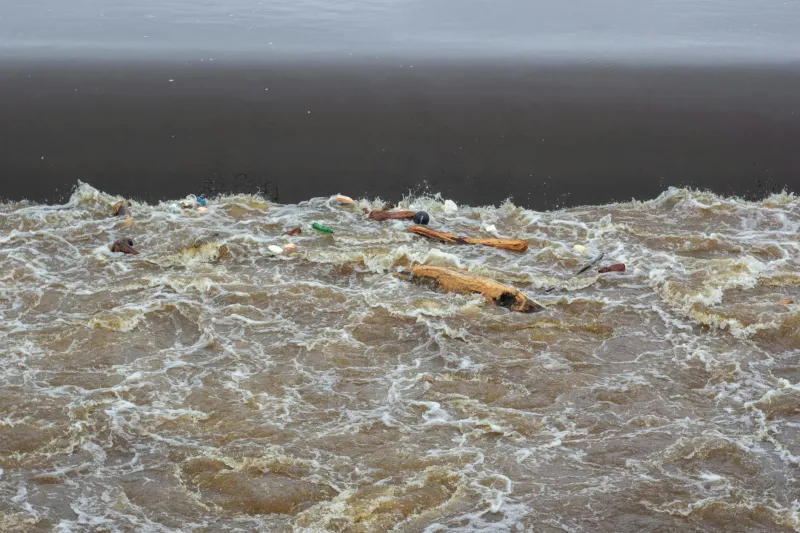
In the summer of 1954, sixteen-year-old Betty Lou Harmon sat by Laurel Creek in eastern Kentucky, watching minnows float belly-up in water that had once run clear enough to drink. The creek that had sustained her family for three generations was dying, and nobody with any power seemed to notice or care.
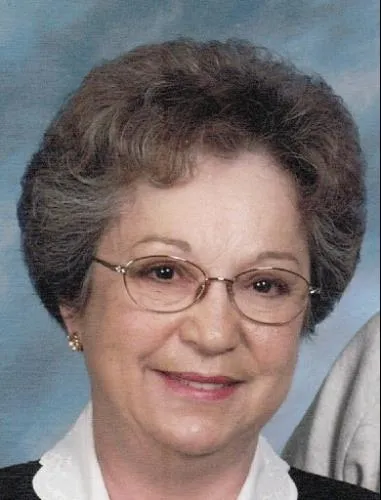 Photo: Betty Lou Harmon, via cache.legacy.net
Betty Lou had dropped out of school after eighth grade to help her mother take in washing, but she could read well enough to know that somewhere in Washington, D.C., there were people whose job it was to protect places like Laurel Creek. What she didn't know was how to reach them, or that her attempt to do so would accidentally trigger one of the most important environmental policy changes in American history.
The letter she wrote that August afternoon was supposed to disappear into a bureaucratic void. Instead, it became the spark that lit a movement.
A Letter Written in Desperation
Betty Lou's letter was three pages of careful handwriting on lined paper torn from a composition notebook. She wrote it at her kitchen table by lamplight, crossing out words and starting over when her spelling looked wrong. The grammar was imperfect, the tone was urgent, and every sentence carried the weight of someone who had run out of other options.
"Dear Sirs," it began. "I am writing about our creek that is dying and nobody will listen. The coal company up the hollow has been dumping their wash water and now our creek runs black and smells like sulfur and all the fish are dead."
She described how her family had depended on Laurel Creek for drinking water, how her grandmother used to catch trout there, how the company had promised the pollution would stop but instead had gotten worse. She included details that only someone who lived beside the water would notice: how the pollution was worst after rain, how it killed the mayflies that trout needed to survive, how even the cattle wouldn't drink from it anymore.
The letter was addressed simply to "The Water Department, Washington, D.C." Betty Lou had no idea which agency might care about a creek in eastern Kentucky, so she did what seemed logical: she sent it to the people in charge of water.
The Journey Through Bureaucratic Limbo
Betty Lou's letter arrived at the Department of the Interior on a Tuesday morning in September 1954. A mail clerk, following protocol, sent it to the Bureau of Reclamation, which handled water projects. The Bureau of Reclamation sent it to the Fish and Wildlife Service, since it mentioned dead fish. Fish and Wildlife sent it to the Public Health Service, since it mentioned drinking water.
For three months, the letter traveled through Washington's bureaucratic maze, stamped and forwarded and filed, until it landed on the desk of Dr. Robert Rudd, a young biologist who had recently joined the Public Health Service's new Environmental Health Division.
Rudd was supposed to rubber-stamp the letter and send it to the appropriate state agency in Kentucky — standard procedure for local pollution complaints. Instead, he read it carefully and realized that Betty Lou Harmon had documented something that federal scientists were just beginning to understand: the systematic poisoning of America's waterways by industrial pollution.
The Scientist Who Recognized Truth
Dr. Rudd had spent his graduate years studying water chemistry, but most of his knowledge came from laboratory experiments and academic papers. Betty Lou's letter contained observations that no scientific study had captured: the real-time, day-by-day documentation of how pollution moved through an ecosystem, told by someone who had watched it happen.
Her description of the pollution's timing — "worst after rain" — indicated that the contamination was coming from surface runoff, not direct dumping. Her observation about dead mayflies suggested that the pollution was disrupting the entire food chain, not just killing fish directly. Her detail about cattle avoiding the water indicated that the contamination was detectable by animals' instincts even when it wasn't visible to human observers.
Rudd realized that Betty Lou's letter wasn't just a complaint — it was a field report from someone who had been conducting environmental monitoring without knowing it.
The Investigation That Changed Everything
Instead of forwarding the letter to Kentucky, Rudd decided to investigate. In November 1954, he drove to eastern Kentucky to meet Betty Lou Harmon and see Laurel Creek for himself.
What he found was worse than the letter had described. The coal company's "wash water" was actually a toxic slurry of heavy metals and chemical processing agents that was poisoning not just Laurel Creek, but the entire watershed. Similar operations throughout Appalachia were dumping identical waste into hundreds of streams and rivers.
But Rudd also discovered something unprecedented: Betty Lou had been keeping informal records of the creek's condition for over two years, noting changes in water color, fish populations, and plant life in the margins of her mother's account ledger. Her documentation was more detailed and consistent than most official environmental monitoring programs.
The Ripple Effect
Rudd's investigation, triggered by Betty Lou's letter, became the foundation for the Federal Water Pollution Control Act of 1956 — the first comprehensive federal legislation to address water pollution. The law established federal authority to investigate and prosecute industrial water pollution, created funding for state pollution control programs, and required companies to disclose their waste disposal practices.
More importantly, it established the principle that environmental protection was a federal responsibility, not just a local concern. Betty Lou's letter had demonstrated that pollution in rural Kentucky was connected to larger patterns of environmental degradation that crossed state lines and required national coordination to address.
The coal company that had been dumping into Laurel Creek was forced to install waste treatment facilities. Within two years, fish had returned to the creek, and Betty Lou's family could drink from it again.
The Voice That Wasn't Supposed to Matter
Betty Lou Harmon never intended to become an environmental activist. She just wanted her creek to stop dying. But her letter succeeded where formal complaints from local officials had failed because it carried something that bureaucratic reports couldn't: the credibility of lived experience.
Her geographic isolation, which had kept her out of formal education, had also given her something more valuable: intimate knowledge of how a healthy ecosystem actually worked. Her lack of scientific training meant she described what she saw in plain language that policymakers could understand. Her desperation gave her the courage to write to Washington when more sophisticated observers might have assumed it was pointless.
Dr. Rudd later said that Betty Lou's letter taught him more about water pollution than four years of graduate school had. "She wasn't trying to prove a hypothesis," he explained. "She was just telling us what was happening to her world."
The Legacy of One Letter
Betty Lou Harmon's letter established a template that environmental advocates still use today: the power of local observation to drive national policy. Her story demonstrated that the people closest to environmental problems are often the most qualified to identify solutions, even when they lack formal credentials.
The Federal Water Pollution Control Act evolved into the Clean Water Act of 1972, which remains the foundation of American water protection policy. Every time a citizen reports pollution to federal authorities, every time local knowledge influences national environmental policy, they're following a path that Betty Lou Harmon accidentally created with three pages of careful handwriting.
She never left eastern Kentucky, never attended college, never held a title that included the word "environmental." But her willingness to write one desperate letter to people she'd never met changed how America thinks about protecting the natural world. Sometimes the most important voices are the ones that weren't supposed to be heard at all.