Clocking Out, Then Clocking In: Five Janitors Who Invented Their Way to a Better Life
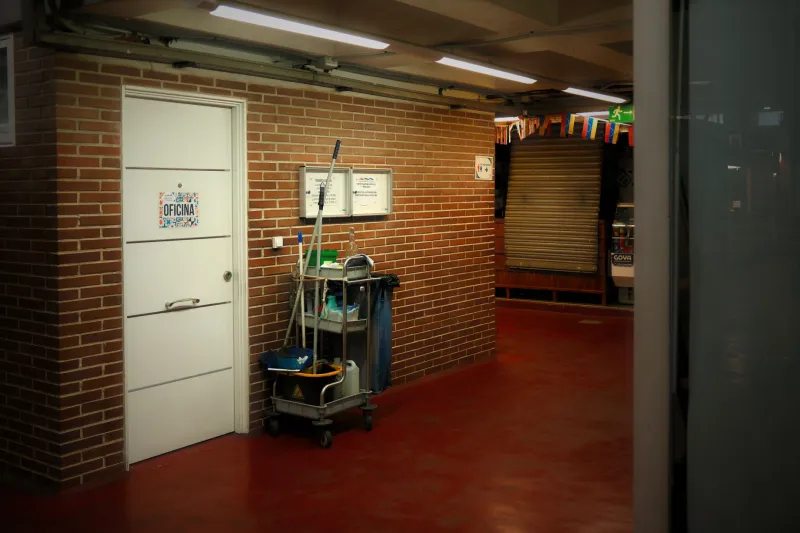
There's a particular kind of quiet that falls over a building after midnight. The hum of fluorescent lights. The distant rumble of a floor buffer. The occasional creak of an empty hallway. Most people never hear it. But for a small, remarkable group of men and women, that silence was the sound of possibility.
These are the stories of five custodians — people hired to clean up after the world — who used their off-hours, their sharp eyes, and their stubborn refusal to accept limitations to invent solutions that nobody else saw coming.
1. The Night Shift Nurse-in-Disguise
For twelve years, Lonnie Johnson worked nights as a custodial supervisor at a hospital in Birmingham, Alabama. His job was maintenance — fixing broken things, keeping systems running, making sure the facility was ready for the people whose work actually saved lives. But Johnson had a background in mechanical engineering from a community college program he'd scraped together tuition for over six years, and he couldn't turn that brain off just because his badge said "Facilities."
Working alongside nurses and respiratory therapists, he kept noticing the same problem: portable suction devices used to clear airways during emergencies were clunky, unreliable, and dangerously slow to respond. He started sketching on the back of supply requisition forms. Over eighteen months — working in a rented garage on weekends — he prototyped a compact, manually operated suction device that could be deployed in seconds without power. He filed for a patent in 1987. The device is now used in emergency kits across dozens of hospital systems in the Southeast. Johnson never became a household name. But somewhere, someone is breathing because he couldn't stop thinking.
2. The Mop Handle That Became a Million-Dollar Patent
Maria Esposito came to the United States from Calabria, Italy in 1962 with her husband and three children. She spent her first decade in America cleaning office buildings in Chicago's Loop, often pulling double shifts to cover rent. The work was hard, and the equipment was harder — industrial mops that wrung out by hand, soaking sleeves and straining wrists across every shift.
By 1971, Esposito had designed and built — using materials from a hardware store and a sewing kit — a prototype wringer mechanism that attached to a standard mop handle and allowed one-handed operation. Her son, who worked at a patent law office, helped her navigate the filing process. The design was granted a patent in 1974. She licensed it to a janitorial supply company for a sum that, adjusted for inflation, would be worth roughly $400,000 today. She used the money to open a small cleaning supply business that her grandchildren still run in the western suburbs. The mop mechanism she invented remains a foundational design element in several commercial products.
3. The Building Engineer Who Quietly Revolutionized HVAC
Robert "Bucky" Tran spent twenty-two years as a building maintenance worker for a mid-sized manufacturing plant in Dayton, Ohio. He was the guy who showed up when the heat went out in January, who knew every pipe and valve by feel in the dark. What his employers didn't know was that Tran — a Vietnamese refugee who arrived in the U.S. in 1979 with nothing but a mechanical aptitude and a ferocious work ethic — had been quietly documenting inefficiencies in the plant's HVAC system for years.
He noticed that the ventilation cycles were dramatically out of sync with actual occupancy patterns, wasting enormous amounts of energy. Using a secondhand computer and a library card, he taught himself basic programming and developed a simple occupancy-linked ventilation algorithm. He pitched it to his plant manager, who dismissed it. He pitched it to a local engineering firm, who didn't. They partnered with him, refined the concept, and filed a joint patent in 1998. The resulting system reduced energy costs at the Dayton plant by 34 percent in its first year. Tran's share of the licensing revenue eventually allowed him to retire comfortably and fund his youngest daughter's engineering degree — a fact he mentions, whenever asked, before anything else.
4. The School Custodian Who Made Playgrounds Safer
Dorothy "Dot" Chambers had been cleaning Riverside Elementary School in Tucson, Arizona for eleven years when a second-grader broke her wrist on the playground equipment. It wasn't the first injury. The rubber safety surfacing beneath the jungle gym had been degrading for years, and the school district kept patching it with mismatched materials that created uneven, hazardous surfaces.
Chambers — who had no formal engineering background but had raised four kids and fixed everything in her house herself for decades — started experimenting. She mixed recycled tire rubber with a binding compound she developed through trial and error in her backyard, producing a pourable, self-leveling surface material that cured harder and more uniformly than the commercial products the school had been using. She applied it herself over a long weekend. Nobody got hurt on that playground again.
When a district facilities director noticed the surface during a routine inspection and asked who'd installed it, Chambers explained what she'd done. With help from a small-business development center, she filed for a patent in 2003. She later sold the formulation rights to a safety surfacing company and used the proceeds to start a nonprofit that refurbishes playground equipment at underfunded schools across southern Arizona.
5. The Midnight Tinkerer Who Cleaned Labs and Then Built One
James Okafor grew up in Lagos, Nigeria, and arrived in Houston in 1995 on a student visa that eventually expired. For nearly a decade, he worked as a nighttime custodian at a university research facility, cleaning labs that contained equipment worth more than he would earn in a lifetime. He was careful, quiet, and — when the researchers had gone home — intensely curious.
Okafor had studied chemistry briefly before circumstances forced him to leave school. He read everything he could find. He watched the researchers. And he noticed, over and over again, that certain chemical filtration processes used in the labs were needlessly wasteful — producing large volumes of contaminated byproduct that required expensive disposal. He began sketching a modified filtration design in a notebook he kept in his supply cart.
It took him four years to develop a working prototype using salvaged lab components that researchers had discarded. A sympathetic professor — who'd noticed Okafor's notebook during a late-night shift and started talking to him — helped him formalize the design and connect with the university's technology transfer office. The patent was filed in 2007. The filtration process has since been licensed to three industrial chemical companies. Okafor used his licensing income to regularize his immigration status, finish his chemistry degree at forty-one, and open a small environmental consulting firm. His lab is immaculate. He makes sure of that himself.