She Couldn't Read the Sign on the Door — Then She Rewrote the Rules Behind It
The Suitcase and the Phrasebook
When Mira Ohanyan stepped off a bus in Fresno, California, in the early 1990s, she had exactly three things going for her: a cousin who had agreed to let her sleep on a pullout couch, a dog-eared English-Armenian phrasebook, and a stubborn refusal to believe that the life she had just fled was the only life available to her.
She had been a food technologist back in Armenia — trained, credentialed, experienced. She had spent years inspecting processing facilities and working alongside agricultural scientists. None of that translated on paper. American licensing boards wanted American degrees. American employers wanted American references. The system wasn't hostile to Mira exactly; it simply didn't have a drawer that fit her shape.
So she did what people with nothing left to lose often do. She improvised.
Learning the Language of Bacteria
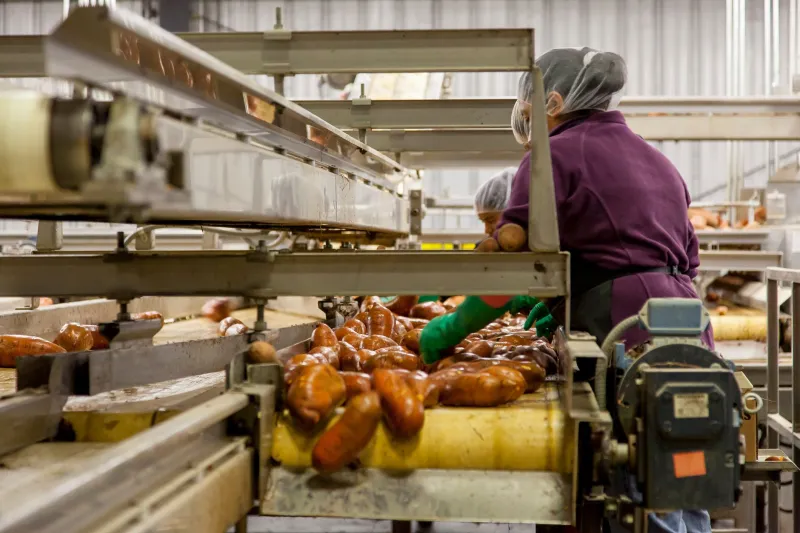
Mira's first American job was in a commercial cannery on the outskirts of the Central Valley. She wasn't inspecting anything — she was on the line, checking seals, watching for dents, doing the repetitive physical work that new arrivals with broken English could reliably get. She earned $6.25 an hour and took the bus both ways.
But Mira was watching. She always had been.
She noticed things the full-time workers had stopped noticing years ago — the way certain conveyor belt temperatures fluctuated after the lunch break, the subtle discoloration that appeared on jar lids when the humidity spiked, the patterns that only became visible when you weren't used to tuning them out. She started keeping a notebook. In Armenian, because her English wasn't good enough yet for technical vocabulary, she logged observations that she later translated with a dictionary, one word at a time, at the kitchen table after her cousin's kids were asleep.
She enrolled in night classes at a community college. Then another. She studied microbiology, food science, and public health — not because anyone told her to, but because she needed the language to describe what her eyes were already telling her.
The Outsider Who Saw What the Insiders Couldn't
Within three years, Mira had enough coursework and enough documented observations to apply for a trainee position with the California Department of Food and Agriculture. The hiring manager later admitted he had almost passed on her application — the foreign degree, the accent, the unconventional resume path. He gave her a shot anyway, mostly because she had shown up in person, notebook in hand, and walked him through six months of contamination observations she had made on her own time, unpaid, at a facility his department had cleared twice in the previous year.
Two of her flagged observations, it turned out, were actively developing problems. One was a Listeria risk that hadn't yet triggered a measurable outbreak.
She was hired on a Tuesday. By Thursday, she was back in a facility with a badge and a mandate.
What made Mira different wasn't just diligence — plenty of inspectors were diligent. It was her angle of vision. She had never been trained to inspect the American way, which meant she hadn't inherited the American blind spots. She asked questions that seemed almost childishly basic to her colleagues, questions about why certain procedures were done in certain sequences, whether those sequences had ever been formally tested, whether anyone had checked whether the original reasoning still applied to modern equipment. The answers, more often than not, were unsatisfying.
The Patterns Nobody Was Looking For
Over the following decade, Mira developed what colleagues began calling — at first as a mild joke, then with genuine respect — "the Ohanyan method." It wasn't a formal protocol. It was a philosophy: treat every facility as if you've never seen a facility before, because the contamination that's going to hurt someone isn't hiding where you've been trained to look.
She identified a recurring cross-contamination pattern in produce distribution facilities that had been attributed, incorrectly, to supplier-side issues. She traced a multi-state illness cluster to a refrigeration maintenance schedule that had been grandfathered in from the 1970s and never revisited. She helped redesign inspection training materials to include what she called "fresh eye" protocols — structured techniques for helping experienced inspectors temporarily set aside their assumptions.
She also became something of a quiet legend in the community of food safety professionals, the kind of person whose name gets passed around in whispered recommendations when a case isn't making sense.
What Rejection Built
Mira is retired now, living in Sacramento. She still teaches occasional workshops, still carries a notebook, still asks the questions that make people think she's joking until they realize she isn't.
When asked what she would tell a young immigrant arriving today with a suitcase and a phrasebook and credentials that no one will recognize, she doesn't offer a tidy motivational answer. She thinks about it for a moment, the way she thinks about everything — carefully, without rushing.
"I would tell them: the thing they will not give you credit for is the thing that will make you better than anyone they did give credit to," she says. "Your outside eye is not a disadvantage. It is the only thing that cannot be taught."
The system that had no drawer for her shape eventually had to build one. And the food supply is safer because it did.