The Artist Who Didn't Exist
On a humid Saturday morning in 1987, antique dealer Margaret Chen was rummaging through an estate sale in rural Missouri when she noticed something odd about the farmhouse's wooden floors. One plank seemed loose, warped slightly upward as if hiding something underneath.
What she found changed everything: dozens of oil paintings wrapped in old feed sacks, each canvas depicting impossible worlds where farm animals floated through crystalline skies and kitchen utensils sprouted wings. The signature in the corner read "L.M. Storey," but nobody at the sale knew who that was.
The deceased homeowner, according to neighbors, had been Loula Mae Storey—a quiet farm wife who kept to herself, raised chickens, and never mentioned having any artistic inclinations. Yet here was evidence of a secret creative life that had flourished for decades in complete isolation.
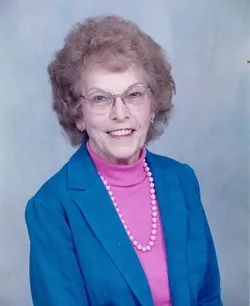 Photo: Loula Mae Storey, via helenafuneralhome.com
The Education of Silence
Loula Mae had been born in 1898 to a family that believed women had two acceptable paths: teaching school until marriage, then raising children. Art was a luxury for city people with too much time and too little sense. When she showed early talent for drawing, her father burned her sketchbooks and assigned her extra chores.
She married Earl Storey in 1923, moving to his family's 200-acre farm outside Sedalia. Earl was a practical man who measured success in bushels of corn and head of cattle. When Loula Mae mentioned wanting to take art classes in town, he laughed and suggested she focus on canning vegetables instead.
So she did both—but only one in public.
The Secret Studio
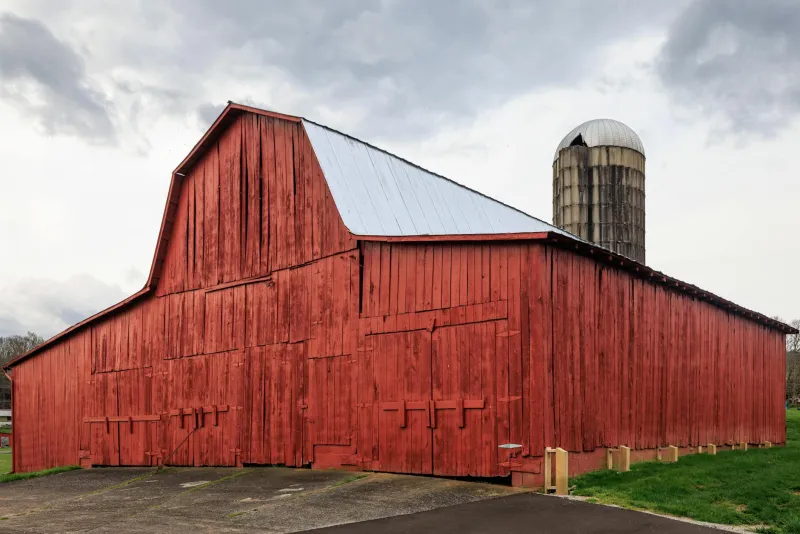
Loula Mae began painting in 1925, working in the barn's hayloft while Earl was in the fields. She ordered supplies through the Sears catalog, paying with egg money and hiding the packages before Earl came home. Her first canvases were painted on wooden boards salvaged from old chicken coops.
Her subjects defied everything about her environment. While surrounded by the harsh realities of farm life during the Depression, Loula Mae painted dreamscapes: melting clocks draped over fence posts, cows with butterfly wings grazing in impossible meadows, kitchen scenes where pots and pans danced through the air like escaped spirits.
She had never heard of Salvador Dalí or René Magritte, yet her work shared their surrealist sensibilities. Art historians would later theorize that her isolation had forced her to develop a visual language entirely from within, uninfluenced by contemporary movements or critical expectations.
The Geography of Hiding
As her collection grew, so did the challenge of concealment. Loula Mae became an expert in the architecture of secrecy. She hollowed out spaces behind barn walls, created false bottoms in storage chests, and eventually lifted floorboards in the farmhouse to create a hidden gallery that only she knew existed.
Neighbors occasionally noticed her spending long hours in the barn, but they assumed she was tending to sick animals or organizing feed. Earl never questioned her activities—farm wives were always busy with something, and as long as dinner appeared on time, the details didn't matter.
The closest she came to exposure was in 1943, when a barn fire nearly destroyed her entire collection. While neighbors helped Earl move equipment to safety, Loula Mae frantically rescued paintings from their hiding spots, claiming they were "important family documents" that needed protection.
The World That Might Have Been
Loula Mae painted through the 1930s, 40s, and 50s, her style evolving from tentative experiments to confident masterworks. Her later paintings showed increasing sophistication in composition and color theory, suggesting she had been studying art books borrowed secretly from the county library.
She never signed her full name—always just "L.M. Storey"—as if even in her private creative world, she couldn't quite claim complete ownership of her identity as an artist. Friends who knew her described a woman who seemed to live slightly apart from her own life, present but somehow dreaming of elsewhere.
Earl died in 1968, and for the first time in forty-three years of marriage, Loula Mae was alone with her secret. Neighbors expected her to sell the farm and move to town, but she stayed put, painting until arthritis made holding a brush impossible.
The Discovery That Changed Everything
When Loula Mae died in 1986 at age eighty-eight, she left no will and no heirs. The county handled the estate sale, pricing her belongings as typical farm household items. Nobody thought to look under the floorboards.
Margaret Chen's accidental discovery led to a scramble among art dealers and collectors. The paintings were unlike anything in the established canon of American folk art—too sophisticated for "outsider art," too isolated from contemporary movements to fit standard categories.
Major museums began acquiring Loula Mae's work, and critics struggled to contextualize an artist who had developed in complete creative isolation. Her paintings challenged assumptions about artistic influence, the role of formal training, and the relationship between geographic location and creative vision.
The Questions That Remain
A retrospective at the Whitney Museum in 1992 established Loula Mae Storey as a significant figure in twentieth-century American art. Yet questions linger: What drove her to paint in secret for so long? Did she ever imagine her work being seen by others? What other hidden artists might be painting in isolation right now, creating masterpieces that will only be discovered by accident?
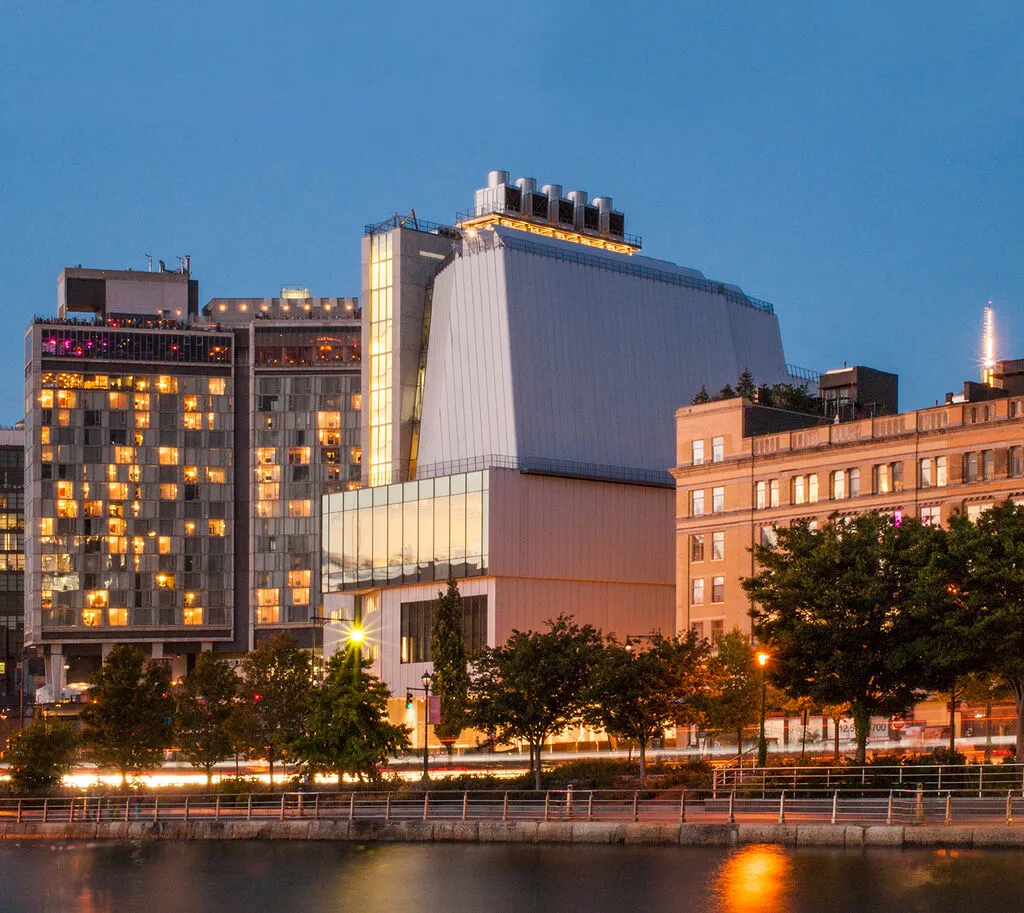 Photo: Whitney Museum, via whitneymedia.org
Her story forces uncomfortable reconsiderations about whose creativity gets nurtured and whose gets buried. How many Loula Mae Storeys have lived and died without anyone finding their hidden canvases?
The Legacy of the Invisible
Today, Loula Mae Storey's paintings hang in major museums alongside works by recognized masters. Art students study her techniques, and critics debate her place in surrealist tradition. The farm wife who hid her dreams under floorboards has become an icon of creative persistence.
Her story reminds us that artistic vision doesn't require permission or validation—it simply requires the stubborn refusal to stop creating, even when the world insists you have nothing worthwhile to say. Sometimes the most important art happens in secret, waiting patiently for someone to lift the right floorboard and discover what was always there.
The canvases are no longer hidden, but their message remains radical: creativity finds a way, even when—especially when—nobody is looking.