The Woman Who Waited Her Turn
Maria Santos spent thirty-one years in America without saying more than a few dozen words in English. She raised four children, worked double shifts at a textile factory, and navigated a country that rarely paused to hear her voice, all while carrying stories that no one knew she was collecting.
Then, at fifty-two, something shifted. Her youngest daughter had graduated college, her husband had retired, and for the first time since arriving from El Salvador in 1971, Santos had something she'd never possessed before: time that belonged to her alone.
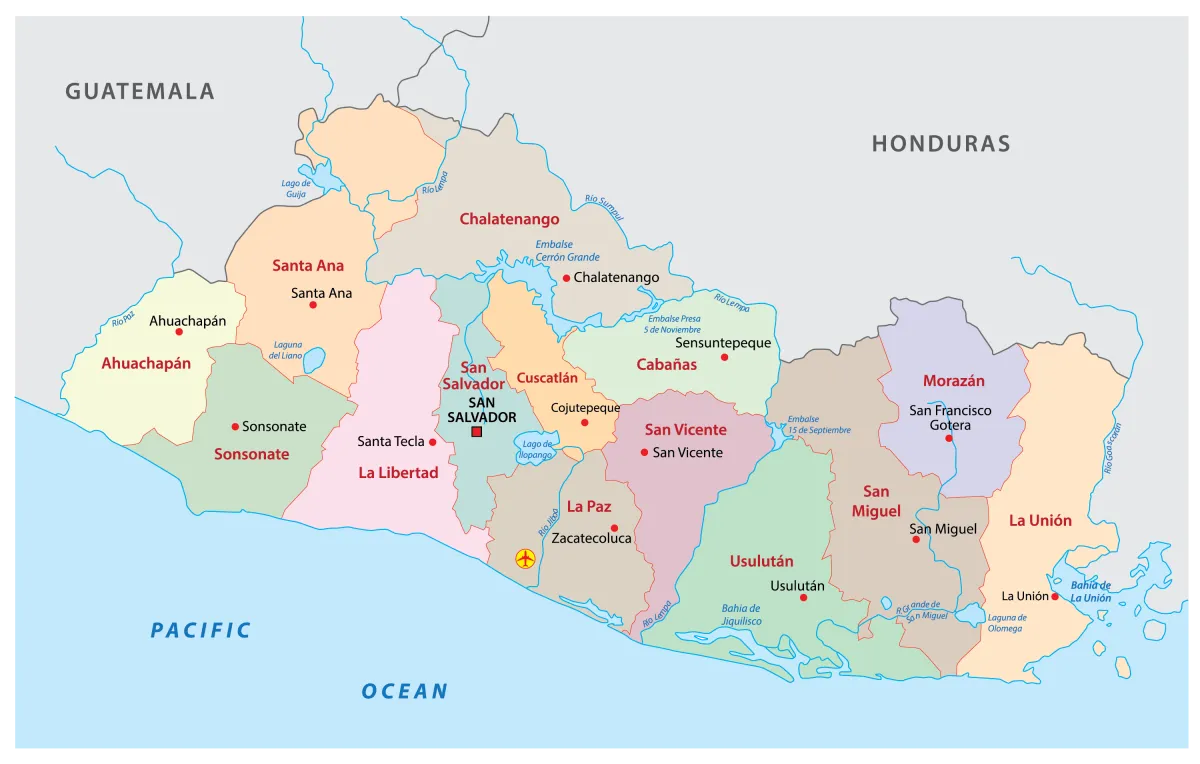 Photo: El Salvador, via www.worldatlas.com
She walked into the Koreatown branch of the Los Angeles Public Library on a Tuesday morning in 2002, approached the reference desk, and asked a question that would change her life: "Where are the books for people who want to learn English?"
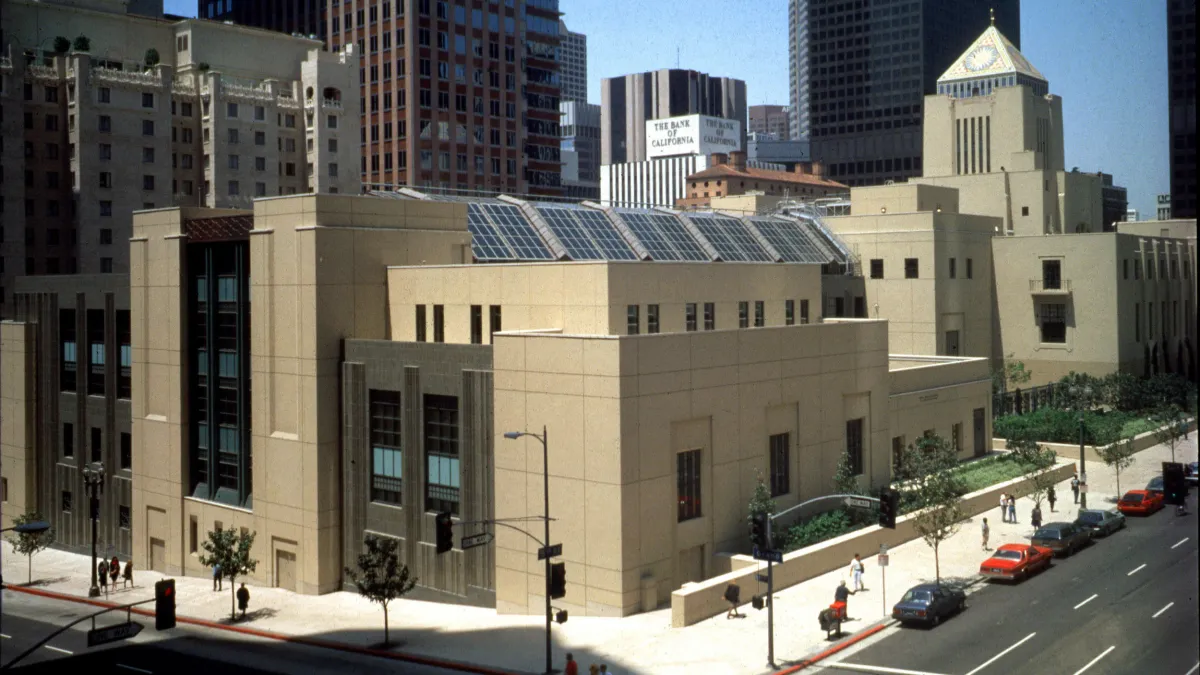 Photo: Los Angeles Public Library, via www.steinberghart.com
The librarian, surprised to hear the question asked in heavily accented but determined English, directed her to the ESL section. Santos checked out three books: a basic grammar guide, a collection of simple short stories, and an English-Spanish dictionary so thick it barely fit in her purse.
"I thought I would read for maybe one hour each day," Santos remembers. "I had no idea I was about to discover who I really was."
The Education of a Lifetime
Santos had arrived in Los Angeles as a nineteen-year-old bride, pregnant with her first child and speaking only Spanish. The America she encountered in the early 1970s was not particularly interested in helping immigrants learn English—ESL programs were rare, and most of her neighbors in East LA spoke Spanish anyway.
For three decades, she lived in a linguistic bubble, working in factories where Spanish was the common language, shopping in stores where Spanish was understood, and raising children who served as her translators for anything requiring English. She was functionally invisible to the broader American conversation, and she had made peace with that invisibility.
But as she sat in that library with her first English grammar book, something unexpected happened. The rules and structures that had seemed impossibly complex when she was nineteen began to make sense. Without the pressure of immediate survival, without children tugging at her sleeve or bosses demanding faster work, Santos discovered she had a gift for language that had been dormant for decades.
"In El Salvador, I was a good student," she explains. "But when I came here, I was so busy surviving that I forgot I was smart."
From Reader to Writer
Within six months, Santos was reading English novels. Within a year, she was writing in a journal, documenting not just her daily life but the stories she'd been collecting since 1971—stories of other immigrant women, of children caught between languages, of dreams deferred and sometimes rediscovered.
Her writing began as simple diary entries, but gradually evolved into something more complex. She wrote about her first job in America, cleaning office buildings at night while her baby slept in a basket beside her cart. She wrote about the Christmas when her family had no money for gifts, so she made dolls from factory scraps and told her children they were more valuable than anything from a store because they were made from love.
Most importantly, she wrote about the women she'd worked alongside for thirty years—women whose stories had never been recorded, whose struggles and triumphs existed only in whispered conversations during lunch breaks and in the solidarity of shared exhaustion.
"I realized I had been a witness to so many lives," Santos says. "All these women had stories that mattered, but no one was writing them down. So I decided I would."
Finding Her Voice at Fifty-Five
In 2005, Santos enrolled in a creative writing class at East Los Angeles College. She was the oldest student by two decades and the only one for whom English was a second language. Her first assignment was to write about a meaningful moment from her childhood.
 Photo: East Los Angeles College, via storage.googleapis.com
Instead, she wrote about learning to read English at fifty-two, about the shame she'd carried for decades about her accent, and about the discovery that intelligence doesn't have an expiration date. The essay was raw, honest, and unlike anything her professor had ever read.
"Maria's writing had this authenticity that you can't teach," remembers Dr. Patricia Morales, her first creative writing instructor. "She wasn't trying to sound like other writers. She was trying to sound like herself, and that made all the difference."
Encouraged by her professor, Santos began submitting her work to literary magazines. Her first published piece appeared in a small journal called "Voices from the Margins" in 2006. It was a 2,000-word essay about working in factories while raising children, written with the kind of detailed observation that only comes from decades of careful attention to the world around you.
The Book That Almost Wasn't
By 2008, Santos had published a dozen essays and short stories, each one drawing from her deep well of immigrant experience. A small press in San Francisco contacted her about writing a book, but Santos wasn't sure she had enough material.
"I kept thinking, who wants to read about an old woman learning English?" she recalls. "I didn't understand that my story was also the story of millions of other people."
Her book, "Late Harvest: Stories from the Other America," was published in 2010 when Santos was sixty. It was a collection of interconnected stories about immigrant women in Los Angeles, written with the kind of wisdom that only comes from having lived multiple lives within a single lifetime.
The book found its audience slowly, through word of mouth and book clubs rather than major media attention. But it found them powerfully. Readers recognized their mothers, their neighbors, themselves in Santos's characters. Here were stories about people who cleaned office buildings and raised children and dreamed in languages that America didn't always want to hear.
The Unexpected Bestseller
What happened next surprised everyone, including Santos. "Late Harvest" began appearing on regional bestseller lists. It was selected for community-wide reading programs in cities across the Southwest. Book clubs from suburban Phoenix to rural Oregon were discussing Santos's characters as if they were real people.
The success led to speaking engagements, writing workshops, and eventually a second book. Santos found herself traveling to universities and conferences, sharing stages with writers who had been publishing for decades. At sixty-five, she was being described as "an important new voice in American literature."
"New voice," Santos laughs when she hears that phrase. "I'm not new. I've been here for forty years. I just finally learned how to speak loud enough for people to hear me."
The Lesson of Late Starts
Today, at seventy-one, Santos has published four books and mentors other late-life learners through a program she started at the Los Angeles Public Library. Her story has been featured in documentaries about immigrant experiences and adult education, but she remains most proud of the letters she receives from readers who tell her that her example gave them permission to pursue their own delayed dreams.
"People think there's a deadline for becoming who you're supposed to be," Santos explains. "But life doesn't work that way. Sometimes you have to live a long time before you understand what you have to offer the world."
Her success challenges conventional wisdom about language acquisition, creative development, and the relationship between age and artistic achievement. Linguists have studied her case as evidence that the critical period hypothesis—the idea that languages must be learned young—may be more flexible than previously thought.
But Santos is less interested in scientific theories than in practical inspiration. She continues to write, continues to read voraciously, and continues to prove that the most powerful stories often come from people who have been waiting their whole lives for permission to tell them.
"I wasted thirty years thinking I wasn't smart enough, wasn't educated enough, wasn't American enough to have something important to say," she reflects. "Now I know better. Everyone has stories that matter. The question is whether you're brave enough to learn how to tell them."
In a culture obsessed with young prodigies and early achievement, Maria Santos represents something different: the power of patience, the value of lived experience, and the truth that some flowers bloom most beautifully when they take their time reaching toward the sun.