When Desperation Meets Vision: How a Laid-Off Janitor Fed His Way to Fortune
The Day Everything Changed
Marcus Williams was mopping floors at the Meridian Chemical Plant when the announcement came over the loudspeaker. Budget cuts. Immediate layoffs. Twenty-three years of steady work, gone in an afternoon.
It was 1987, and the Rust Belt was living up to its name. In Williams' neighborhood on Detroit's east side, the plant closure wasn't just bad news—it was catastrophic. Families that had scraped by on factory wages suddenly had nothing. The corner stores closed first, then the small restaurants. Within months, finding fresh food meant a bus ride to the suburbs, assuming you had bus fare.
Williams, 42 and supporting three kids, watched his neighbors struggle. But instead of just worrying, he started cooking.
From Survival to Service
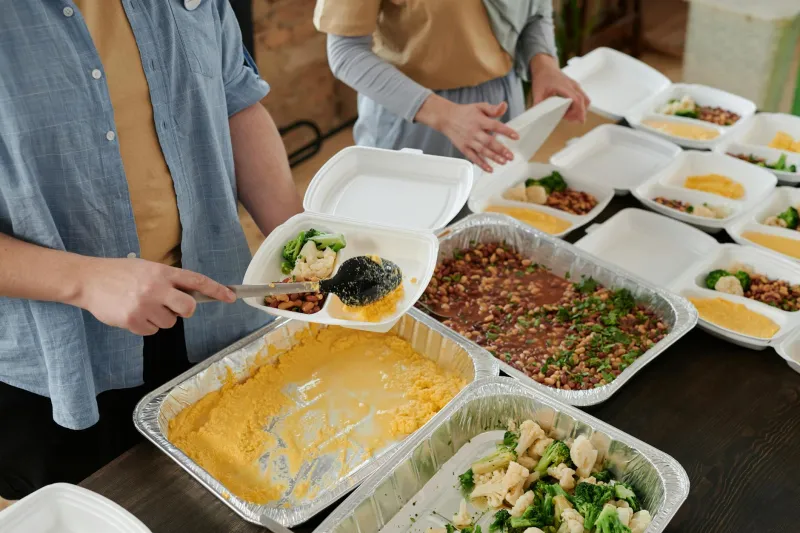
Every Saturday morning, Williams showed up at Mount Olive Baptist Church with whatever ingredients he could afford or convince local suppliers to donate. Day-old bread, dented cans, vegetables just past their prime—nothing went to waste in his makeshift kitchen.
"I wasn't trying to build a business," Williams would later recall. "I was trying to keep people fed."
The church basement became an unlikely laboratory. Williams, who'd learned to cook from his grandmother in rural Alabama, experimented with ways to make cheap ingredients taste extraordinary. His signature creation—a protein-rich spread made from peanuts, black beans, and spices—could turn stale bread into a satisfying meal.
Word spread through the neighborhood like smoke. Families started showing up not just on Saturdays, but throughout the week. Williams found himself cooking for fifty people, then a hundred, then more.
The Accidental Entrepreneur
The breakthrough came from an unexpected source: complaints. People loved Williams' food so much they wanted to take it home. The peanut spread, in particular, had become legendary in the neighborhood. Mothers asked for jars to pack in their children's lunches. Workers wanted containers for their shifts.
Williams started filling old mason jars with his creations, charging just enough to buy more ingredients. He labeled them by hand with masking tape and a marker: "Marcus's Mix" and "Williams Wonder Spread." It wasn't pretty, but it was honest.
Local corner stores, desperate for products that would sell, started stocking Williams' jars. The owner of Tony's Market on Eight Mile Road became his first real customer, ordering two dozen jars a week. Then four dozen. Then more than Williams could make in his church kitchen.
Scaling Up, Staying True
By 1990, Williams had moved operations to a rented warehouse space, hired his first employees (all neighbors who'd been eating his food for years), and was supplying stores across Detroit. But he never forgot where he came from.
Every jar still carried a simple promise printed on the label: "Good food shouldn't be a luxury." Williams kept his prices low, his ingredients simple, and his recipes rooted in the necessity that had birthed them.
The business model was unconventional. Williams refused venture capital, grew slowly, and maintained deep ties to the communities he served. When big food companies came calling with acquisition offers, he turned them down. When distributors suggested raising prices to increase margins, he found ways to cut costs instead.
The Prophet's Vision
Today, Williams Foods operates from a 50,000-square-foot facility in suburban Detroit, employs 200 people, and distributes products across twelve states. The company generates over $40 million in annual revenue. The original peanut spread—now called "Community Crunch"—remains the bestseller, though the product line has expanded to include soups, sauces, and meal kits.
Williams, now in his late seventies, still shows up to work most days. He still insists on tasting every batch, still remembers the names of longtime customers, still believes that good food can change everything.
But perhaps most remarkably, he still operates weekend community kitchens in Detroit neighborhoods, serving free meals to anyone who needs them. The profit from his business funds the service that started it all.
Lessons from the Basement
The story of Marcus Williams challenges every assumption about entrepreneurship. He didn't have an MBA, venture capital, or a business plan. He had a problem, a kitchen, and an unwillingness to accept that his neighbors should go hungry.
His success came not from disrupting an industry, but from serving a community that had been forgotten by it. He built loyalty not through marketing campaigns, but through consistency—showing up every week for years, making food that people could afford and trust.
In a business world obsessed with scaling fast and maximizing returns, Williams proved that sometimes the most sustainable growth comes from the deepest roots. His empire wasn't built on ambition alone, but on the simple recognition that when people are hungry, feeding them isn't just good business—it's the right thing to do.
Today, when food insecurity affects millions of Americans and small businesses struggle against corporate giants, the Williams model offers a different path forward. It suggests that the most improbable entrepreneurs might not be found in Silicon Valley boardrooms or business school classrooms, but in church basements and community centers, wherever ordinary people refuse to accept that extraordinary problems require someone else's solution.
Marcus Williams didn't set out to build a food empire. He just refused to let his neighbors go hungry. Sometimes, that's exactly the kind of vision the world needs.