
The Night Shift Nobody Saw
Every evening after his garbage truck rounds through Washington D.C., James Hampton would disappear into a rented garage on 7th Street. What happened next defied everything the world thought it knew about art, faith, and the invisible people who keep cities running.
 Photo: Washington D.C., via jooinn.com
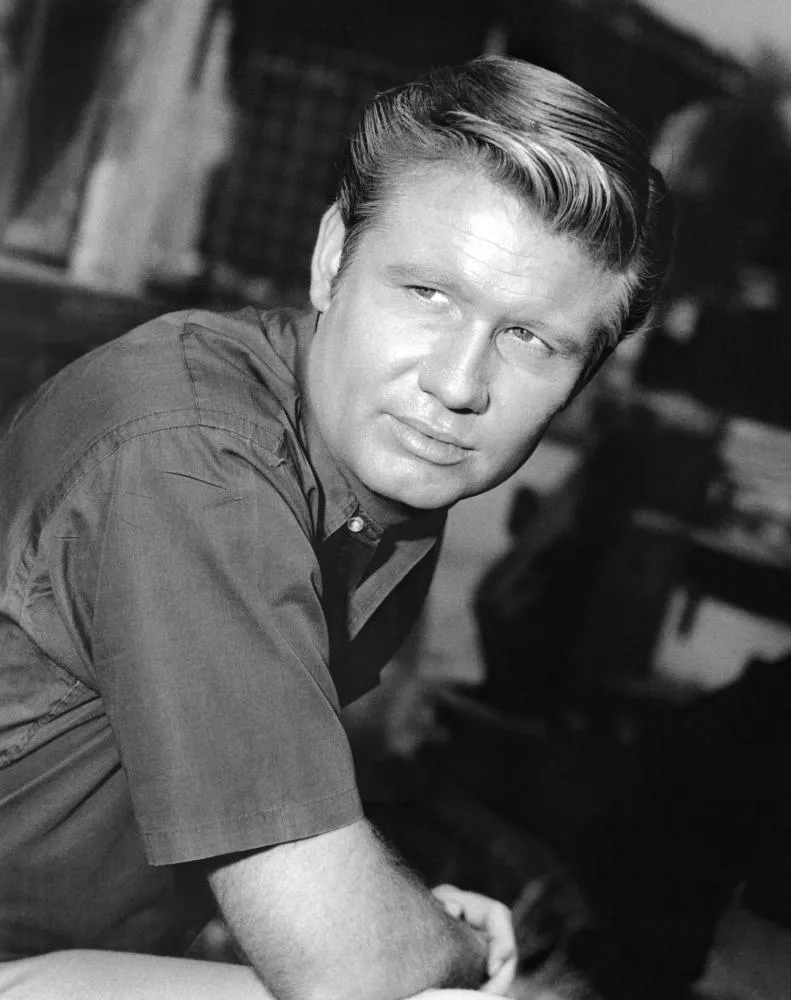 Photo: James Hampton, via media.baselineresearch.com
For fourteen years, from 1950 to 1964, Hampton worked in complete secrecy. By day, he collected the refuse of the nation's capital. By night, he transformed that same refuse into something transcendent. When he died suddenly in 1964, his landlord discovered what Hampton had been building: a massive religious installation called "The Throne of the Third Heaven of the Nations' Millennium General Assembly."
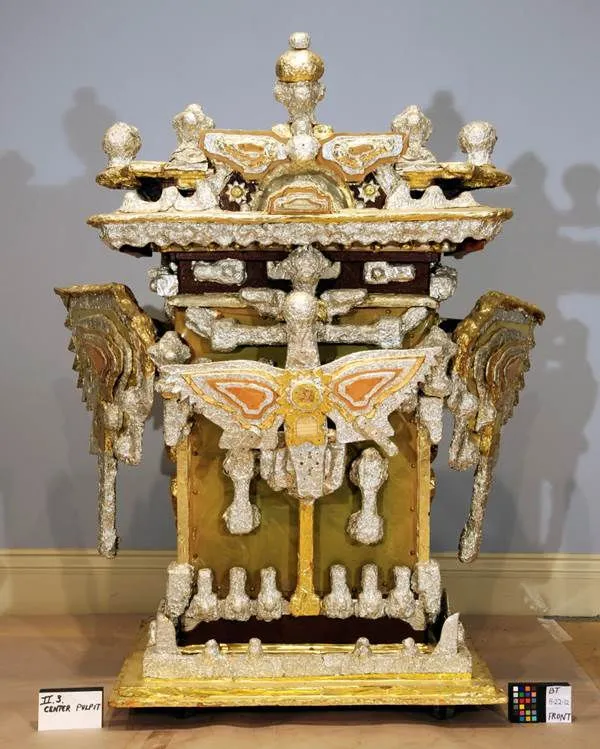 Photo: The Throne of the Third Heaven of the Nations' Millennium General Assembly, via static.wixstatic.com
The discovery stunned the art world. Here was a janitor and garbage collector who had created one of the most ambitious works of visionary art in American history, using nothing but aluminum foil, light bulbs, jelly jars, and cardboard—materials he'd salvaged from his daily routes.
The Invisible Man's Advantage
Hampton's story begins with a profound irony: his invisibility became his greatest asset. Born in rural South Carolina in 1909, he migrated to Washington during World War II, taking jobs that rendered him nearly invisible to the city's power brokers and cultural gatekeepers. He worked as a short-order cook, a hospital janitor, and finally as a sanitation worker.
But this invisibility gave Hampton something precious: complete creative freedom. He answered to no gallery owners, no critics, no art school professors. His only audience was God, and his only materials were what others had thrown away.
"James Hampton represents the ultimate outsider artist," says Lynda Roscoe Hartigan, who curated Hampton's work at the Smithsonian. "He was creating purely for spiritual reasons, with no expectation of recognition or commercial success."
Building Heaven from Trash
Hampton's masterpiece spans an entire room. At its center sits an enormous throne, flanked by 180 smaller pieces—altars, plaques, crowns, and wings, all covered in shimmering foil and arranged according to Hampton's personal vision of heavenly hierarchy. Every surface bears his handwritten inscriptions in a mysterious script that scholars still struggle to decipher.
The materials tell the story of mid-century America: Kraft paper, desk blotters, plastic bottles, burned-out light bulbs. Hampton saw divinity in what others discarded. A broken office chair became the foundation for a throne. Discarded light bulbs became celestial orbs. Aluminum foil—pounds and pounds of it—transformed humble cardboard into something that seemed to capture and reflect divine light.
The Prophet's Process
Hampton claimed he received visions directing his work. He told his few confidants that he was preparing for the Second Coming, building furniture for Jesus Christ's return to Earth. His garage became a chapel where he could work undisturbed, sometimes until dawn.
He developed his own techniques for working with found materials. He learned to stretch aluminum foil so thin it became almost translucent, creating subtle gradations of light and shadow. He devised a system for attaching materials without nails or screws, using pins and careful folding techniques that held everything together.
The physical demands were enormous. Hampton worked alone, moving heavy pieces, climbing ladders, perfecting details that no one else would ever see up close. His neighbors occasionally heard hammering and rustling from the garage, but no one suspected the scope of what he was creating.
Recognition After Death
When Hampton's landlord found the installation, he nearly had it hauled away as junk. Only the intervention of a local artist prevented the destruction of what would become one of the Smithsonian's most treasured acquisitions.
The art world's response was immediate and profound. Here was work that challenged every assumption about who could be an artist and what materials could become art. Hampton had created something that belonged neither to folk art nor fine art, but occupied its own category entirely.
The Paradox of the Discarded
Hampton's story reveals a profound truth about creativity and society's blind spots. The same society that discarded both Hampton and his materials was ultimately transformed by what he created from that refuse. His work now sits in the nation's most prestigious museum, visited by thousands who come to witness what one invisible man built from what everyone else threw away.
The installation's current home in the Smithsonian American Art Museum represents a kind of poetic justice. The garbage collector's vision now occupies the same cultural space as works by the most celebrated artists in American history.
Legacy of the Overlooked
Today, Hampton's "Throne" continues to challenge viewers' assumptions about art, faith, and the potential hidden in plain sight. His story has inspired countless other outsider artists and changed how museums think about whose stories deserve preservation.
Perhaps most importantly, Hampton's work reminds us that genius can emerge from anywhere—from the most humble circumstances, using the most humble materials. In a culture obsessed with credentials and pedigree, James Hampton proved that the most profound visions sometimes come from the people we never think to see.
His garage on 7th Street is long gone, but his message endures: in the hands of true vision, nothing is truly waste, and no one is truly invisible.