The Boy Who Talked to Plants
The first thing you need to know about George Washington Carver is that he almost never became George Washington Carver at all. Born into slavery around 1864, orphaned as an infant, and raised by his former owners in Missouri, he seemed destined for obscurity. But Carver possessed something that couldn't be bought, sold, or taught in any classroom: an uncanny ability to understand what plants needed to thrive.
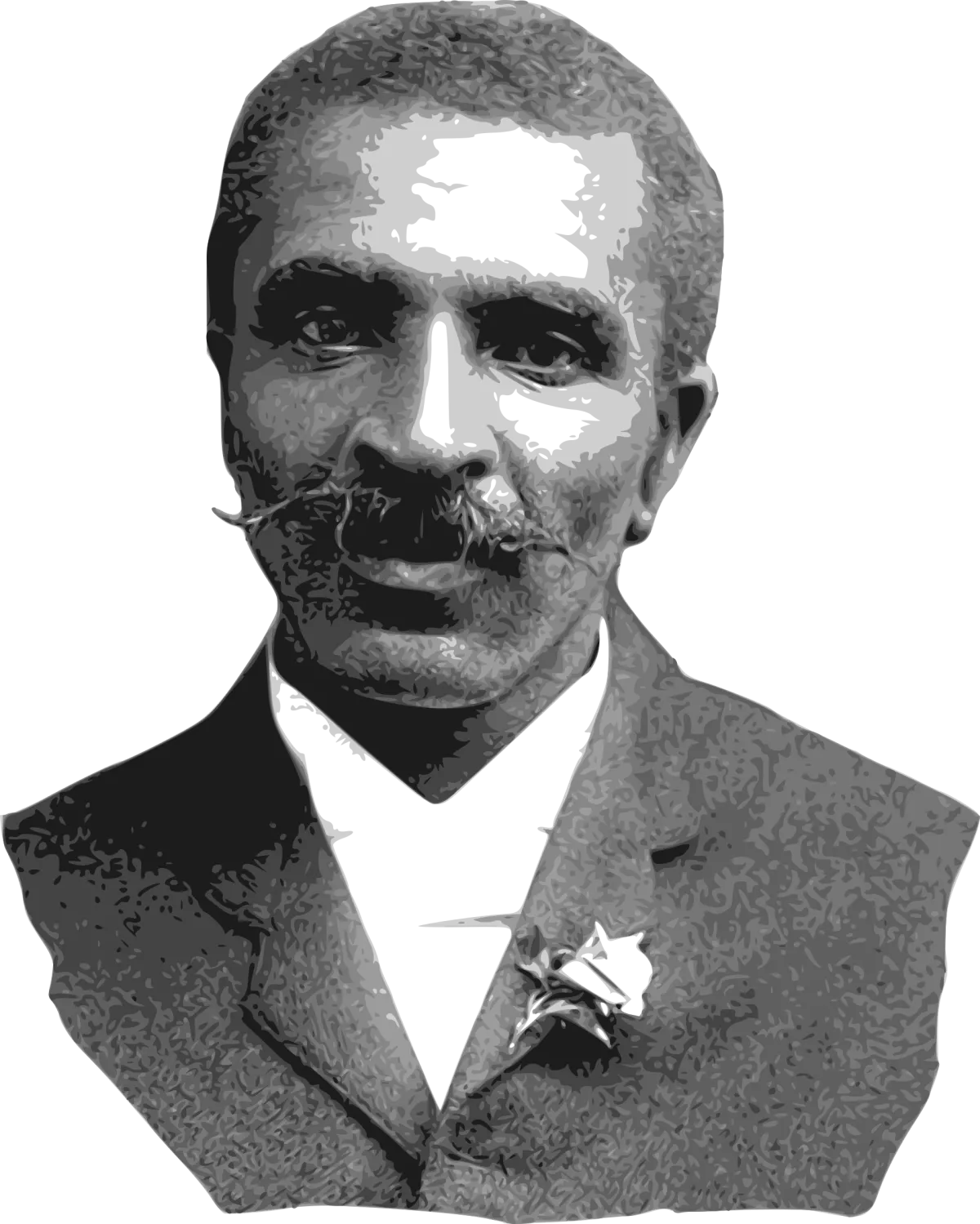 Photo: George Washington Carver, via openclipart.org
Neighbors called him the "plant doctor." While other children played games, young Carver wandered through forests and fields, collecting specimens, nursing sick plants back to health, and asking questions that no one around him could answer. He wanted to know why some soil grew healthy crops while other soil didn't. He wanted to understand what made plants strong or weak, productive or barren.
The problem was that in 1880s America, a Black boy with these questions had nowhere to take them.
The Education of a Wanderer
Carver's pursuit of formal education became an odyssey of rejection and reinvention. At fifteen, he walked 75 miles to attend a one-room schoolhouse, only to discover another George Carver was already enrolled. To distinguish himself, he added "Washington" to his name—a decision that would echo through history.
College proved even more challenging. Highland College in Kansas accepted him by mail but rejected him upon arrival when administrators discovered he was Black. Devastated but undeterred, Carver spent the next several years drifting across the Midwest, working as a cook, launderer, and homesteader while teaching himself botany, geology, and chemistry through observation and experimentation.
This period of wandering, which might have broken a lesser spirit, became Carver's greatest education. Formal science taught students to study plants in laboratories. Carver learned to study them in their natural habitat, developing an intuitive understanding of the relationship between soil, climate, and crop health that no textbook could provide.
The Accidental Scientist
Carver finally gained admission to Simpson College in Iowa in 1890, initially pursuing art. His teacher, recognizing his botanical talents, encouraged him to transfer to Iowa State University's agriculture program. There, Carver became the first Black student to earn a bachelor's degree, followed by a master's degree in 1896.
 Photo: Iowa State University, via www.crwflags.com
But even with credentials, the scientific establishment remained largely closed to him. Instead of wallowing in disappointment, Carver accepted an invitation from Booker T. Washington to join the faculty at Tuskegee Institute in Alabama. It seemed like a step backward—trading a well-equipped laboratory for a struggling school with almost no resources.
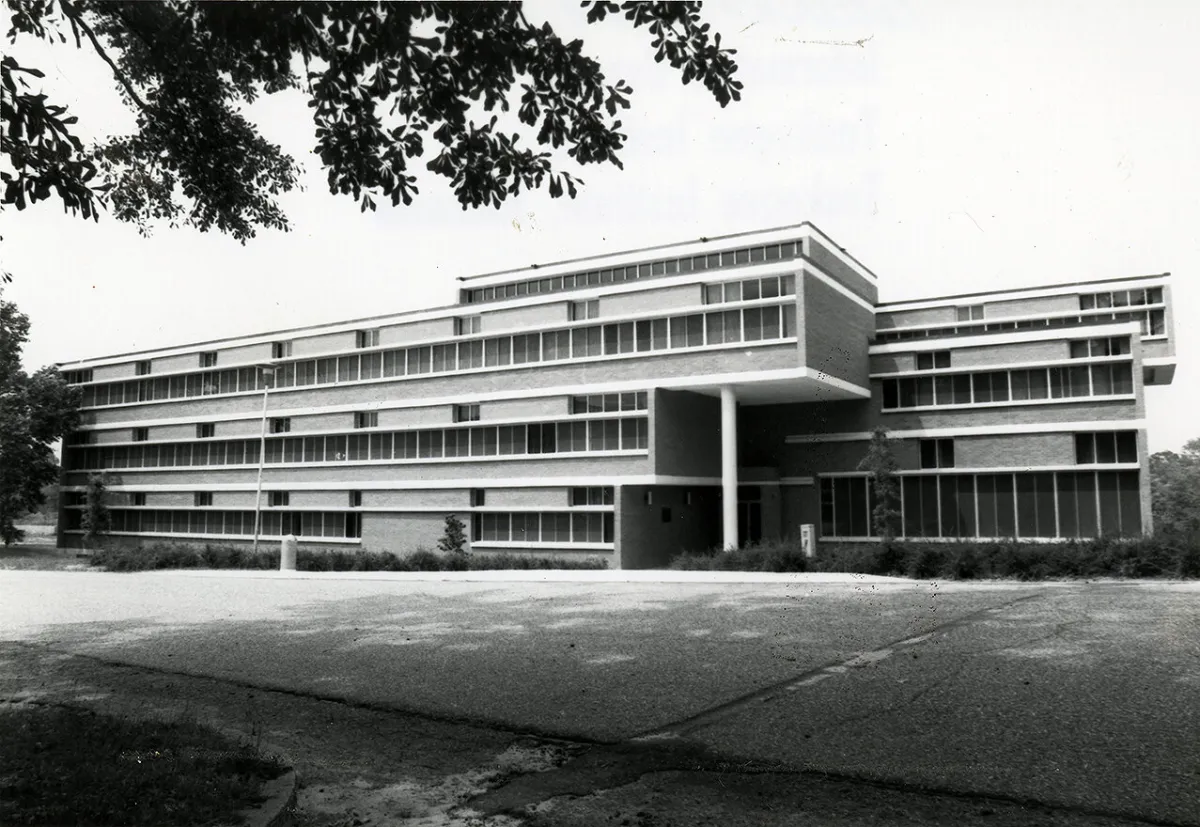 Photo: Tuskegee Institute, via images.squarespace-cdn.com
It was actually the perfect match.
The Laboratory Made of Dirt
At Tuskegee, Carver found himself surrounded by the very problems his unconventional education had prepared him to solve. Southern soil was exhausted from decades of cotton monoculture. Farmers were trapped in cycles of debt and diminishing returns. The land itself seemed to be dying.
Carver turned Tuskegee into a living laboratory. He taught students to make fertilizer from swamp muck and compost. He showed farmers how rotating crops could restore soil health. Most famously, he demonstrated how peanuts and sweet potatoes could fix nitrogen in the soil while providing new sources of nutrition and income.
What made Carver revolutionary wasn't just his scientific insights—it was his ability to translate complex agricultural science into practical solutions that poor farmers could implement with materials they already had.
The Peanut Prophet
Carver's work with peanuts became the stuff of legend, though the popular narrative often misses the point. He didn't invent peanut butter, as many believe. Instead, he developed over 300 products from peanuts—from cosmetics to plastics to printing ink—demonstrating the crop's economic potential and encouraging farmers to diversify beyond cotton.
This wasn't just agricultural innovation; it was economic revolution. By proving that peanuts could be profitable, Carver helped break the South's dependence on cotton and gave farmers a path toward financial independence.
His methods were as unconventional as his background. While other scientists published in academic journals, Carver distributed simple bulletins with titles like "How to Grow the Peanut and 105 Ways of Preparing it for Human Consumption." He conducted cooking demonstrations, not just laboratory experiments. He spoke the language of farmers, not just fellow scientists.
The Wisdom of Exclusion
Carver's exclusion from traditional scientific institutions ultimately became his greatest strength. While university researchers focused on narrow specializations, Carver developed a holistic understanding of agriculture that connected soil science, plant biology, nutrition, and economics.
His outsider status also freed him from academic orthodoxy. He wasn't trying to impress colleagues or publish in prestigious journals. He was trying to help farmers feed their families and improve their land. This practical focus led him to innovations that more conventional scientists might have overlooked.
Recognition and Legacy
By the 1920s, Carver's reputation had grown beyond the South. He advised presidents, testified before Congress, and received honorary degrees from universities that once wouldn't have admitted him as a student. Time magazine featured him on its cover, calling him a "Black Leonardo."
Yet Carver remained remarkably humble about his achievements. He often said, "I love to think of nature as an unlimited broadcasting station, through which God speaks to us every hour, if we will only tune in."
The Lesson of the Soil
Carver's story reveals something profound about innovation and expertise. Sometimes the most important breakthroughs come not from those with the most impressive credentials, but from those who approach problems from unexpected angles.
His work anticipated modern sustainable agriculture by decades, proving that farming could restore rather than deplete the land. His emphasis on crop diversification and soil health became fundamental principles of agricultural science.
Perhaps most importantly, Carver demonstrated that scientific knowledge belongs not in ivory towers but in the hands of ordinary people working to improve their lives and communities.
Today, as we grapple with climate change and food security, Carver's vision of agriculture as partnership with nature rather than domination over it feels remarkably prescient. The dropout farmer who taught himself to listen to plants may have been ahead of his time—or perhaps he understood something timeless that formal education sometimes obscures.
In the end, George Washington Carver's greatest discovery wasn't any single product or technique. It was the recognition that wisdom can emerge from the most unlikely places, and that the earth itself can be our greatest teacher if we're humble enough to listen.