The Gambler's Last Hand
In 1952, Chuck Wilson was flat broke in Tulsa, Oklahoma, staring at a carnival that had seen better decades. The traveling show he'd worked for three seasons had finally collapsed, leaving its crew stranded with nothing but a collection of rusted rides and unpaid bills.
Most of the carnies scattered to find work elsewhere. But Wilson, a thirty-four-year-old high school dropout who'd been moving from town to town since he was sixteen, saw something different in the wreckage. While others saw junk, he saw possibility.
With five dollars borrowed from a sympathetic diner owner, Wilson made a bet that would accidentally reshape American entertainment: he convinced the carnival owner to let him take over the debt on a broken carousel in exchange for promising to pay what was owed.
It was the kind of desperate decision that usually leads to bankruptcy. Instead, it launched an industry.
The Field of Broken Dreams
Wilson's "theme park" started as twenty acres of rented farmland outside Tulsa. He had one carousel that worked half the time, a handful of carnival games held together with duct tape, and absolutely no idea what he was doing.
What he did have was an understanding of what people actually wanted from entertainment. Unlike the polished amusement parks of the East Coast, which catered to wealthy families, Wilson's operation was built for working-class Americans who wanted affordable fun.
He charged a quarter for admission—less than a movie ticket—and let families bring their own food. Instead of trying to extract maximum profit from each visitor, Wilson focused on creating an experience that felt accessible to everyone.
The strategy was born from necessity, not business school theory. Wilson couldn't afford to be exclusive because he couldn't afford anything.
Building Magic from Scrap Metal
What happened next defied every rule of business logic. Word spread about the little park where kids could ride as many times as they wanted for a single admission fee. Families drove hours to experience something that felt both nostalgic and revolutionary.
Wilson reinvested every penny back into the park. He bought broken rides from failed carnivals and spent his winters rebuilding them in a rented garage. Each addition was a calculated risk that could have sunk the entire operation.
By 1955, Wilson's park featured a dozen rides, a miniature train that circled the property, and something unprecedented: themed areas that told stories. His "Wild West Town" wasn't just a collection of rides—it was an immersive experience that made visitors feel like they'd stepped into a different world.
This was years before Disney would perfect the concept of themed entertainment, but Wilson was already intuiting the same principles from pure instinct.
The Accidental Revolution
What Wilson created wasn't just a successful business—it was a new category of American entertainment. His park proved that families would travel significant distances for experiences that couldn't be found in their hometowns.
More importantly, he demonstrated that entertainment didn't have to be either cheap carnival rides or expensive resort destinations. There was a middle ground where quality and accessibility could coexist.
Other entrepreneurs noticed. Within a decade, Wilson's model was being replicated across the country. Regional theme parks sprouted in suburbs and small cities, each one following his formula of affordable admission, family-friendly atmosphere, and just enough spectacle to feel special.
The Corporate Takeover
By the late 1960s, Wilson's little park was generating millions in revenue. Corporate entertainment companies began circling, offering buyout packages that would have made him wealthy beyond his carnival-worker dreams.
Wilson sold in 1971, using the proceeds to start three more parks in different regions. But the industry he'd helped create was rapidly evolving beyond his bootstrapped origins.
The theme park business became dominated by massive corporations with unlimited marketing budgets and teams of engineers. The scrappy, improvisational spirit that had defined Wilson's operation was replaced by focus groups and feasibility studies.
Wilson didn't seem to mind. He'd proven his point: that extraordinary entertainment could emerge from the most humble beginnings.
The DNA of American Fun
Today's theme park industry generates billions in revenue and employs hundreds of thousands of Americans. From Disney World to Six Flags, every major park traces its conceptual DNA back to pioneers like Wilson who understood that entertainment is ultimately about creating temporary escape from ordinary life.
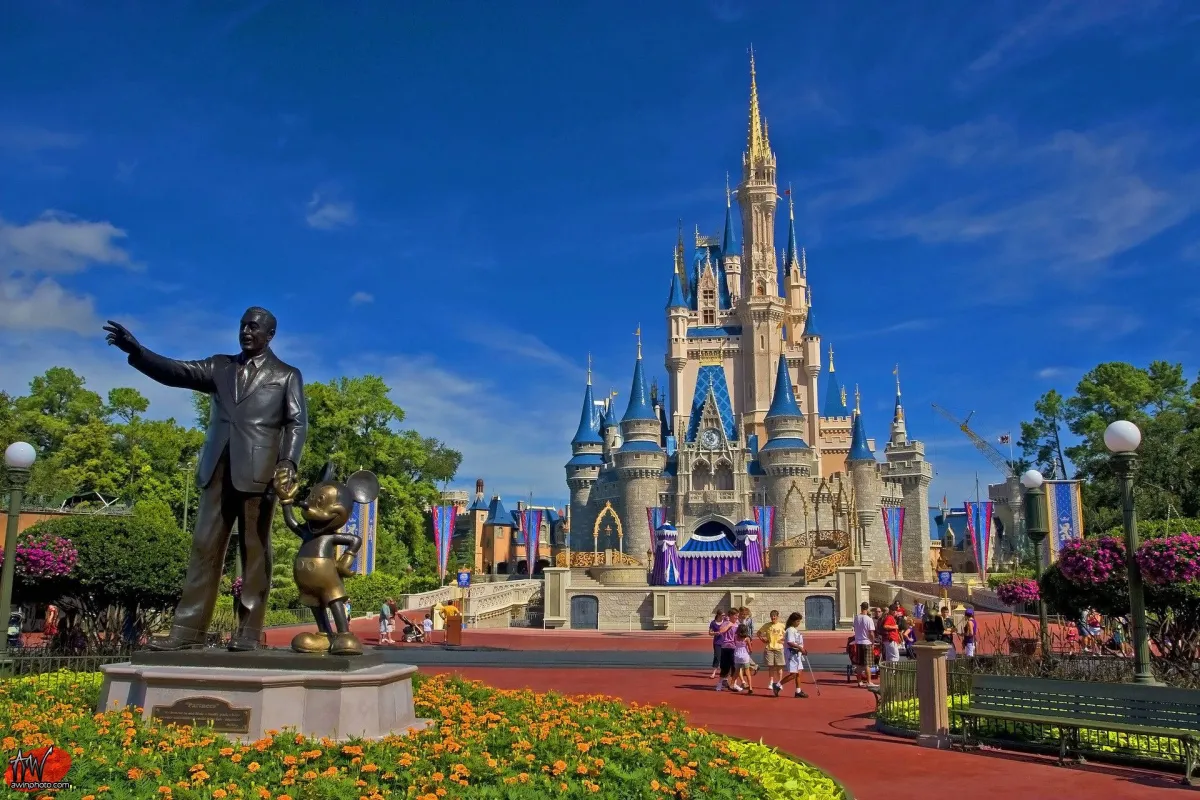 Photo: Disney World, via wallpapers.com
Wilson's contribution wasn't technological innovation or massive capital investment. It was recognizing that working-class families deserved the same quality of entertainment that had traditionally been reserved for the wealthy.
His parks were democratic in the truest sense—places where a factory worker's kids could experience the same magic as a banker's children.
The Carnival Spirit Lives On
Chuck Wilson died in 1998, long after selling his final park. His obituary in the Tulsa World was brief, mentioning his role in developing regional entertainment but missing the larger significance of his contribution.
But his influence lives on in every theme park that prioritizes accessibility over exclusivity, in every regional attraction that proves you don't need Hollywood budgets to create lasting memories.
Wilson's story reminds us that some of America's most enduring industries began with people who had nothing to lose and everything to prove. Sometimes the best business plan is simple desperation combined with an unshakeable belief that everyone deserves a little magic in their lives.
The five-dollar bet that started it all turned out to be the smartest investment in the history of American entertainment. Not because Wilson could predict the future, but because he understood something timeless about what makes people happy.