The Man Who Collected Songs
Ralph Peer was tired, frustrated, and completely lost when he stepped off the train in Bristol, Virginia, on a sweltering July afternoon in 1927. The talent scout for Victor Records had been traveling through the South for months, setting up temporary recording studios in hotel rooms and church basements, hunting for the "authentic" American music that Northern record executives were convinced would sell.
Peer had planned to spend just a few hours in Bristol before catching a connection to Tennessee, where he hoped to record some mountain musicians he'd heard about. Instead, a scheduling mix-up left him stranded for an entire week in a border town that most people used as a brief stop between somewhere and somewhere else.
That accidental detour would create the most consequential week in American popular music history.
The Town Between Worlds
Bristol straddled the Tennessee-Virginia state line like a musical crossroads, with State Street literally dividing the two states down the middle. The town had grown around the railroad, becoming a natural gathering point for traveling musicians, coal miners with guitars, and farming families who carried centuries-old ballads in their memories.
What made Bristol special wasn't any particular musical tradition—it was the collision of many traditions. Scottish-Irish ballads mixed with African-American blues, church hymns blended with work songs, and immigrant melodies found new life in Appalachian hollows. The town was a living jukebox of American musical DNA.
Peer had no idea about any of this when he reluctantly booked a room at the Bristol Hotel and began asking around about local musicians. He was just trying to make the best of a bad situation, hoping to salvage something useful from his unexpected week in exile.
The Advertisement That Changed Everything
Desperately trying to fill his time, Peer placed an advertisement in the local Bristol News Bulletin: "The Victor Talking Machine Company will have a recording machine in Bristol for 10 days beginning Monday to record records—fiddle bands, singers, jugs bands, quartets or anything." The ad promised to pay musicians for successful recordings and invited anyone interested to audition.
It was a shot in the dark, but the response was overwhelming. Word spread through the mountains faster than Peer could have imagined. Musicians began arriving in Bristol from hundreds of miles away—some walking for days, others borrowing cars or catching rides on coal trucks, all drawn by the impossible dream that their music might be worth something to the outside world.
Peer set up his equipment in an empty warehouse, creating a makeshift studio that would witness musical history. He had no idea that he was about to document the birth of commercial country music.
The Carter Family: Keepers of Memory
On August 1, 1927, A.P. Carter arrived in Bristol with his wife Sara and sister-in-law Maybelle, driving twenty-five miles from their home in Poor Valley, Virginia. They had heard about the recording sessions through the mountain grapevine and decided to take a chance.
The Carter Family had been singing together for years at church gatherings and family reunions, but they had never imagined their music as anything more than local entertainment. Their repertoire consisted of ancient ballads, hymns, and songs that had been passed down through generations of oral tradition.
When they stepped into Peer's makeshift studio, something magical happened. Sara's haunting lead vocals, combined with Maybelle's innovative guitar technique and A.P.'s bass harmonies, created a sound that was both ancient and immediate. They recorded six songs that day, including "Bury Me Under the Weeping Willow" and "Poor Orphan Child."
Peer knew immediately that he had discovered something special. The Carter Family's music carried the weight of centuries while feeling completely contemporary. They would go on to record over 300 songs and become known as the "First Family of Country Music."
Jimmie Rodgers: The Blue Yodeler's Gamble
Two days after the Carter Family session, a skinny former railroad worker named Jimmie Rodgers showed up at the warehouse with his guitar and a tubercular cough that would kill him within six years. Rodgers had been performing around the South with various string bands, but he was essentially unknown outside of local circles.
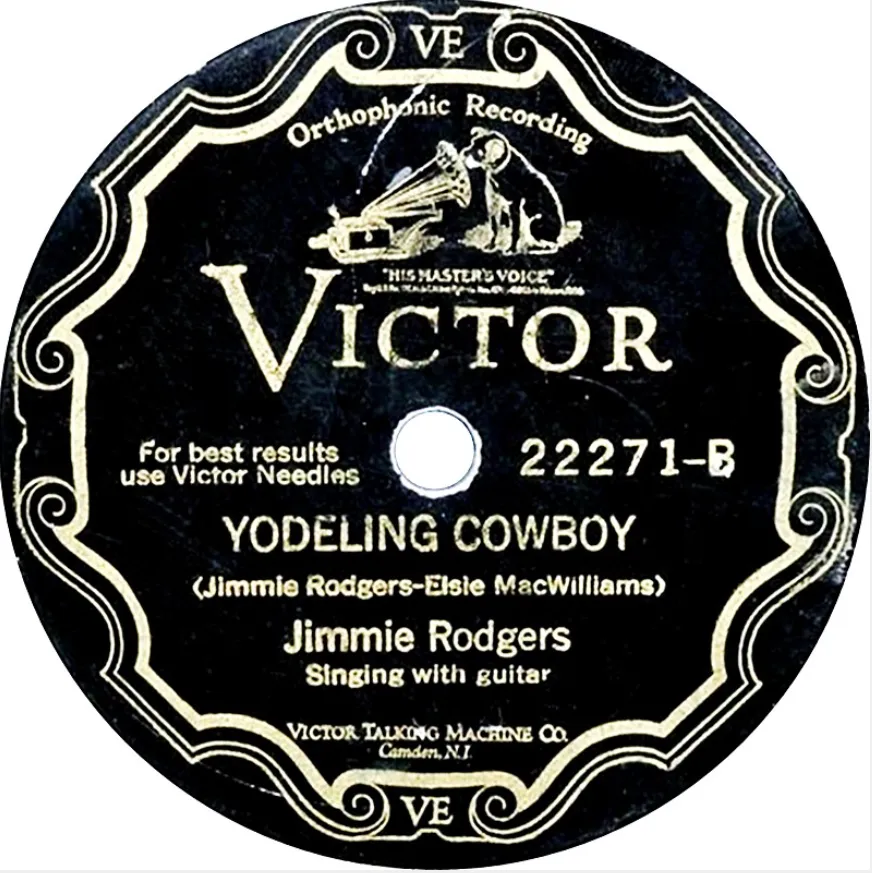 Photo: Jimmie Rodgers, via images.genius.com
What set Rodgers apart was his unique fusion of musical styles. He combined the storytelling tradition of country music with the emotional intensity of blues, adding a distinctive yodeling technique that he had developed during his years working on the railroad. His music was simultaneously rural and cosmopolitan, rooted in tradition yet pointing toward the future.
Rodgers recorded two songs during his Bristol session: "The Soldier's Sweetheart" and "Sleep, Baby, Sleep." While neither became huge hits immediately, they established his recording career and led to later classics like "Blue Yodel" and "T for Texas," which would make him country music's first major star.
The Ripple Effect
The Bristol Sessions didn't just launch two careers—they created a template for American popular music that continues to influence artists today. The success of the Carter Family and Jimmie Rodgers proved that rural, working-class musicians could find national audiences, opening doors for countless others.
Record companies began actively seeking out "hillbilly" music, leading to the development of Nashville as a recording center and eventually the creation of the Grand Ole Opry. The sound pioneered in Bristol would evolve into bluegrass, honky-tonk, rockabilly, and eventually rock and roll itself.
Elvis Presley, Johnny Cash, Bob Dylan, and countless other musicians would trace their artistic lineage back to that accidental week in Bristol when Ralph Peer stumbled onto the authentic American sound he had been searching for.
The Legacy of Getting Lost
By the time Peer packed up his equipment and left Bristol, he had recorded seventy-six songs by nineteen different acts. Most would be forgotten, but the Carter Family and Jimmie Rodgers recordings would reshape American music forever.
The irony wasn't lost on anyone: the most important recording session in country music history happened because a talent scout missed his train connection. Sometimes the best discoveries come from the worst planning.
The Sound That Built America
Today, Bristol calls itself the "Birthplace of Country Music," and a museum on State Street commemorates those legendary sessions. But the real legacy of the Bristol Sessions isn't just country music—it's the proof that American culture is built on beautiful accidents, wrong turns, and the willingness to listen when unexpected voices start singing.
Ralph Peer's missed connection reminds us that the most important destinations are often the ones we never intended to reach. Sometimes you have to get completely lost to find exactly what you were looking for.
The train that Peer missed in 1927 was heading toward Tennessee, but the detour that kept him in Bristol was heading toward forever. In the end, getting lost had led him—and American music—exactly where they needed to be.